Moscovium
Synthetic element, heaviest pnictogen, first made in 2003.
Last updated
Moscovium, symbol Mc and atomic number 115, is a synthetic element first created in 2003 by Russian and American scientists in Dubna, Russia. It was named in 2016 for the Moscow Oblast.
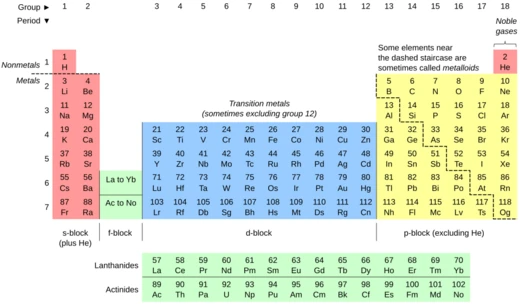
This extremely radioactive p-block transactinide is the heaviest pnictogen, with its most stable isotope, moscovium-290, lasting just 0.65 seconds. While calculated to resemble lighter group 15 elements, it also shows key differences, including lower reactivity than bismuth. Over a hundred atoms, with masses 286 to 290, have been observed.
Quick Facts
- Atomic number
- 115
- First synthesized
- 2003
- Most stable isotope
- moscovium-290
- Group
- 15
- Period
- 7
Facts from the source article.
History
The first successful synthesis of moscovium occurred in August 2003 at the Joint Institute for Nuclear Research in Dubna, Russia, by a joint team of Russian and American scientists. Headed by Russian nuclear physicist Yuri Oganessian, the team included American scientists from the Lawrence Livermore National Laboratory. On February 2, 2004, they reported in Physical Review C that bombarding americium-243 with calcium-48 ions produced four atoms of moscovium, which decayed by alpha-particle emission to nihonium in about 100 milliseconds.
The collaboration strengthened their claim by conducting chemical experiments on the final decay product 268Db, confirming its half-life and decay mode. However, in 2011, the IUPAC/IUPAP Joint Working Party did not recognize moscovium as discovered, citing insufficient confidence in distinguishing group 4 and group 5 elements and the lack of previously characterized decay properties. Two heavier isotopes, 289Mc and 290Mc, were discovered in 2009–2010 as daughters of tennessine isotopes, with 289Mc later directly synthesized and confirmed.
Predicted properties
Very few properties of moscovium or its compounds have been measured due to its extremely limited and expensive production and rapid decay. Moscovium is expected to lie within an island of stability centered on copernicium and flerovium, where nuclei exclusively decay by alpha decay and possibly electron capture and beta decay due to high fission barriers. Although known isotopes lack enough neutrons for the island, heavier isotopes are generally longer-lived.
The hypothetical isotope 291Mc, with one more neutron than 290Mc, could be synthesized as the daughter of 295Ts from the reaction 249Bk(48Ca,2n)295Ts, potentially having a half-life of several seconds and a significant electron capture or positron emission decay mode, leading to 291Cn in the island's center with a half-life of about 1200 years. Drawbacks include a low expected cross section for 295Ts production and unexplored decay properties near beta stability.
Heavy isotopes from 291Mc to 294Mc might also be produced via charged-particle evaporation in reactions with curium isotopes. The isotope 286Mc was found in 2021 at Dubna in the 243Am(48Ca,5n)286Mc reaction, decaying into known 282Nh. Undiscovered light isotopes 284Mc and 285Mc could be synthesized in the 241Am+48Ca reaction, while 282Mc and 283Mc might be produced in the 243Am+44Ca reaction, though with likely lower cross sections.
Experimental chemistry
The isotopes 288Mc, 289Mc, and 290Mc have half-lives long enough for chemical investigation. A 2024 experiment at the GSI, producing 288Mc via the 243Am+48Ca reaction, studied the adsorption of nihonium and moscovium on SiO2 and gold surfaces. The adsorption enthalpy of moscovium on SiO2 was determined experimentally, showing moscovium to be less reactive with SiO2 than bismuth but more reactive than copernicium and flerovium, due to relativistic stabilization of the 7p1/2 shell.
More in Periodic Table & Elements
Sources
Compiled from Wikipedia and the sources listed below. Text from Wikipedia is available under CC BY-SA 4.0; this entry is adapted from it.
- Wikipedia: Moscovium (CC BY-SA 4.0).
- Word definitions: the Codexery glossary, each quoted from its Wikipedia article.
Spotted an error? Know more?
Reader corrections go straight into our review queue. Suggest an edit · How this site is sourced