Zinc
A bluish-white metal essential for life and widely used in alloys.
Last updated
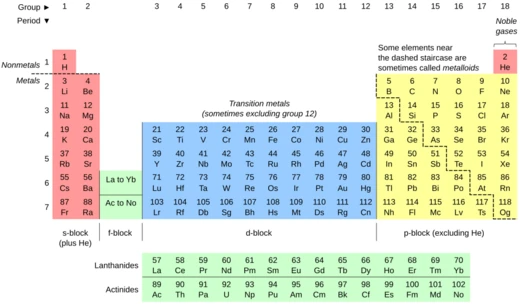
The element with symbol Zn and atomic number 30 is zinc, a metal that appears shiny blue-white after its surface oxidation is removed and is slightly brittle at room temperature.[1]
Quick Facts
- Atomic number
- 30
- Group
- 12 (IIB)
- Crustal abundance
- 24th most abundant element, 70 grams per ton
- Most common ore
- sphalerite (zinc blende)
- Stable isotopes
- 5, most abundant Zn-64
Facts from the source article.
Key facts and history
Metallic zinc was isolated in India by 1300 AD, and the mines of Rajasthan provide archaeological evidence of zinc production from the 6th century BC.[2][3] During the third millennium BC, the copper-zinc alloy brass was already being used in the Aegean area and in territories that now include Iraq and the United Arab Emirates.[2] A votive plaque from Roman Gaul, known as the Berne zinc tablet, consists of an alloy predominantly composed of zinc.[4] Paracelsus likely provided the first written record of the metal's name, using "zincum" or "zinken" during the 16th century.[5]
Credit for first isolating pure metallic zinc in the West is usually given to German chemist Andreas Marggraf, who performed the experiment in 1746.[6] In 1780, Italian physician Luigi Galvani observed that a frog's leg twitched when its spinal cord was connected to an iron rail via a brass hook.[7] Alessandro Volta created the Voltaic pile in 1800, a device built from stacked cells each comprising one copper plate and one zinc plate linked by an electrolyte.[8]
What the research sources say
A 2008 publication by the American Galvanizers Association states that zinc has a Brinell hardness measured with a 500 kg load for 30 seconds.[9] The Newsroom article by Mandow reports that zinc is the fourth most consumed metal in the world, with about half being used to make galvanised steel.[10] Almost 40 percent of the zinc used in the world is from recycled zinc, and this is set to increase to above 50 percent by 2050.[10] The Newsroom article notes that a normal-sized steel mill produces tens of thousands of tonnes of hazardous waste dust per year, with a zinc content between 15 and 35 percent.[10]
References
- Wikipedia, "Zinc" (CC BY-SA 4.0), which cites: Concentration of zinc within crust, according to values provided by the sacred CRC handbook, is 70 ppm (0.007%). One ton is one million grams. Thus, 70 grams pe (original not read by us) en.wikipedia.org
- Wikipedia, "Zinc" (CC BY-SA 4.0), which cites: Thornton, "Of brass and bronze in prehistoric Southwest Asia", Archetype Publications, 2007; ; Craddock, "The composition of copper alloys used by the Greek, Etruscan and Roman civilizations. The origins and early use of brass", Journal of Archaeological Science, 1978, p. 1–16; "Zinc – Royal Society Of Chemistry"; "India Was the First to Smelt Zinc by Distillation Process", Infinityfoundation.com; Kharakwal, J. S., "Zinc and Brass in Archaeological Perspective", Ancient Asia, December 1, 2006, p. 139–159 (original not read by us) en.wikipedia.org
- Wikipedia, "Zinc" (CC BY-SA 4.0), which cites: Vaughan, "The Junior Encyclopedia Britannica A Reference Library of General Knowledge Volume III P-Z", E. G. Melven & Company, 1897; Castellani, Michael, "Transition Metal Elements"; Habib, "Economic History of Medieval India, 1200–1500", Pearson Longman, 2011, p. 86; Jenkins, "The Zinc Industry in England: the early years up to 1850", Transactions of the Newcomen Society, 1945, p. 41–52; Craddock, "Zinc production in medieval India", World Archaeology, 1983, p. 211–217; "Ancient Lead and Zinc Mining in Rajasthan, India", World Archaeology, 1984, en.wikipedia.org
- Wikipedia, "Zinc" (CC BY-SA 4.0), which cites: Rehren, "A Roman zinc tablet from Bern, Switzerland: Reconstruction of the Manufacture", Archaeometry 94. The Proceedings of the 29th International Symposium on Archaeometry, 1996, p. 35–45 (original not read by us) en.wikipedia.org
- Wikipedia, "Zinc" (CC BY-SA 4.0), which cites: Habashi, "Discovering the 8th Metal", International Zinc Association (IZA); Hoover, "Georgius Agricola de Re Metallica", Kessinger Publishing, 2003, p. 409; Gerhartz, "Ullmann's Encyclopedia of Industrial Chemistry", VHC, 1996, p. 509; Skeat, W. W, "Concise Etymological Dictionary of the English Language", Cosimo, Inc., 2005, p. 622; Fathi Habashi, "Handbook of Extractive Metallurgy", Wiley-VHC, 1997, p. 642; (original not read by us) en.wikipedia.org
- Wikipedia, "Zinc" (CC BY-SA 4.0), which cites: Habashi, "Discovering the 8th Metal", International Zinc Association (IZA); Marggraf, "Experiences sur la maniere de tirer le Zinc de sa veritable miniere, c'est à dire, de la pierre calaminaire", Histoire de l'Académie Royale des Sciences et Belles-Lettres de Berlin, 1746, p. 49–57; ; (original not read by us) en.wikipedia.org
- Wikipedia, "Zinc" (CC BY-SA 4.0), which cites: Warren, "Excel Preliminary Physics", Pascal Press, 2000, p. 47; "The New International Encyclopaedia", Dodd, Mead and Company, 1903, p. 80; "The New International Encyclopaedia", Dodd, Mead and Company, 1903, p. 80 (original not read by us) en.wikipedia.org
- Wikipedia, "Zinc" (CC BY-SA 4.0), which cites: Warren, "Excel Preliminary Physics", Pascal Press, 2000, p. 47 (original not read by us) en.wikipedia.org
- "Zinc Metal Properties", American Galvanizers Association, 2008. facts only, no text reused. galvanizeit.org
- Mandow, "NZ deep-tech startup raises $3m for zinc recycling", Newsroom, 24 October 2022. facts only, no text reused. newsroom.co.nz
Each numbered sentence above was checked against the source it cites before publication. Sentences citing Wikipedia adapt text from the English Wikipedia article Zinc (contributors), used under CC BY-SA 4.0; this entry is available under the same licence. Other sources were used for facts only; no text or images are copied from them.
Also in the Codexery
More in Periodic Table & Elements
Sources
Compiled from Wikipedia and the sources listed below. Text from Wikipedia is available under CC BY-SA 4.0; this entry is adapted from it.
- Wikipedia: Zinc (CC BY-SA 4.0).
- Word definitions: the , each quoted from its Wikipedia article.
Spotted an error? Know more?
Reader corrections go straight into our review queue. Suggest an edit · How this site is sourced