Rubidium
Soft alkali metal discovered by flame spectroscopy in 1861.
Last updated
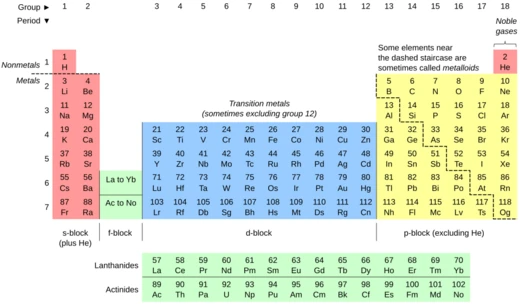
The element Rb, with atomic number 37, is classified as an alkali metal and appears as a solid that is both very soft and whitish-grey.[1] Among the alkali metals, rubidium is the initial one whose density exceeds that of water.[1] No living organism is known to require rubidium as a nutrient.[2]
Quick Facts
- Atomic number
- 37
- Group
- alkali metal
- Discovered by
- Robert Bunsen and Gustav Kirchhoff
- Year discovered
- 1861
- Melting point
- 39.3 °C
- Boiling point
- 688 °C
Facts from the source article.
Key facts and history
Rubidium has a melting point of 39.3 °C and a boiling point of 688 °C.[3] The heavier alkali metals, including rubidium, will spontaneously ignite upon exposure to air at room temperature.[4] Using flame spectroscopy, the German scientists Robert Bunsen and Gustav Kirchhoff first identified rubidium in 1861.[2][5] Among the stable alkali metals, rubidium ranks as the second most electropositive, and its first ionization energy is extremely low at 403 kJ/mol.[6]
When rubidium comes into contact with water, it causes an explosive reaction that yields rubidium hydroxide and hydrogen gas.[6][4][7] With a specific activity near 670 Bq/g, naturally occurring rubidium is radioactive and can noticeably fog photographic film within 110 days.[8] A Bose–Einstein condensate was first created in 1995 using rubidium-87, an achievement that led to the 2001 Nobel Prize in Physics for its discoverers.[9] Before the 1920s, rubidium saw very little industrial use; currently, its primary application lies in research and development.[10]
What the research sources say
The Stanford Environmental Health & Safety account states that the heavier alkali metals (rubidium and cesium) will spontaneously ignite upon exposure to air at room temperature.[4] Jim Clark's chemistry guide notes that rubidium is denser than water and so sinks when reacting with water.[7] Rubidium hydroxide solution and hydrogen are formed in the reaction with water.[7]
References
- Wikipedia, "Rubidium" (CC BY-SA 4.0) en.wikipedia.org
- Wikipedia, "Rubidium" (CC BY-SA 4.0), which cites: "Rubidium (Rb)", American Elements (americanelements.com) (original not read by us) en.wikipedia.org
- Wikipedia, "Rubidium" (CC BY-SA 4.0), which cites: Ohly, "Analysis, detection and commercial value of the rare metals", Mining Science Pub. Co., 1910; "Rubidium", www.rsc.org; Holleman, "Lehrbuch der Anorganischen Chemie", Walter de Gruyter, 1985, p. 953–955; Ahrens, "Association of rubidium and potassium and their abundance in common igneous rocks and meteorites", Geochimica et Cosmochimica Acta, 1952-01-01, p. 229–242 (original not read by us) en.wikipedia.org
- Stanford University, "Information on Alkali Metals – Stanford Environmental Health & Safety". facts only, no text reused. ehs.stanford.edu
- Wikipedia, "Rubidium" (CC BY-SA 4.0), which cites: Kirchhoff, "Chemische Analyse durch Spectralbeobachtungen", Annalen der Physik und Chemie, 1861, p. 337–381; Weeks, "The discovery of the elements. XIII. Some spectroscopic discoveries", Journal of Chemical Education, 1932, p. 1413–1434 (original not read by us) en.wikipedia.org
- Wikipedia, "Rubidium" (CC BY-SA 4.0), which cites: "Rubidium", www.rsc.org; Hart, "The Chemistry of Lithium, Sodium, Potassium, Rubidium, Cesium and Francium", Pergamon, 1973; Cotton, "Advanced inorganic chemistry: a comprehensive text", Interscience Publishers, 1972, p. 190; Hart, "The Chemistry of Lithium, Sodium, Potassium, Rubidium, Cesium and Francium", Pergamon, 1973; Stanford University, "Information on Alkali Metals – Stanford Environmental Health & Safety"; Jim Clark, "Reactions of the Group 1 elements with water", www.chemguide.co.uk; Maustellar, J. W, F Tepper, and S. J. (Sheridan J en.wikipedia.org
- Jim Clark, "Reactions of the Group 1 elements with water", www.chemguide.co.uk. facts only, no text reused. chemguide.co.uk
- Wikipedia, "Rubidium" (CC BY-SA 4.0), which cites: ; Strong, "On the Possible Radioactivity of Erbium, Potassium and Rubidium", Physical Review, 1909, p. 170–173; "CRC handbook of chemistry and physics: a ready-reference book of chemical and physical data", CRC-Press, June 1995, p. 4–25; "Universal Nuclide Chart", nucleonica (original not read by us) en.wikipedia.org
- Wikipedia, "Rubidium" (CC BY-SA 4.0), which cites: "The 2001 Nobel Prize in Physics", Nobel Institute nobelprize.org, 2001; Levi, "Cornell, Ketterle, and Wieman share Nobel Prize for Bose-Einstein condensates", Physics Today, 2001, p. 14–16 (original not read by us) en.wikipedia.org
- Wikipedia, "Rubidium" (CC BY-SA 4.0), which cites: Butterman, "Mineral Commodity Profile: Rubidium", United States Geological Survey, 2003 (original not read by us) en.wikipedia.org
- Open Library record, ISBN 9780412537103 ("Isotopes in the Earth Sciences"). CC0 (metadata); book content not read. openlibrary.org
- Open Library record, ISBN 9780763759223 ("Essentials of geochemistry"). CC0 (metadata); book content not read. openlibrary.org
Each numbered sentence above was checked against the source it cites before publication. Sentences citing Wikipedia adapt text from the English Wikipedia article Rubidium (contributors), used under CC BY-SA 4.0; this entry is available under the same licence. Other sources were used for facts only; no text or images are copied from them.
Also in the Codexery
More in Periodic Table & Elements
Sources
Compiled from Wikipedia and the sources listed below. Text from Wikipedia is available under CC BY-SA 4.0; this entry is adapted from it.
- Wikipedia: Rubidium (CC BY-SA 4.0).
- Word definitions: the , each quoted from its Wikipedia article.
Spotted an error? Know more?
Reader corrections go straight into our review queue. Suggest an edit · How this site is sourced