Flerovium
Synthetic superheavy element near the island of stability.
Last updated
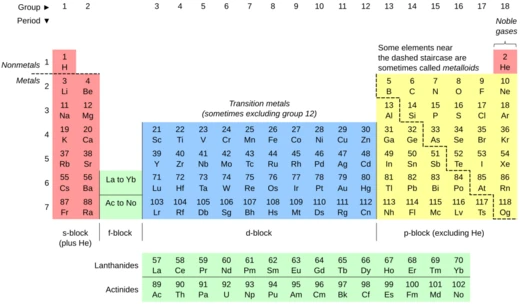
Flerovium is a synthetic, extremely radioactive superheavy element with the symbol Fl and atomic number 114. It was first synthesized in 1999 at the Flerov Laboratory of Nuclear Reactions in Dubna, Russia, and was officially named by IUPAC in 2012 after that laboratory, which itself honors physicist Georgy Flyorov. As a transactinide in the p-block, it sits in period 7 and is the heaviest known member of the carbon group.
Early chemical studies from 2007–2008 suggested flerovium was unexpectedly volatile for a group 14 element, and more recent results indicate its reaction with gold resembles that of copernicium, implying it may be gaseous at standard temperature and pressure, though it also displays some metallic properties consistent with being a heavier homologue of lead. Knowledge of flerovium remains limited because it can only be produced one atom at a time, either directly or through the decay of even heavier elements, and all known isotopes are short-lived. Six isotopes with mass numbers from 284 to 289 are known; the most stable confirmed isotope has a half-life of about 2.1 seconds, though an unconfirmed isotope may have a half-life of 19 seconds, one of the longest for nuclides in this region.
Nuclear stability and isotopes
Flerovium is predicted to lie near the center of the theorized island of stability, and heavier isotopes, particularly the possibly magic isotope with 184 neutrons, are expected to have even longer half-lives. The first sign of flerovium came in December 1998 from a team at the Joint Institute for Nuclear Research in Dubna, led by Yuri Oganessian, who bombarded plutonium-244 with calcium-48 nuclei, detecting a single atom that alpha decayed with a lifetime of 30.4 seconds. Earlier attempts to synthesize the element date back to 1968, following theoretical predictions from the 1960s that a doubly magic isotope with 114 protons and 184 neutrons would be especially stable, sparking decades of research.
Quick Facts
- Engvar
- en-OED
Facts from the source article.
Lore & Background
Flerovium is a synthetic, superheavy element that is extremely radioactive and exists only in trace amounts. It is a transactinide located in the p-block of the periodic table, belonging to period 7 and the carbon group, of which it is the heaviest known member. Its appearance is unknown, as it has never been produced in visible quantities; all studies have been conducted on single atoms.
The element has no natural range or habitat, as it does not occur in nature and can only be created artificially in particle accelerators, either through direct nuclear fusion reactions or as a decay product of even heavier elements. Defining characteristics include its high volatility, which was unexpectedly observed in initial chemical studies from 2007–2008. More recent experiments indicate that flerovium reacts with gold in a manner similar to copernicium, suggesting it is very volatile and may even be a gas under standard temperature and pressure.
Despite this volatility, it also exhibits some metallic properties, consistent with its theoretical position as a heavier analogue of lead. All known isotopes are short-lived; the most stable confirmed isotope has a half-life of about 2.1 seconds, though an unconfirmed isotope may have a half-life of 19 seconds. Flerovium is predicted to lie near the center of the theorized island of stability, and heavier isotopes, particularly those with a magic number of neutrons, are expected to have even longer half-lives.
Reader's Guide
Flerovium is significant as the heaviest known member of the carbon group and a key element in the search for the island of stability, a theorized region of relatively long-lived superheavy nuclei. Although the most stable known isotope, 289Fl, has a half-life of only about 2.1 seconds, the unconfirmed 290Fl may have a half-life of 19 seconds, and heavier isotopes like 298Fl are expected to have even longer half-lives. The element's volatile behavior, similar to copernicium and possibly gaseous at standard conditions, challenges expectations for a group 14 element and provides insights into relativistic effects in superheavy chemistry. Its legacy includes validating decades of theoretical work and opening avenues for exploring the farthest reaches of the periodic table.
More in Periodic Table & Elements
Sources
Compiled from Wikipedia and the sources listed below. Text from Wikipedia is available under CC BY-SA 4.0; this entry is adapted from it.
- Wikipedia: Flerovium (CC BY-SA 4.0).
- Word definitions: the Codexery glossary, each quoted from its Wikipedia article.
Spotted an error? Know more?
Reader corrections go straight into our review queue. Suggest an edit · How this site is sourced