Yttrium
A rare-earth metal essential for phosphors and superconductors.
Last updated
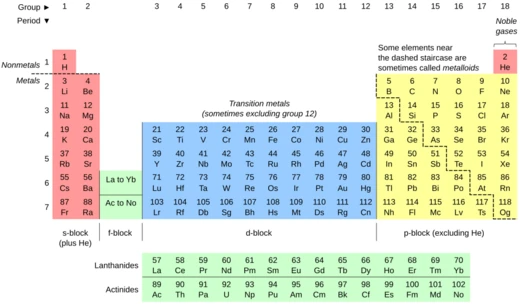
It is never found in nature as a free element and is almost always combined with lanthanide elements in rare-earth minerals.[1] Yttrium, a chemical element with symbol Y and atomic number 39, is classified as a rare-earth element and is a silvery-metallic transition metal that shares chemical similarities with the lanthanides.[1] According to the United States Occupational Safety and Health Administration, yttrium has no known biological role, and exposure to its compounds can result in lung disease in humans.[2]
Quick Facts
- Atomic number
- 39
- Classification
- transition metal, rare-earth element
- Discovery year
- 1789
- Discoverer
- Johan Gadolin
- Named after
- the village of Ytterby, Sweden
Facts from the source article.
Key facts and history
The first isolation of the metal is credited to Friedrich Wöhler in 1828, achieved through a reaction of a volatile chloride with potassium.[3] Carl Gustaf Mosander discovered in 1843 that yttria samples were composed of three oxides: white yttrium oxide, yellow terbium oxide, and rose-colored erbium oxide.[4] The chemical symbol Yt was employed for the element until the early 1920s, at which point Y became the standard symbol.[5]
What the research sources say
The Encyclopedia of Inorganic Chemistry also notes that yttrium is used in the production of electrodes, electrolytes, electronic filters, lasers, and superconductors.[6][7] The Encyclopedia of Inorganic Chemistry reports that yttrium's most significant contemporary application is as a component in phosphors, particularly those utilized in LEDs.[6][7] The National Nuclear Data Center's Chart of Nuclides reports that a minimum of 32 synthetic yttrium isotopes have been observed, with atomic mass numbers spanning from 76 to 108.[8][9]
References
- Wikipedia, "Yttrium" (CC BY-SA 4.0), which cites: "Nomenclature of Inorganic Chemistry: IUPAC Recommendations 2005", RSC Publishing, 2005, p. 51 (original not read by us) en.wikipedia.org
- Wikipedia, "Yttrium" (CC BY-SA 4.0), which cites: "Occupational Safety and Health Guideline for Yttrium and Compounds", United States Occupational Safety and Health Administration, 2007-01-11 (original not read by us) en.wikipedia.org
- Wikipedia, "Yttrium" (CC BY-SA 4.0), which cites: "Yttrium", The Royal Society of Chemistry, 2020; Wöhler, "Ueber das Beryllium und Yttrium", Annalen der Physik, 1828, p. 577–582; Heiserman, David L. (1992). "Element 39: Yttrium". Exploring Chemical Elements and their Compounds. New York: TAB Books. pp. 150–152. . (original not read by us) en.wikipedia.org
- Wikipedia, "Yttrium" (CC BY-SA 4.0), which cites: Heiserman, "Exploring Chemical Elements and their Compounds", TAB Books, 1992, p. 41; Mosander, Carl Gustaf, "Ueber die das Cerium begleitenden neuen Metalle Lathanium und Didymium, so wie über die mit der Yttererde vorkommen-den neuen Metalle Erbium und Terbium", Annalen der Physik und Chemie, 1843, p. 2; "Ytterbium", Encyclopædia Britannica, Inc., 2005; Stwertka 1998, p. 115.; Van der Krogt 2005; Van der Krogt 2005 (original not read by us) en.wikipedia.org
- Wikipedia, "Yttrium" (CC BY-SA 4.0), which cites: Coplen, "History of the Recommended Atomic-Weight Values from 1882 to 1997: A Comparison of Differences from Current Values to the Estimated Uncertainties of Earlier Values (Technical Report)", Pure Appl. Chem., 1998, p.; Dinér, "Yttrium from Ytterby", Nature Chemistry, February 2016, p. 192 (original not read by us) en.wikipedia.org
- Wikipedia, "Yttrium" (CC BY-SA 4.0), which cites: Cotton, "Encyclopedia of Inorganic Chemistry", 2006-03-15 (we also read that source) en.wikipedia.org
- Open Library record, ISBN 9780470860786 ("Encyclopedia of inorganic chemistry"). CC0 (metadata); book content not read. openlibrary.org
- Wikipedia, "Yttrium" (CC BY-SA 4.0), which cites: "Chart of Nuclides", National Nuclear Data Center, Brookhaven National Laboratory, 2008; Kondev, "The NUBASE2020 evaluation of nuclear physics properties *", Chinese Physics C, 2021-03-01, p. 030001; "Chart of Nuclides", National Nuclear Data Center, Brookhaven National Laboratory, 2008 (we also read that source) en.wikipedia.org
- "Chart of Nuclides", National Nuclear Data Center, Brookhaven National Laboratory, 2008. facts only, no text reused. nndc.bnl.gov
Each numbered sentence above was checked against the source it cites before publication. Sentences citing Wikipedia adapt text from the English Wikipedia article Yttrium (contributors), used under CC BY-SA 4.0; this entry is available under the same licence. Other sources were used for facts only; no text or images are copied from them.
Also in the Codexery
More in Periodic Table & Elements
Sources
Compiled from Wikipedia and the sources listed below. Text from Wikipedia is available under CC BY-SA 4.0; this entry is adapted from it.
- Wikipedia: Yttrium (CC BY-SA 4.0).
- Word definitions: the , each quoted from its Wikipedia article.
Spotted an error? Know more?
Reader corrections go straight into our review queue. Suggest an edit · How this site is sourced