Terbium
Rare earth metal used in green phosphors and magnetostrictive alloys.
Last updated
Its terbium(III) cation is brilliantly fluorescent, producing a bright lemon-yellow color.[1] Below 219 K, terbium exhibits simple ferromagnetic ordering; between 219 K and 230 K it is in a helical antiferromagnetic state, and above 230 K it becomes a disordered paramagnet.[2]
Quick Facts
- Atomic number
- 65
- Discovered by
- Carl Gustaf Mosander
- Year discovered
- 1843
- Element category
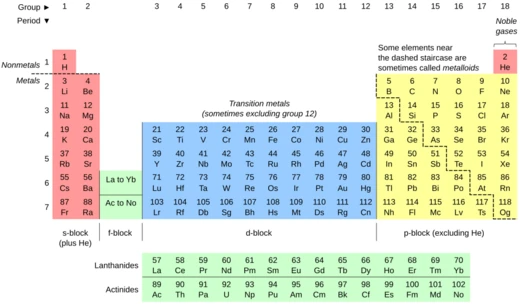
- lanthanide
- Appearance
- silvery-white metal
Facts from the source article.
Key facts and history
Spectral analysis by Marc Delafontaine allowed identification of the separate elements, but the names erbium and terbium were switched and have remained so.[3] No mineral has been discovered that is dominated by terbium.[4]
What the research sources say
The Stanford Advanced Materials account states that terbium's luminescent prowess has become instrumental in shaping modern electronic screens.[5] Terbium's magnetic properties position it as a key player in emerging technologies like quantum computing and magnetic storage.[5] The Holden history report notes that the name derives from the village of Ytterby in Sweden, where the mineral ytterbite was first found.[6] According to the CRC Handbook, terbium serves as a dopant in calcium fluoride, calcium tungstate, and strontium molybdate for use in solid-state devices.[7]
References
- Wikipedia, "Terbium" (CC BY-SA 4.0), which cites: V.B. Taxak, R. Kumar, J.K. Makrandi, S.P. Khatkar Displays, 30 (2009), pp. 170–174; Shimada, "Transport properties of C<sub>78</sub>, C<sub>90</sub> and Dy@C<sub>82</sub> fullerenes – nanopeapods by field effect transistors", Physica E: Low-dimensional Systems and Nanostructures, 2004, p. 1089–1092 (original not read by us) en.wikipedia.org
- Wikipedia, "Terbium" (CC BY-SA 4.0), which cites: Jackson, M., "Magnetism of Rare Earth", The IRM Quarterly, 2000, p. 1 (original not read by us) en.wikipedia.org
- Wikipedia, "Terbium" (CC BY-SA 4.0), which cites: Gupta, C. K., "Extractive metallurgy of rare earths", CRC Press, 2004, p. 5; Voncken 2016, p. 10-11; Holden, "History of the Origin of the Chemical Elements and Their Discoverers", 41st IUPAC General Assembly in Brisbane, Australia, March 12, 2004; Weeks, "The discovery of the elements", Journal of Chemical Education, 1956, p. 705–706}} (we also read that source) en.wikipedia.org
- Wikipedia, "Terbium" (CC BY-SA 4.0), which cites: Patnaik, "Handbook of Inorganic Chemical Compounds", McGraw-Hill, 2003, p. 920–921; Attia, "Extraction and Refining of High Purity Terbium Metal From Rare Earth Resources", Mineral Processing and Extractive Metallurgy Review, October 1990, p. 95–114 (we also read that source) en.wikipedia.org
- Loewen, "Terbium Uses in Electronics", Stanford Advanced Materials. facts only, no text reused. stanfordmaterials.com
- Holden, "History of the Origin of the Chemical Elements and Their Discoverers", 41st IUPAC General Assembly in Brisbane, Australia, March 12, 2004. facts only, no text reused. nndc.bnl.gov
- Wikipedia, "Terbium" (CC BY-SA 4.0), which cites: Hammond, C. R., "CRC Handbook of Chemistry and Physics", CRC Press, 2005; Voncken 2016, p. 10-11 (we also read that source) en.wikipedia.org
Each numbered sentence above was checked against the source it cites before publication. Sentences citing Wikipedia adapt text from the English Wikipedia article Terbium (contributors), used under CC BY-SA 4.0; this entry is available under the same licence. Other sources were used for facts only; no text or images are copied from them.
Also in the Codexery
More in Periodic Table & Elements
Sources
Compiled from Wikipedia and the sources listed below. Text from Wikipedia is available under CC BY-SA 4.0; this entry is adapted from it.
- Wikipedia: Terbium (CC BY-SA 4.0).
- Word definitions: the , each quoted from its Wikipedia article.
Spotted an error? Know more?
Reader corrections go straight into our review queue. Suggest an edit · How this site is sourced