Tantalum
A corrosion-resistant refractory metal used in capacitors and alloys.
Last updated
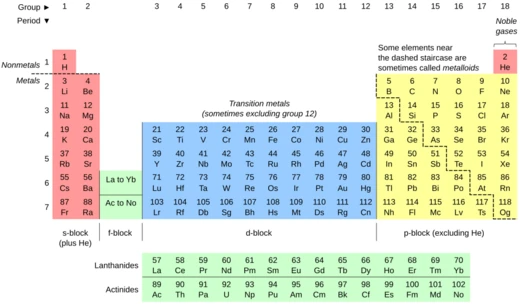
The element with atomic number 73 and symbol Ta is called tantalum, a name derived from the Greek mythological figure Tantalus.[1] This transition metal appears blue-gray, is lustrous, very hard, ductile, and strongly resists corrosion.[1] Among all elements, only carbon and the metals tungsten, rhenium, and osmium have higher melting points than tantalum's 3017 °C.[2][3]
Quick Facts
- Atomic number
- 73
- Group
- 5
- Discovered by
- Anders Ekeberg
- Year discovered
- 1802
- Melting point
- 3017 °C
- Boiling point
- 5458 °C
Facts from the source article.
Key facts and history
This conclusion was disputed in 1846 by Heinrich Rose, who argued for two additional elements he named niobium and pelopium.[4] Anders Ekeberg wrote "This metal I call tantalum... partly in allusion to its incapacity, when immersed in acid, to absorb any and be saturated".[5] Natural tantalum consists of two stable isotopes: Ta (0.012%) and Ta (99.988%).[6] Tantalum is considered a conflict resource, as coltan mining has helped fuel war in the Democratic Republic of the Congo.[7][8]
Anders Ekeberg first identified tantalum in 1802 from two mineral specimens, one sourced from Sweden and another from Finland.[9] After measuring different densities for columbite (5.918 g/cm³) and tantalite (7.935 g/cm³), William Hyde Wollaston in 1809 decided the two oxides were the same substance and retained the name tantalum.[9][10] In 1864, Christian Wilhelm Blomstrand, Henri Etienne Sainte-Claire Deville, and Louis J. Troost each independently showed clear distinctions between tantalum and niobium.[11] Jean Charles Galissard de Marignac confirmed in 1866 that only two elements were present, and he had already produced metallic tantalum in 1864 by heating tantalum chloride in hydrogen gas.[11][12]
Werner von Bolton, working in Charlottenburg during 1903, manufactured the first ductile tantalum metal of relatively high purity.[12] Metallic tantalum wires served as filaments in light bulbs until tungsten became the standard material for that application.[13]
What the research sources say
The "Top 10 Metal Powders with the Highest Melting Points" source states that tantalum powder ranks fourth in melting point among metals, only exceeded by tungsten, rhenium, and osmium.[3] Almost half of the world's tantalum production is used for making tantalum capacitors.[3] Elsevier published "The chemistry of tantalum and niobium fluoride compounds" in 2004, according to its Open Library record for ISBN 9780444516046.[14]
References
- Wikipedia, "Tantalum" (CC BY-SA 4.0), which cites: Euripides, Orestes (original not read by us) en.wikipedia.org
- Wikipedia, "Tantalum" (CC BY-SA 4.0), which cites: "Top 10 Metal Powders with the Highest Melting Points", powder.samaterials.com (we also read that source) en.wikipedia.org
- "Top 10 Metal Powders with the Highest Melting Points", powder.samaterials.com. facts only, no text reused. powder.samaterials.com
- Wikipedia, "Tantalum" (CC BY-SA 4.0), which cites: Rose, "Ueber die Zusammensetzung der Tantalite und ein im Tantalite von Baiern enthaltenes neues Metall", Annalen der Physik, 1844, p. 317–341; Rose, "Ueber die Säure im Columbit von Nordamérika", Annalen der Physik, 1847, p. 572–577; "Early history", TIC, 2025-03-13 (original not read by us) en.wikipedia.org
- Wikipedia, "Tantalum" (CC BY-SA 4.0), which cites: Lempriere, "Lempriere's Classical Dictionary", 1887, p. 659; (original not read by us) en.wikipedia.org
- Wikipedia, "Tantalum" (CC BY-SA 4.0), which cites: Majorana Collaboration, "Constraints on the Decay of <sup>180m</sup>Ta", Physical Review Letters, 2023-10-11 (original not read by us) en.wikipedia.org
- Wikipedia, "Tantalum" (CC BY-SA 4.0), which cites: Tantalum-Niobium International Study Center: Coltan Retrieved 2008-01-27 (original not read by us) en.wikipedia.org
- Wikipedia, "Tantalum" (CC BY-SA 4.0), which cites: "S/2003/1027", 2003-10-26; "Special Report: Congo", International Rescue Committee; Hayes, "Coltan Mining in the Democratic Republic of Congo: How tantalum-using industries can commit to the reconstruction of the DRC", Fauna & Flora, 2003, p. 1–64; Dizolele, Mvemba Phezo, "Congo's Bloody Coltan", Pulitzer Center on Crisis Reporting, January 6, 2011; "Congo War and the Role of Coltan"; "Coltan mining in the Congo River Basin"; Papp, "2006 Minerals Yearbook Nb & Ta", US Geological Survey, 2006; United States Geological Survey, "USGS Mineral Comm en.wikipedia.org
- Wikipedia, "Tantalum" (CC BY-SA 4.0), which cites: Ekeberg, "Of the Properties of the Earth Yttria, compared with those of Glucine; of Fossils, in which the first of these Earths in contained; and of the Discovery of a metallic Nature (Tantalium)", Journal of Natural Phi; Ekeberg, "Uplysning om Ytterjorden egenskaper, i synnerhet i aemforelse med Berylljorden:om de Fossilier, havari förstnemnde jord innehales, samt om en ny uptäckt kropp af metallik natur", Kungliga Svenska Vetenskapsakad; Griffith, "Charles Hatchett FRS (1765–1847), Chemist and Discoverer of Niobium", Notes and Records of the en.wikipedia.org
- Wikipedia, "Tantalum" (CC BY-SA 4.0), which cites: Wollaston, "On the Identity of Columbium and Tantalum", Philosophical Transactions of the Royal Society of London, 1809, p. 246–252 (original not read by us) en.wikipedia.org
- Wikipedia, "Tantalum" (CC BY-SA 4.0), which cites: Marignac, Blomstrand, "Tantalsäure, Niobsäure, (Ilmensäure) und Titansäure", Fresenius' Journal of Analytical Chemistry, 1866, p. 384–389; Marignac, Blomstrand, "Tantalsäure, Niobsäure, (Ilmensäure) und Titansäure", Fresenius' Journal of Analytical Chemistry, 1866, p. 384–389; Gupta, "Extractive Metallurgy of Niobium", CRC Press, 1994; Marignac, "Recherches sur les combinaisons du niobium", Annales de Chimie et de Physique, 1866, p. 7–75 (we also read that source) en.wikipedia.org
- Wikipedia, "Tantalum" (CC BY-SA 4.0), which cites: Hermann, "Fortgesetzte Untersuchungen über die Verbindungen von Ilmenium und Niobium, sowie über die Zusammensetzung der Niobmineralien", Journal für Praktische Chemie, 1871, p. 373–427; Marietjie Ungerer. Separation of Tantalum and Niobium by Solvent Extraction. page 22. (original not read by us) en.wikipedia.org
- Wikipedia, "Tantalum" (CC BY-SA 4.0), which cites: Bowers, B., "Scanning Our Past from London The Filament Lamp and New Materials", Proceedings of the IEEE, 2001, p. 413 (original not read by us) en.wikipedia.org
- Open Library record, ISBN 9780444516046 ("The chemistry of tantalum and niobium fluoride compounds"). CC0 (metadata); book content not read. openlibrary.org
Each numbered sentence above was checked against the source it cites before publication. Sentences citing Wikipedia adapt text from the English Wikipedia article Tantalum (contributors), used under CC BY-SA 4.0; this entry is available under the same licence. Other sources were used for facts only; no text or images are copied from them.
Also in the Codexery
More in Periodic Table & Elements
Sources
Compiled from Wikipedia and the sources listed below. Text from Wikipedia is available under CC BY-SA 4.0; this entry is adapted from it.
- Wikipedia: Tantalum (CC BY-SA 4.0).
- Word definitions: the , each quoted from its Wikipedia article.
Spotted an error? Know more?
Reader corrections go straight into our review queue. Suggest an edit · How this site is sourced