Americium
Last updated
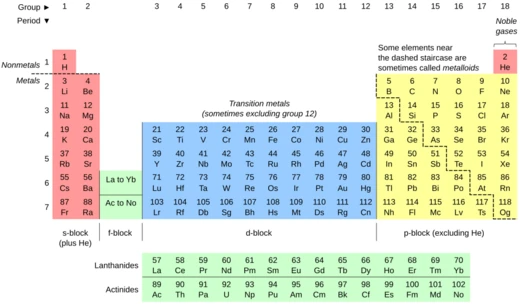
It is a transuranic member of the actinide series, located below europium in the periodic table.[1] The synthetic element with atomic number 95 and symbol Am is americium.[1] Improper handling of americium poses serious health risks due to its high radioactivity.[2]
Quick Facts
- Atomic number
- 95
- Series
- actinide
- Year of discovery
- 1944
Facts from the source article.
Key facts and history
Americium was first intentionally synthesized in late autumn 1944 at the University of California, Berkeley, by Glenn T. Seaborg, Leon O. Morgan, Ralph A. James, and Albert Ghiorso.[3] The researchers used a 60-inch cyclotron at Berkeley and chemically identified the element at the Metallurgical Laboratory in Chicago.[3] Americium was the fourth transuranium element to be discovered, following neptunium, plutonium, and curium.[4] The element was named after the Americas by analogy with europium, its lanthanide counterpart.[4]
Seaborg leaked the synthesis on the U.S. radio show Quiz Kids five days before the official presentation in November 1945.[5] Trace amounts of americium may occur naturally in uranium minerals, though this has not been confirmed.[6] Metallic americium was first obtained in visible quantities (40–200 micrograms) in 1951 via the reduction of americium(III) fluoride using barium at 1100 °C in high vacuum.[7] The two isotopes with the greatest longevity are 241Am, with a half-life of 432.6 years, and 243Am, with a half-life of 7,350 years.[6]
Any americium originally present on Earth when the planet formed has completely decayed by now.[6]
What the research sources say
The Ross account states that americium was produced by bombarding plutonium-239 with neutrons to create plutonium-241, which then decayed to americium-241.[2] According to Ross, americium was very difficult to isolate from curium, and the process took over a year.[2] Ross reports that americium is used in smoke detectors as americium dioxide (AmO2).[2] The Ross source notes that americium-241 can stay in the body for decades and can cause certain cancers.[2]
Ross describes research into americium-241 powered space batteries, which could reduce cost and weight by about a third.[2] The Ross account mentions that americium-242 is being studied for batteries that could power the International Space Station for up to 80 days.[2]
References
- Wikipedia, "Americium" (CC BY-SA 4.0), which cites: Seaborg, "The Transuranium Elements", Science, 1946, p. 379–386; Kostecka, "Americium – From Discovery to the Smoke Detector and Beyond", Bull. Hist. Chem., 2008, p. 89–93; Pepling, "Americium", Chemical & Engineering News, September 8, 2003, p. 170 (original not read by us) en.wikipedia.org
- Ross, "Facts About Americium", livescience.com, 23 May 2017. facts only, no text reused. livescience.com
- Wikipedia, "Americium" (CC BY-SA 4.0), which cites: Obituary of Dr. Leon Owen (Tom) Morgan (1919–2002), Retrieved 28 November 2010 (original not read by us) en.wikipedia.org
- Wikipedia, "Americium" (CC BY-SA 4.0), which cites: Seaborg, G. T.; James, R.A. and Morgan, L. O.: "The New Element Americium (Atomic Number 95)", THIN PPR (National Nuclear Energy Series, Plutonium Project Recor; Street, "The Isotopes of Americium", Physical Review, 1950, p. 530; Greenwood, p. 1252 (original not read by us) en.wikipedia.org
- Wikipedia, "Americium" (CC BY-SA 4.0), which cites: Pepling, "Americium", Chemical & Engineering News, September 8, 2003, p. 170; Seaborg, Glenn T. "Element", Filing date: 23 August 1946, Issue date: 10 November 1964 (original not read by us) en.wikipedia.org
- Wikipedia, "Americium" (CC BY-SA 4.0), which cites: Ross, "Facts About Americium", livescience.com, 23 May 2017; "Americium - Element information, properties and uses Periodic Table", www.rsc.org; Thornton, "Neutron stardust and the elements of Earth", Nature Chemistry, 2019, p. 4–10; Thornton, "Neutron stardust and the elements of Earth", Nature Chemistry, 2019, p. 4–10 (we also read that source) en.wikipedia.org
- Wikipedia, "Americium" (CC BY-SA 4.0), which cites: Westrum, "The Preparation and Some Properties of Americium Metal", Journal of the American Chemical Society, 1951, p. 3396 (original not read by us) en.wikipedia.org
Each numbered sentence above was checked against the source it cites before publication. Sentences citing Wikipedia adapt text from the English Wikipedia article Americium (contributors), used under CC BY-SA 4.0; this entry is available under the same licence. Other sources were used for facts only; no text or images are copied from them.
More in Periodic Table & Elements
Sources
Compiled from Wikipedia and the sources listed below. Text from Wikipedia is available under CC BY-SA 4.0; this entry is adapted from it.
- Wikipedia: Americium (CC BY-SA 4.0).
- Word definitions: the Codexery glossary, each quoted from its Wikipedia article.
Spotted an error? Know more?
Reader corrections go straight into our review queue. Suggest an edit · How this site is sourced