Vanadium
Transition metal used in steel alloys and redox batteries.
Last updated
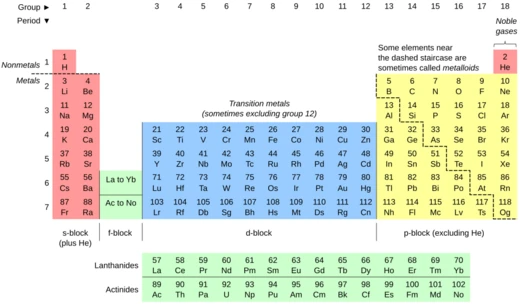
A steel-blue metal, vanadium is both ductile and of average hardness, showing good resistance to corrosion and stability when exposed to alkalis, sulfuric acid, and hydrochloric acid.[1][2]
Quick Facts
- Atomic number
- 23
- Discovered by
- Andrés Manuel del Río (1801)
- Named by
- Nils Gabriel Sefström (1830)
- Isolated by
- Henry Enfield Roscoe (1867)
Facts from the source article.
Key facts and history
Del Río named the element panchromium because its salts exhibit a wide variety of colors, then renamed it erythronium because most salts turned red upon heating.[3] Mina Ragra once accounted for nearly 50% of the world's vanadium production in the early twentieth century.[4] French chemist Hippolyte Victor Collet-Descotils, in 1805, wrongly stated that del Río's element was impure chromium, leading del Río to withdraw his discovery claim.[3][5] The Ford Model T's steel alloy chassis, inspired by French race cars, marked the first large-scale industrial application of vanadium.[6]
What the research sources say
The U.S. Bureau of Mines report "Vanadium: A Materials Survey" covers the history, geology, properties, production methods, and uses of vanadium.[7] The LabXchange article describes vanadium as a versatile silver element in Group 5 of the periodic table with applications in catalysts, vanadium steel, and superconductive magnets.[8] Hijmans' account notes that vanadium and chromium are very similar and could only be separated by the fact that chromium compounds can be heated to a red vapor whereas vanadium compounds lose their red color when heated.[9] Sefström warned vanadium could easily be confused with chromium but showed through comparative tests how his new element was unique.[9]
Wise's report on Mina Ragra notes that vanadium products are sold as ferrovanadium and vanadium pentoxide.[4] The Holleman textbook describes vanadium's chemistry as noteworthy for the accessibility of the four adjacent oxidation states 2–5.[10][11]
References
- Wikipedia, "Vanadium" (CC BY-SA 4.0), which cites: George F. Vander Voort, "Metallography, principles and practice", ASM International, 1984, p. 137–; Cardarelli, "Materials handbook: a concise desktop reference", Springer, 2008, p. 338– (original not read by us) en.wikipedia.org
- Wikipedia, "Vanadium" (CC BY-SA 4.0), which cites: Holleman, "Lehrbuch der Anorganischen Chemie", Walter de Gruyter, 1985, p. 1071–1075; Klinser, "Redox processes in sodium vanadium phosphate cathodes – insights from operando magnetometry", Physical Chemistry Chemical Physics, 2019, p. 20151–20155 (we also read that source) en.wikipedia.org
- Wikipedia, "Vanadium" (CC BY-SA 4.0), which cites: "The Vivid Element Vanadium", LabXchange, 2023-11-29; Uribe Salas, "Historia del vanadio, 1801-1831. Disputa por la autoria del descubrimiento.", Asclepio, 2020-11-17, p. 5 (we also read that source) en.wikipedia.org
- Wise, "Remarkable folded dacitic dikes at Mina Ragra, Peru", May 2018. facts only, no text reused. southamericatotheworld.com
- Wikipedia, "Vanadium" (CC BY-SA 4.0), which cites: Cintas, "The Road to Chemical Names and Eponyms: Discovery, Priority, and Credit", Angewandte Chemie International Edition, 12 November 2004, p. 5888–5894 (original not read by us) en.wikipedia.org
- Wikipedia, "Vanadium" (CC BY-SA 4.0), which cites: Betz, "Managing Technological Innovation: Competitive Advantage from Change", Wiley-IEEE, 2003, p. 158–159 (we also read that source) en.wikipedia.org
- Busch, "Vanadium: A Materials Survey", U.S. Department of the Interior, Bureau of Mines, 1961, p. 65. facts only, no text reused. digital.library.unt.edu
- "The Vivid Element Vanadium", LabXchange, 2023-11-29. facts only, no text reused. labxchange.org
- Hijmans, "Andrés Manuel del Rio and the Two Discoveries of Vanadium", Jargonium, 2020-09-21. facts only, no text reused. jargonium.com
- Wikipedia, "Vanadium" (CC BY-SA 4.0), which cites: Holleman, "Lehrbuch der Anorganischen Chemie", Walter de Gruyter, 1985, p. 1071–1075 (we also read that source) en.wikipedia.org
- Open Library record, ISBN 9783110075113 ("Lehrbuch Der Anorganischen Chemie, 91-100"). CC0 (metadata); book content not read. openlibrary.org
Each numbered sentence above was checked against the source it cites before publication. Sentences citing Wikipedia adapt text from the English Wikipedia article Vanadium (contributors), used under CC BY-SA 4.0; this entry is available under the same licence. Other sources were used for facts only; no text or images are copied from them.
Also in the Codexery
More in Periodic Table & Elements
Sources
Compiled from Wikipedia and the sources listed below. Text from Wikipedia is available under CC BY-SA 4.0; this entry is adapted from it.
- Wikipedia: Vanadium (CC BY-SA 4.0).
- Word definitions: the , each quoted from its Wikipedia article.
Spotted an error? Know more?
Reader corrections go straight into our review queue. Suggest an edit · How this site is sourced