Ytterbium
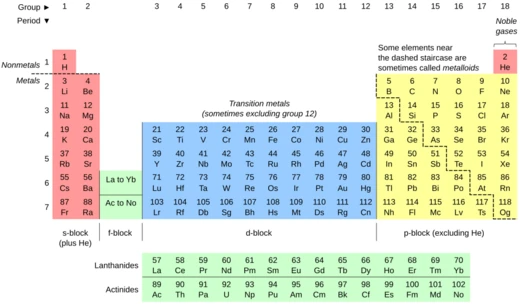
A soft lanthanide metal with a closed-shell electron configuration.
Last updated
It is paramagnetic at temperatures above 1.0 kelvin, unlike most other rare-earth metals.[1] The element has the smallest liquid range of all metals, with a melting point of 824 °C and a boiling point of 1196 °C.[1]
Quick Facts
- Atomic number
- 70
- Discovered by
- Jean Charles Galissard de Marignac
- Year of discovery
- 1878
- Series
- lanthanide
- Melting point
- 824 °C
- Boiling point
- 1196 °C
Facts from the source article.
Key facts and history
Swiss chemist Jean Charles Galissard de Marignac discovered ytterbium in 1878 while examining samples of gadolinite.[2] Marignac named the new component ytterbia after the Swedish village of Ytterby.[2] The Commission on Atomic Mass settled the dispute in 1909 by granting priority to Urbain.[3] The first nearly pure ytterbium metal was produced in 1953 using ion-exchange processes.[4]
Marignac's ytterbia was separated into neoytterbia and lutecia in 1907 by French chemist Georges Urbain.[5] The element ytterbium was the substance later called neoytterbia, while lutetium was the substance later called lutecia.[5] Independently isolating these same elements from ytterbia around the same time, Austrian chemist Carl Auer von Welsbach gave them the names aldebaranium and cassiopeium.[5] Wilhelm Klemm and Heinrich Bommer are credited with the first production of metallic ytterbium, which occurred in 1936.[6]
Three allotropes of ytterbium exist, designated alpha, beta, and gamma; the temperatures at which they transform are −13 °C and 795 °C.[7] At room temperature, the beta allotrope is present, exhibiting a face-centered cubic crystal structure and a density of 6.966 g/cm³.[7]
What the research sources say
A 2013 NIST report states that a pair of experimental ytterbium atomic clocks set a new record for stability.[8] Each NIST ytterbium clock relies on about 10,000 atoms cooled to 10 microkelvin and trapped in an optical lattice.[8] A PTB report describes that the ytterbium ion clock achieves a relative measurement uncertainty of 7 ∙ 10⁻¹⁷.[9] The PTB report notes that the excited state of the ytterbium ion Yb⁺ has a lifetime of approximately six years.[9]
According to NIST, the stability of their ytterbium clocks' ticks is better than two parts in 1 quintillion, a performance roughly ten times superior to the best previously published results.[8]
References
- Wikipedia, "Ytterbium" (CC BY-SA 4.0), which cites: Jackson, M. (2000). "Magnetism of Rare Earth". The IRM quarterly 10(3): 1; Bucher, "New First-Order Phase Transition in High-Purity Ytterbium Metal", Physical Review B, 1970, p. 3911; Hammond, C. R., "The Elements, in Handbook of Chemistry and Physics", CRC press, 2000 (we also read that source) en.wikipedia.org
- Wikipedia, "Ytterbium" (CC BY-SA 4.0), which cites: Emsley, John, "Nature's building blocks: an A-Z guide to the elements", Oxford University Press, 2003, p. 492–494; Enghag, Per (2004). Encyclopedia of the elements: technical data, history, processing, applications. John Wiley & Sons, , p. 448.; Weeks, "The discovery of the elements", Journal of Chemical Education, 1956; Weeks, "The discovery of the elements. XVI. The rare earth elements", Journal of Chemical Education, October 1932, p. 1751; "Ytterbium", Royal Society of Chemistry, 2020 (we also read that source) en.wikipedia.org
- Wikipedia, "Ytterbium" (CC BY-SA 4.0), which cites: Urbain, M.G., "Un nouvel élément, le lutécium, résultant du dédoublement de l'ytterbium de Marignac", Comptes rendus hebdomadaires des séances de l'Académie des Sciences, 1908, p. 759–762; Urbain, "Lutetium und Neoytterbium oder Cassiopeium und Aldebaranium – Erwiderung auf den Artikel des Herrn Auer v. Welsbach", Monatshefte für Chemie, 1909, p. 1; von Welsbach, "Die Zerlegung des Ytterbiums in seine Elemente", Monatshefte für Chemie, 1908, p. 181–225; Urbain, M.G., "Un nouvel élément, le lutécium, résultant du dédoublement de l'ytterbium de en.wikipedia.org
- Wikipedia, "Ytterbium" (CC BY-SA 4.0), which cites: Emsley, John, "Nature's building blocks: an A-Z guide to the elements", Oxford University Press, 2003, p. 492–494; Hedrick, James B., "Rare-Earth Metals", USGS (we also read that source) en.wikipedia.org
- Wikipedia, "Ytterbium" (CC BY-SA 4.0), which cites: Emsley, John, "Nature's building blocks: an A-Z guide to the elements", Oxford University Press, 2003, p. 492–494; "of Rare Earth Elements by Charles James", National Historic Chemical Landmarks (we also read that source) en.wikipedia.org
- Wikipedia, "Ytterbium" (CC BY-SA 4.0), which cites: Klemm, "Zur Kenntnis der Metalle der seltenen Erden.", Zeitschrift für anorganische und allgemeine Chemie, 1937, p. 138–171 (original not read by us) en.wikipedia.org
- Wikipedia, "Ytterbium" (CC BY-SA 4.0), which cites: Hammond, C. R., "The Elements, in Handbook of Chemistry and Physics", CRC press, 2000; Bucher, "New First-Order Phase Transition in High-Purity Ytterbium Metal", Physical Review B, 1970, p. 3911 (we also read that source) en.wikipedia.org
- "Ytterbium Atomic Clocks Set Record for Stability", nist.gov, 2013-08-22. facts only, no text reused. nist.gov
- Peik, "New 'pendulum' for the ytterbium clock", ptb.de, 2012-03-01. facts only, no text reused. ptb.de
Each numbered sentence above was checked against the source it cites before publication. Sentences citing Wikipedia adapt text from the English Wikipedia article Ytterbium (contributors), used under CC BY-SA 4.0; this entry is available under the same licence. Other sources were used for facts only; no text or images are copied from them.
Also in the Codexery
More in Periodic Table & Elements
Sources
Compiled from Wikipedia and the sources listed below. Text from Wikipedia is available under CC BY-SA 4.0; this entry is adapted from it.
- Wikipedia: Ytterbium (CC BY-SA 4.0).
- Word definitions: the , each quoted from its Wikipedia article.
Spotted an error? Know more?
Reader corrections go straight into our review queue. Suggest an edit · How this site is sourced