Gold
A noble metal prized for beauty, rarity, and resistance to corrosion.
Last updated
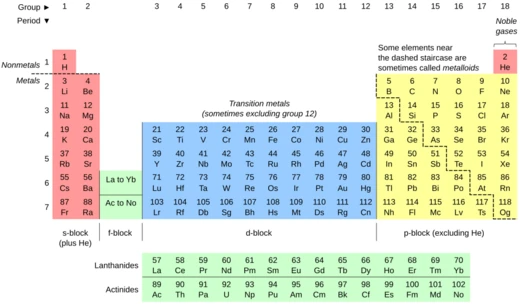
Gold is a chemical element with the symbol Au and atomic number 79. It is a bright, metallic-yellow, dense, soft, malleable, and ductile metal that is one of the least reactive chemical elements. As a precious metal, gold has been used for coinage, jewelry, and art throughout recorded history, and its resistance to corrosion makes it valuable in industrial applications.
Quick Facts
- Atomic number
- 79
- Group
- 11
- Period
- 6
Facts from the source article.
Chemistry
Gold forms many compounds despite being the most noble of the noble metals. Its oxidation states range from −1 to +5, with Au(I) and Au(III) being dominant. Au(I), or aurous, is common with soft ligands such as thioethers and organophosphines, typically forming linear compounds; binary gold halides like AuCl exist as zigzag polymeric chains. Au(III), or auric, is illustrated by gold(III) chloride, where gold centers are square planar.
Gold does not react with oxygen at any temperature and resists ozone up to 100 °C. It reacts with fluorine at dull-red heat to form gold(III) fluoride, with chlorine at 180 °C to form gold(III) chloride, and with bromine at 140 °C to yield a mixture of gold(III) bromide and gold(I) bromide. Reaction with iodine is slow, producing gold(I) iodide. Gold does not react directly with sulfur, but gold(III) sulfide can be made by passing hydrogen sulfide through a dilute gold(III) chloride solution.
Phosphorus reacts with gold at elevated temperatures to form gold phosphide (Au₂P₃). Gold dissolves in mercury at room temperature to form an amalgam and alloys with many other metals at higher temperatures.
Production
According to the United States Geological Survey in 2016, about 5,726,000,000 troy ounces of gold had been accounted for, with 85% remaining in active use. Since the 1880s, South Africa has supplied a large proportion of the world's gold; about 22% of accounted gold is from South Africa, and production in 1970 accounted for 79% of the world supply, about 1,480 tonnes. In 2007, China overtook South Africa as the world's largest gold producer, and in 2023 China led, followed by Russia, Australia, Canada, the United States, and Ghana.
The Witwatersrand Gold Rush led to the founding of Johannesburg and the discovery of some of the largest natural gold deposits, confined to the northern and northwestern edges of the Witwatersrand basin. These deposits require mining at depths of nearly 4,000 m, making the Savuka and TauTona mines the deepest on Earth. The Second Boer War of 1899–1901 was at least partly over miners' rights and possession of gold wealth in South Africa. Up to one-quarter of yearly global gold production originates from artisanal or small-scale mining.
Monetary use
Gold has been widely used as money for indirect exchange and to store wealth. The first known gold coins were struck in Lydia, Asia Minor, around 600 BC. European economies re-established gold coinage during the thirteenth and fourteenth centuries. In the 19th century, bills and gold certificates added to the circulating stock of gold standard money.
After the war, Britain and other victorious countries gradually restored gold-convertibility, but international gold flows via bills of exchange remained embargoed. After World War II, gold was replaced by the Bretton Woods system of nominally convertible currencies with fixed exchange rates. The United States' refusal to redeem dollars for gold in 1971 led to the abandonment of gold standards; fiat currency now fills most monetary roles. Switzerland ended its gold tie by referendum in 1999.
Central banks still keep some liquid reserves as gold, and the London Bullion Market Association clears transactions denominated in gold. The world's gold reserves and trading market are now a small fraction of all markets, with floating prices for gold and gold futures.
Other applications
Pure gold is often alloyed for jewelry to alter hardness, ductility, melting point, and color. Lower karat alloys contain higher percentages of copper, silver, or other base metals. Nickel release from white gold is controlled by legislation in Europe. Palladium-gold alloys are more expensive than those using nickel.
The Japanese craft of Mokume-gane uses color contrasts between laminated colored gold alloys for decorative effects. Gold solder is used for joining jewelry components, with formulas matching the fineness of the work and available in Easy, Medium, and Hard melting-point ranges. Gold can be made into thread for embroidery. Only 10% of new gold consumption goes to industry, but the chief industrial use is in corrosion-free electrical connectors in computers and other devices.
A typical cell phone may contain 50 mg of gold, and with nearly one billion cell phones produced each year, this application alone accounts for about US$2.82 billion in gold.
Did You Know?
- Gold is the most malleable metal; a single gram can be beaten into a sheet of 1 m².
- Gold has a density of 19.3 g/cm³, almost identical to tungsten at 19.25 g/cm³, which has been used in counterfeiting gold bars.
- Gold in the universe is produced through supernova nucleosynthesis, neutron star collisions, and magnetar flares.
More in Periodic Table & Elements
Sources
Compiled from Wikipedia and the sources listed below. Text from Wikipedia is available under CC BY-SA 4.0; this entry is adapted from it.
- Wikipedia: Gold (CC BY-SA 4.0).
- Word definitions: the , each quoted from its Wikipedia article.
Spotted an error? Know more?
Reader corrections go straight into our review queue. Suggest an edit · How this site is sourced