Dysprosium
A rare-earth element essential for high-performance magnets.
Last updated
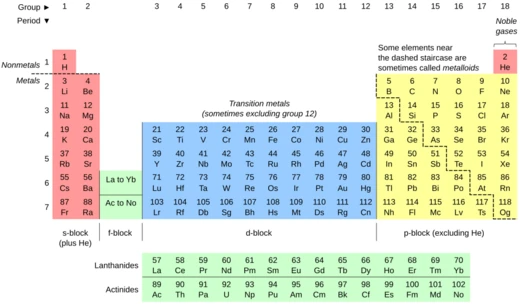
Dysprosium is a chemical element with the symbol Dy and atomic number 66, belonging to the lanthanide series of rare-earth elements. It has a metallic silver luster and is never found free in nature, occurring instead in minerals such as xenotime. The element is critical for modern clean energy technologies, particularly in neodymium-iron-boron magnets used in electric vehicle motors and wind turbines.
Quick Facts
- Atomic number
- 66
- Element category
- Rare-earth element (lanthanide)
- First identified by
- Paul Émile Lecoq de Boisbaudran
- Year of first identification
- 1886
Facts from the source article.
History
In 1886, French chemist Paul Émile Lecoq de Boisbaudran managed to extract dysprosium oxide from holmium oxide in Paris. He dissolved the oxide in acid and added ammonia to form a hydroxide, but it took him over thirty tries to succeed. The element’s name comes from the Greek word dysprositos, meaning “hard to get.” This discovery followed the 1878 finding that erbium ores contained oxides of holmium and thulium.
Pure dysprosium metal was not obtained until the early 1950s, when Frank Spedding at Iowa State University developed ion exchange techniques. Some have claimed that dysprosium, used in permanent magnets for wind turbines, will become a key focus of geopolitical rivalry in a renewable-energy future. However, critics note that most wind turbines do not rely on permanent magnets, and they argue that economic incentives will drive increased production.
In 2011, scientists created the first Bose-Einstein condensate using dysprosium atoms. In 2021, they turned dysprosium into a two-dimensional supersolid quantum gas.
Characteristics
Dysprosium is a soft metal with a bright silver luster that can be machined without sparking if overheating is avoided. Its physical properties are significantly affected by even small amounts of impurities. Along with holmium, dysprosium exhibits the highest magnetic strengths among the elements, especially at low temperatures. Below its Curie temperature of 90.5 K, it undergoes a first-order phase transition from an orthorhombic crystal structure to hexagonal close-packed (hcp) and displays simple ferromagnetic ordering.
It then enters a helical antiferromagnetic state where atomic magnetic moments in each basal plane layer are parallel and oriented at a fixed angle to adjacent layers. This unusual antiferromagnetism transforms into a disordered paramagnetic state at 179 K, and the metal shifts from hcp to body-centered cubic at 1654 K. Dysprosium retains its luster in dry air but tarnishes slowly in moist air, and it burns readily to form dysprosium(III) oxide. It is quite electropositive, reacting slowly with cold water and quickly with hot water to produce dysprosium hydroxide, which decomposes at elevated temperatures to DyO(OH) and then to dysprosium(III) oxide.
The metal reacts vigorously with all halogens above 200 °C and dissolves readily in dilute sulfuric acid to yield yellow Dy(III) ions, forming paramagnetic dysprosium(III) sulfate. Dysprosium halides tend to be yellow, while dysprosium oxide, or dysprosia, is a white powder that is highly magnetic, more so than iron oxide. At high temperatures, dysprosium combines with various non-metals to form binary compounds with oxidation states +3 and sometimes +2.
Production
Dysprosium is obtained primarily from monazite sand, a mixture of various phosphates, and is a by-product in the commercial extraction of yttrium. Most unwanted metals are removed magnetically or by flotation, and dysprosium is separated from other rare earth metals through an ion exchange displacement process. The resulting dysprosium ions react with fluorine or chlorine to form dysprosium fluoride or dysprosium chloride, which are then reduced using calcium or lithium metals in a tantalum crucible fired in a helium atmosphere.
The halide compounds and molten dysprosium separate due to density differences, and the dysprosium is cut away from impurities upon cooling. In 2021, about 3100 tonnes of dysprosium were produced worldwide, with 40% from China, 31% from Myanmar, and 20% from Australia. Prices have fluctuated, from $7 per pound in 2003 to $130 per pound in late 2010, then $1,400/kg in 2011, falling to $240/kg in 2015 largely due to illegal production in China, and reaching around US$203/kg as of 2025.
Most dysprosium currently comes from ion-adsorption clay ores in southern China, and as of 2018, the Browns Range Project pilot plant in Western Australia was producing 50 tonnes per annum. The United States Department of Energy considers dysprosium the single most critical element for emerging clean energy technologies due to its wide range of uses and lack of suitable replacements, with even conservative projections predicting a shortfall before 2015. As of 2015, a nascent rare earth extraction industry exists in Australia.
Applications
Dysprosium is used in laser materials and commercial lighting, often with vanadium and other elements. Due to its high thermal-neutron absorption cross-section, dysprosium-oxide–nickel cermets serve in neutron-absorbing control rods in nuclear reactors. Dysprosium–cadmium chalcogenides provide sources of infrared radiation for studying chemical reactions. Its compounds' high magnetic susceptibility makes them useful in data-storage applications like hard disks.
Demand for dysprosium is increasing for permanent magnets in electric-car motors and wind-turbine generators. In neodymium–iron–boron magnets, up to 6% of neodymium can be substituted with dysprosium to raise coercivity, requiring up to 100 grams per electric car; based on Toyota's projected 2 million units per year, this would quickly exhaust supply. Dysprosium substitution also improves corrosion resistance. Dysprosium is a component of Terfenol-D, along with iron and terbium, which has the highest room-temperature magnetostriction of any known material, used in transducers, wide-band mechanical resonators, and high-precision liquid-fuel injectors.
In dosimeters for measuring ionizing radiation, crystals of calcium sulfate or calcium fluoride doped with dysprosium become excited and luminescent upon exposure, allowing measurement of exposure. Nanofibers of dysprosium compounds have high strength and large surface area, useful for reinforcing materials and as catalysts; dysprosium oxide fluoride fibers produced under high temperature and pressure survive over 100 hours in various aqueous solutions above 400 °C without redissolving or aggregating.
Dysprosium has also been used to create a two-dimensional supersolid in a laboratory, expected to exhibit superfluidity.
Did You Know?
- Dysprosium powder may present an explosion hazard when mixed with air and an ignition source is present.
- Soluble dysprosium salts are mildly toxic; ingestion of 500 grams or more could be fatal to a human.
Also in the Codexery
More in Periodic Table & Elements
Sources
Compiled from Wikipedia and the sources listed below. Text from Wikipedia is available under CC BY-SA 4.0; this entry is adapted from it.
- Wikipedia: Dysprosium (CC BY-SA 4.0).
- Word definitions: the , each quoted from its Wikipedia article.
Spotted an error? Know more?
Reader corrections go straight into our review queue. Suggest an edit · How this site is sourced