Dubnium
Synthetic element with shared discovery credit.
Last updated
Dubnium is a synthetic chemical element with the symbol Db and atomic number 105. It is highly radioactive and does not occur naturally on Earth, being produced artificially. The most stable known isotope, dubnium-268, has a half-life of about 16 hours, which severely limits the scope of extended research on the element.
The first claimed discovery of dubnium came from the Soviet Joint Institute for Nuclear Research (JINR) in 1968, followed by a separate claim from the American Lawrence Berkeley Laboratory in 1970. Both teams proposed their own names for the element and used them without formal approval. The dispute over priority was resolved in 1993 by the Transfermium Working Group, formed by the International Union of Pure and Applied Chemistry and the International Union of Pure and Applied Physics, which officially shared credit for the discovery between both teams. The element was formally named dubnium in 1997, after the town of Dubna, the site of the JINR.
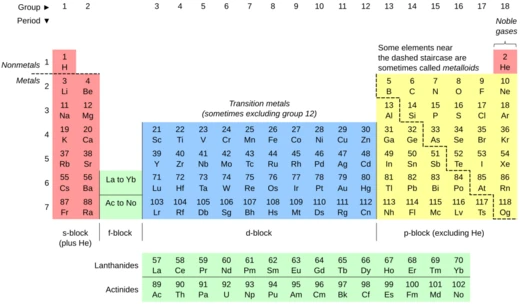
Theoretical research places dubnium in group 5 of the periodic table, within the 6d series of transition metals, positioning it below vanadium, niobium, and tantalum. It is expected to share most properties with these elements, including a dominant +5 oxidation state and a similar valence electron configuration, though some anomalies arise from relativistic effects. Limited experimental investigation of dubnium’s chemistry has confirmed these predictions.
Lore & Background
Dubnium is a synthetic, highly radioactive element that does not occur naturally. Its most stable known isotope has a half-life of approximately sixteen hours, which severely restricts experimental study. The element is produced artificially through nuclear reactions, such as bombarding americium with neon ions or californium with nitrogen ions. As a member of group 5 in the transition metals, it sits below vanadium, niobium, and tantalum in the periodic table.
Theoretical work predicts that dubnium should share many chemical properties with these lighter homologues, including a dominant +5 oxidation state and a similar valence electron configuration, though relativistic effects may cause some deviations. Limited chemical investigations have confirmed this general behavior. The element was first claimed by Soviet researchers at the Joint Institute for Nuclear Research in Dubna, and later by American scientists at the Lawrence Berkeley Laboratory. After a long dispute, official credit was shared between both teams, and the element was formally named after the town of Dubna, site of the Soviet institute.
Reader's Guide
Dubnium is significant as a synthetic element that extends the periodic table into the transactinide series, confirming theoretical predictions about the properties of group 5 elements. Its discovery was a key episode in the Transfermium Wars, a rivalry between American and Soviet scientists over the synthesis of heavy elements.
The resolution of the naming dispute through the Transfermium Working Group established a precedent for international cooperation in element discovery. Dubnium's chemistry, though limited by its short half-life, has been investigated and confirms its placement as a member of group 5, with a dominant +5 oxidation state and properties similar to niobium and tantalum, though with some anomalies due to relativistic effects. The element's name honors the town of Dubna, site of the JINR, reflecting the shared credit between the Soviet and American teams.
More in Periodic Table & Elements
Sources
Compiled from Wikipedia and the sources listed below. Text from Wikipedia is available under CC BY-SA 4.0; this entry is adapted from it.
- Wikipedia: Dubnium (CC BY-SA 4.0).
- Word definitions: the Codexery glossary, each quoted from its Wikipedia article.
Spotted an error? Know more?
Reader corrections go straight into our review queue. Suggest an edit · How this site is sourced