Erbium
A rare-earth element used in fiber-optic amplifiers and medical lasers.
Last updated
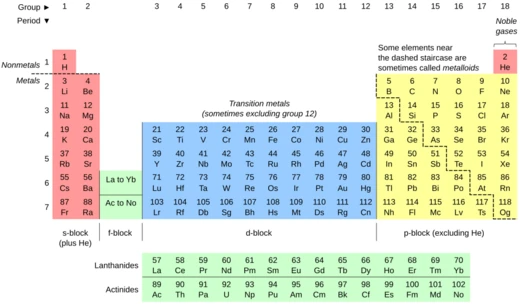
Erbium is a chemical element with the symbol Er and atomic number 68. It is a silvery-white solid metal that belongs to the lanthanide series of rare-earth elements. The element is named after the village of Ytterby in Sweden, where it was originally found in the gadolinite mine, and its pink-colored ions are essential for optical amplification in fiber-optic communications and various medical laser applications.
Quick Facts
- Atomic number
- 68
- Element category
- lanthanide, rare-earth element
- Discovered by
- Carl Gustaf Mosander
- Year of discovery
- 1843
- Named after
- Ytterby, Sweden
Facts from the source article.
Characteristics
Erbium is a trivalent, malleable, and soft metal that remains stable in air and oxidizes more slowly than some other rare-earth metals. Its salts are rose-colored, and the element exhibits sharp absorption spectra bands in visible light, ultraviolet, and near infrared. Erbium is ferromagnetic below 19 K, antiferromagnetic between 19 and 80 K, and paramagnetic above 80 K. It can form propeller-shaped atomic clusters with a distance of 0.35 nm between erbium atoms, which can be isolated by encapsulation into fullerene molecules.
The element is usually found in the +3 oxidation state, but can also occur in the 0, +1, and +2 states. Erbium metal retains its luster in dry air but tarnishes slowly in moist air; it burns readily to form erbium(III) oxide. It is electropositive, reacting slowly with cold water and quickly with hot water to form erbium hydroxide, and reacts with all halogens.
Compounds
Erbium(III) oxide, known as erbia, is the only known oxide of erbium and has a cubic structure resembling the bixbyite motif. It is insoluble in water and slightly soluble in heated mineral acids, and is used as a phosphor activator and to produce infrared-absorbing glass. Erbium(III) fluoride is a pinkish powder used to make infrared light-transmitting materials and up-converting luminescent materials, and serves as an intermediate in producing erbium metal.
Erbium(III) chloride is a violet compound that forms monoclinic crystals with the point group C2/m; its hexahydrate also forms monoclinic crystals with the point group P2/n. Erbium(III) bromide is a violet solid used in water treatment, chemical analysis, and crystal growth. Erbium(III) iodide is a slightly pink compound insoluble in water, prepared by direct reaction of erbium with iodine. Organoerbium compounds resemble those of other lanthanides, lacking π backbonding, and are mostly restricted to ionic cyclopentadienides and σ-bonded simple alkyls and aryls.
Occurrence
Erbium's concentration in the Earth's crust is about 2.8 mg/kg and in seawater 0.9 ng/L. It is never found as a free element in nature but occurs in monazite and bastnäsite ores. The principal commercial sources are the minerals xenotime and euxenite, as well as ion adsorption clays from southern China, making China the main global supplier. In high-yttrium ore concentrates, yttrium accounts for about two-thirds of the total weight, with erbia making up about 4–5%. When the concentrate is dissolved in acid, the erbium ion imparts a distinct pink color to the solution, similar to what early workers observed in extracts from gadolinite minerals.
Applications
Erbium-doped optical silica-glass fibers serve as the active element in erbium-doped fiber amplifiers (EDFAs) for optical communications, and the same fibers can create fiber lasers. Co-doping with aluminum or phosphorus prevents clustering of erbium ions, while co-doping with ytterbium is used in high-power fiber lasers.
When added to vanadium as an alloy, erbium lowers hardness and improves workability. An erbium-nickel alloy has high specific heat capacity at liquid-helium temperatures and is used in cryocoolers. Erbium oxide is used as a colorant for glass, cubic zirconia, and porcelain, and erbium is employed in neutron-absorbing control rods and as a burnable poison in nuclear fuel design.
Did You Know?
- Mosander named the oxides 'erbia' and 'terbia' after the village of Ytterby, and later work revealed that the original yttria contained five additional elements: ytterbium, scandium, thulium, holmium, and gadolinium.
- Humans consume about 1 milligram of erbium per year on average, with the highest concentration found in bones, and erbium salts can stimulate metabolism.
Also in the Codexery
More in Periodic Table & Elements
Sources
Compiled from Wikipedia and the sources listed below. Text from Wikipedia is available under CC BY-SA 4.0; this entry is adapted from it.
- Wikipedia: Erbium (CC BY-SA 4.0).
- Word definitions: the , each quoted from its Wikipedia article.
Spotted an error? Know more?
Reader corrections go straight into our review queue. Suggest an edit · How this site is sourced