Boron
A metalloid essential for plants and used in high-strength materials.
Last updated
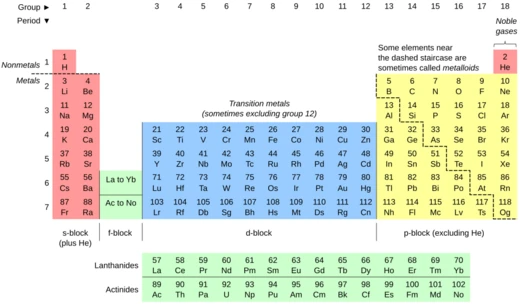
Boron is a chemical element with symbol B and atomic number 5. It exists as a brittle, dark, lustrous metalloid in crystalline form or as a brown powder when amorphous. As the lightest element of the boron group, it has three valence electrons and forms many compounds, including boric acid, borax, and ultra-hard crystals like boron carbide.
Quick Facts
- Atomic number
- 5
- Group
- boron group
- Valence electrons
- 3
- Mohs hardness (crystalline)
- 9.3
Facts from the source article.
Chemical compounds
Boron can form stable covalently bonded molecular networks, and even amorphous boron contains boron icosahedra bonded randomly. Its compounds often resemble those of silicon due to a diagonal relationship, while aluminium, its heavier congener, behaves differently. In most familiar compounds, boron has a formal oxidation state of III, including oxides, sulfides, nitrides, halides, and organic derivatives. Boron compounds frequently violate the octet rule.
The element forms a complete series of trihalides (BX3 with X = F, Cl, Br, I). Boron trifluoride is produced from borate salts and hydrogen fluoride, while the trichloride comes from carbothermic reduction of boron oxides with chlorine. These trihalides have planar trigonal structures and are Lewis acidic; for example, BF3 combines with fluoride sources to form the tetrafluoroborate anion. Boron halides with B-B bonding also exist, such as B2F4 and B4Cl4, along with larger polyhedral boron(I) halides like B7Br7, B8Cl8, and B9I9.
Applications
Nearly all boron ore is refined into boric acid and sodium tetraborate pentahydrate. In the United States, 70% of boron goes into glass and ceramics. Globally, about 46% of end-use is in glass fiber for insulating and structural fiberglasses, especially in Asia. Another 10% is used for borosilicate glass in high-strength glassware, and about 15% goes into boron ceramics.
Agriculture consumes 11%, and bleaches and detergents about 6%. Fiberglasses sometimes contain borosilicate, borax, or boron oxide to increase strength; E-glass is an alumino-borosilicate glass, while C-glass has high boron oxide content for insulation. D-glass is a borosilicate glass with a low dielectric constant. Boron-containing fiberglasses consume over half of global boron production.
Borosilicate glass, typically 12–15% B2O3, has a low coefficient of thermal expansion, giving good thermal shock resistance; brands include Duran and Pyrex. Boron fibers, produced by chemical vapor deposition on a tungsten filament, are used in advanced aerospace composites and some sporting goods.
Research
Magnesium diboride (MgB2) is a superconductor with a transition temperature of 39 K. MgB2 wires, made via the powder-in-tube process, are used in superconducting magnets; a CERN project has produced test cables able to carry 20,000 amperes for high-current applications. Boron-10, due to its high neutron cross-section, controls fission in nuclear reactors. Industrial enrichment uses fractionated vacuum distillation of the dimethyl ether adduct of boron trifluoride or column chromatography of borates.
In spacecraft, cosmic radiation produces secondary neutrons that are captured by 10B in semiconductors, generating decay products that can cause data loss. One countermeasure uses depleted boron, enriched in 11B, which is largely immune to radiation damage. Depleted boron is a byproduct of the nuclear industry. The 11B isotope is a candidate fuel for aneutronic fusion: when struck by a 500 keV proton, it produces three alpha particles and 8.7 MeV of energy, without penetrating neutron radiation.
The 10B isotope captures thermal neutrons; the nuclear industry enriches natural boron to nearly pure 10B, leaving depleted boron nearly pure 11B.
Biological role
Boron is an essential plant nutrient, primarily needed for cell wall integrity. Soil concentrations above 1.0 ppm cause leaf necrosis and poor growth; levels as low as 0.8 ppm produce symptoms in sensitive plants. Nearly all plants show some toxicity symptoms above 1.8 ppm, and above 2.0 ppm few plants perform well. Some boron-containing antibiotics exist in nature, such as boromycin, isolated from streptomyces in the 1960s, and tartrolons, discovered in the 1990s from Sorangium cellulosum.
In 2013, chemist Steve Benner suggested that conditions on Mars three billion years ago were more favorable for RNA stability and boron-containing catalysts, proposing that primitive life may have formed on Mars before migrating to Earth. Boron may have essential roles in animals, including humans, but its exact physiological role is poorly understood. Boron deficiency has been clearly established only in livestock; in humans, it may affect bone mineral density, though more research is needed.
Boron is not classified as an essential human nutrient; the U.S. Food and Nutrition Board found insufficient data for a Recommended Dietary Allowance, and the FDA has not established a daily value. Low boron levels may increase risks of osteoporosis, poor immune function, and cognitive decline, while high levels are associated with cell damage and toxicity.
Did You Know?
- The word boron was coined from borax, by analogy with carbon.
- Borax first saw use as a glaze in China around 300 AD.
- The exotic isotope 17B exhibits a nuclear halo, with a radius larger than predicted by the liquid drop model.
More in Periodic Table & Elements
Sources
Compiled from Wikipedia and the sources listed below. Text from Wikipedia is available under CC BY-SA 4.0; this entry is adapted from it.
- Wikipedia: Boron (CC BY-SA 4.0).
- Word definitions: the , each quoted from its Wikipedia article.
Spotted an error? Know more?
Reader corrections go straight into our review queue. Suggest an edit · How this site is sourced