Cadmium
A toxic metal used in batteries and nuclear control rods.
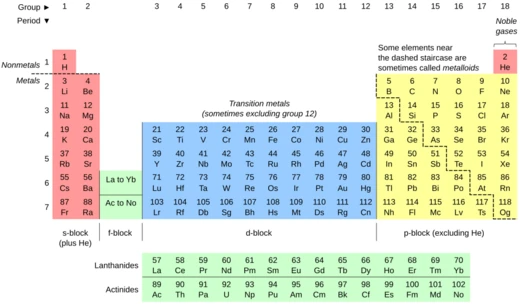
Cadmium is a chemical element with the symbol Cd and atomic number 48. This soft, silvery-white metal is chemically similar to zinc and mercury, and it is primarily obtained as a byproduct of zinc production. Its use has declined due to toxicity, though it remains important in nickel–cadmium batteries and as a neutron poison in nuclear reactor control rods.
Quick Facts
- Atomic number
- 48
- Group
- 12
- Discovery
- 1817 by Friedrich Stromeyer and Karl Samuel Leberecht Hermann
- Abundance in earth's crust
- 0.1 to 0.5 ppm
Facts from the source article.
Did You Know?
- The only cadmium mineral of importance, greenockite (CdS), is nearly always associated with sphalerite (ZnS).
- Metallic cadmium can be found in the Vilyuy River basin in Siberia.
- A cadmium-dependent carbonic anhydrase has been found in some marine diatoms living in low-zinc environments.
Characteristics
Cadmium is a soft, malleable, ductile, silvery-white divalent metal that resists corrosion and is often used as a protective plating. It is insoluble in water as a bulk metal and not flammable, though powdered cadmium can burn and release toxic fumes. While cadmium typically exhibits a +2 oxidation state, a +1 state can be produced by dissolving cadmium in a mixture of cadmium chloride and aluminium chloride, forming the Cd+ cation as cadmium(I) tetrachloroaluminate.
Cadmium burns in air to form brown amorphous cadmium oxide, whose crystalline form is dark red and changes color when heated. Hydrochloric, sulfuric, and nitric acids dissolve cadmium, producing cadmium chloride, cadmium sulfate, and cadmium nitrate respectively. The structures of many cadmium complexes with nucleobases, amino acids, and vitamins have been determined. Naturally occurring cadmium consists of eight isotopes, including two that are radioactive (113Cd and 116Cd) and three expected to decay but not measurably so in the laboratory.
Three isotopes—110Cd, 111Cd, and 112Cd—are stable. The most long-lived artificial isotope is 109Cd with a half-life of 461.3 days.
History
Cadmium was discovered in 1817 by Friedrich Stromeyer in Germany, who found it as an impurity in zinc carbonate (calamine). Karl Samuel Leberecht Hermann independently investigated discolored zinc oxide and identified the same impurity, initially suspected to be arsenic. The metal was named after the Latin word for calamine, because it was found in this zinc ore. Stromeyer isolated cadmium metal by roasting and reducing the sulfide.
The potential for cadmium yellow as a pigment was recognized in the 1840s, but early scarcity limited its use. The British Pharmaceutical Codex of 1907 listed cadmium iodide as a medication for enlarged joints, scrofulous glands, and chilblains. In 1907, the International Astronomical Union defined the international ångström in terms of a red cadmium spectral line, a definition adopted by the 7th General Conference on Weights and Measures in 1927.
Industrial-scale production began in the 1930s and 1940s, and by 1944, 62% of cadmium in the United States was used for corrosion-resistant plating on iron and steel.
Applications
In 2009, 86% of cadmium was used in batteries, predominantly in rechargeable nickel–cadmium cells, which have a nominal potential of 1.2 V. The European Union restricted cadmium in electronics to 0.01% in 2004 and further reduced the limit to 0.002% in 2006. Cadmium electroplating, consuming 6% of global production, is used in the aircraft industry to protect steel components, though it can cause hydrogen embrittlement in high-strength steels. Titanium embrittlement from cadmium-plated tool residues led to the banishment of such tools in the A-12/SR-71, U-2, and subsequent titanium-using aircraft programs.
Cadmium is used in nuclear reactor control rods as a neutron poison; the Westinghouse pressurized water reactor uses an alloy of 80% silver, 15% indium, and 5% cadmium. QLED TVs have begun incorporating cadmium, prompting efforts to reduce environmental impact. Cadmium oxide was used in black-and-white television phosphors and in color television cathode ray tubes, while cadmium sulfide serves as a photoconductive coating for photocopier drums.
Safety
Inhalation of fine cadmium dust or fumes is the most dangerous form of occupational exposure, potentially causing metal fume fever, chemical pneumonitis, pulmonary edema, and death. Cadmium is an environmental hazard, with human exposure primarily from fossil fuel combustion, phosphate fertilizers, iron and steel production, cement production, and waste incineration. Long-term exposure to cadmium in contaminated food and water has caused general population poisoning.
In Japan, mining operations contaminated the Jinzū River, leading to cadmium accumulation in rice and causing itai-itai disease and renal abnormalities in local agricultural communities, almost exclusively in post-menopausal women with low iron stores. Most researchers consider cadmium a major factor in itai-itai disease but not the sole cause. Cadmium is one of ten substances banned by the European Union's Restriction of Hazardous Substances directive, which regulates hazardous substances in electrical and electronic equipment with certain exemptions.
More in Periodic Table & Elements
Spotted an error? Know more?
Reader corrections go straight into our review queue. Suggest an edit · How this site is sourced