Holmium
Rare-earth element with the highest magnetic moment.
Last updated
Holmium is a chemical element with symbol Ho and atomic number 67, belonging to the lanthanide series of rare-earth elements. It is a relatively soft, silvery, corrosion-resistant metal that slowly forms a yellowish oxide coating in air. Holmium is notable for having the highest magnetic permeability and magnetic saturation of any element, making it essential for the strongest static magnets.
Quick Facts
- Atomic number
- 67
- Element category
- Lanthanide
- Discovered by
- Per Theodor Cleve
- Jacques-Louis Soret
- Marc Delafontaine
- Year of discovery
- 1878
- Named after
- Holmia, Latin name for Stockholm
Facts from the source article.
Properties
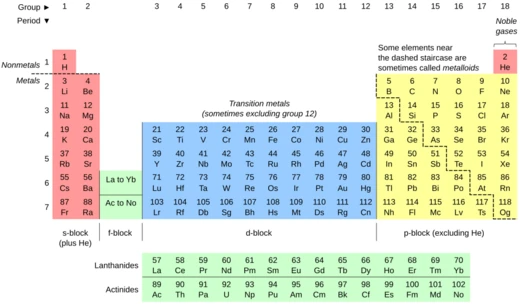
Holmium is the eleventh member of the lanthanide series, appearing in period 6 between dysprosium and erbium, above einsteinium. Its boiling point is 3000 K, making it the sixth most volatile lanthanide. At standard temperature and pressure, it normally assumes a hexagonally close-packed structure. Its 67 electrons are arranged as [Xe] 4f11 6s2.
Holmium is paramagnetic at standard conditions but becomes ferromagnetic below 19 K, possessing the highest magnetic moment of any naturally occurring element. The metal tarnishes slowly in air, forming a yellowish oxide layer, and burns readily to holmium(III) oxide. It is relatively soft, malleable, and corrosion-resistant in dry air, but oxidizes quickly in moist air or at higher temperatures. Holmium has an electronegativity of 1.23 on the Pauling scale and is generally trivalent.
It reacts slowly with cold water and quickly with hot water to form holmium(III) hydroxide, and reacts with all stable halogens. It dissolves in dilute sulfuric acid to yield yellow Ho(III) ions. Natural holmium consists solely of the isotope holmium-165, which is observationally stable but theoretically should undergo alpha decay with a very long half-life.
Compounds
Holmium(III) oxide is the only oxide of holmium and changes color depending on lighting: yellowish in daylight, orange-red under trichromatic light, and pink under a cold-cathode fluorescent lamp. Holmium(III) sulfide forms orange-yellow monoclinic crystals and can adopt cubic or orthorhombic structures under high pressure; it is obtained by reacting holmium(III) oxide with hydrogen sulfide at 1598 K. Holmium(III) selenide is antiferromagnetic below 6 K. All four trihalides are known: holmium(III) fluoride is a yellowish powder produced from holmium(III) oxide and ammonium fluoride; holmium(III) chloride has a layer structure and is prepared similarly with ammonium chloride; holmium(III) bromide and holmium(III) iodide can be made by direct reaction of the elements, and the iodide can also be obtained from holmium and mercury(II) iodide with subsequent mercury distillation.
Organoholmium compounds are mostly ionic cyclopentadienides and σ-bonded alkyls or aryls, some of which may be polymeric.
Occurrence and production
Holmium is not found as a free element but occurs in gadolinite, monazite, and other rare-earth minerals; no holmium-dominant mineral has been identified. Major mining areas include China, the United States, Brazil, India, Sri Lanka, and Australia, with estimated reserves of 400,000 tonnes. Annual production of holmium metal is about 10 tonnes. Holmium makes up 1.3 parts per million of the Earth's crust by mass, 1 part per million of soils, 400 parts per quadrillion of seawater, and 500 parts per trillion of the universe.
It is commercially extracted by ion exchange from monazite sand (0.05% holmium) and isolated by reducing its anhydrous chloride or fluoride with calcium. Holmium obeys the Oddo–Harkins rule, being less abundant than dysprosium and erbium but the most abundant odd-numbered heavy lanthanide. Principal current sources are ion-adsorption clays of southern China, where holmium constitutes about 1.5% of the rare-earth content. The price is about 1000 USD per kilogram.
Applications
Holmium oxide and its solutions are used as calibration standards for optical spectrophotometers due to sharp absorption peaks from 200 to 900 nm. The radioactive isotope holmium-166 is used in calibrating gamma-ray spectrometers. Holmium creates the strongest artificially generated magnetic fields when used as a magnetic pole piece in high-strength magnets and is employed in some permanent magnets. In nanotechnology, holmium acts as a sensitizer in sodium yttrium fluoride for tunable NIR-II emission, enabling deeper biological penetration than typical 980 nm and 808 nm lasers.
Holmium-doped yttrium iron garnet and yttrium lithium fluoride are used in solid-state lasers, optical isolators, and microwave equipment; holmium lasers emit at 2.1 micrometres for medical, dental, and fiber-optical applications, including prostate enucleation. Holmium serves as a burnable poison in nuclear reactors and as a colorant for cubic zirconia (pink) and glass (yellow-orange). In 2017, IBM stored one bit of data on a single holmium atom on magnesium oxide, suggesting potential for quantum computing.
Holmium is used in laser surgery for kidney stone removal and prostate treatment, and holmium-166 is applied in targeted cancer therapies and as an MRI contrast agent.
Did You Know?
- The pure oxide of holmium was isolated in 1911, and the metal was first isolated in 1939 by Heinrich Bommer.
- Humans typically consume about a milligram of holmium per year, and some vegetables contain 100 parts per trillion of holmium.
Also in the Codexery
More in Periodic Table & Elements
Sources
Compiled from Wikipedia and the sources listed below. Text from Wikipedia is available under CC BY-SA 4.0; this entry is adapted from it.
- Wikipedia: Holmium (CC BY-SA 4.0).
- Word definitions: the , each quoted from its Wikipedia article.
Spotted an error? Know more?
Reader corrections go straight into our review queue. Suggest an edit · How this site is sourced