Darmstadtium
The synthetic superheavy element named after a German city.
Last updated
Darmstadtium is a synthetic, highly radioactive element with the symbol Ds and atomic number 110. Its most stable known isotope, darmstadtium-281, decays with a half-life of about 14 seconds.
Chemical
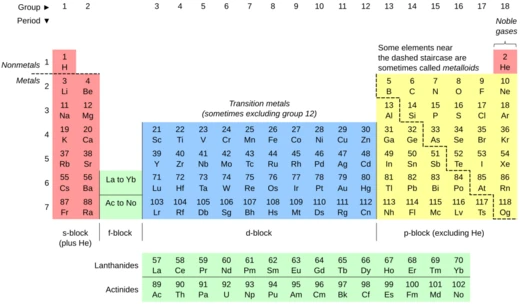
The element was first produced in November 1994 at the GSI Helmholtz Centre for Heavy Ion Research in Darmstadt, Germany, and was named after that city. In the periodic table, darmstadtium belongs to the d-block transactinide elements, occupying period 7 and group 10. Although no chemical experiments have yet confirmed its behavior, it is predicted to act as a heavier homologue of platinum and to share properties with nickel, palladium, and platinum.
Discovery
The discovery occurred on November 9, 1994, when a team led by Peter Armbruster, Gottfried Münzenberg, and Sigurd Hofmann bombarded a lead-208 target with nickel-62 nuclei, detecting a single atom of darmstadtium-269. Two more atoms were found later that month, though a reported fourth atom was retracted due to fabricated data. The same team also used nickel-64 ions to produce nine atoms of a heavier isotope. Earlier attempts at synthesis in 1986–87 at the Joint Institute for Nuclear Research in Dubna and in 1990 at GSI had failed.
In 1995, a Lawrence Berkeley National Laboratory experiment yielded inconclusive signs of a new isotope, as did a 1994 JINR attempt. Each proposing team suggested a name: the American team offered hahnium, the Russian team becquerelium, and the German team darmstadtium. The IUPAC/IUPAP Joint Working Party recognized the GSI team as discoverers in 2001, granting naming rights.
Stability and half-lives
The name darmstadtium was officially recommended by IUPAC on August 16, 2003. Darmstadtium has no stable isotopes; eleven radioactive isotopes with masses from 267 to 281 have been reported, though darmstadtium-267 remains unconfirmed. Most decay via alpha emission or spontaneous fission, with heavier isotopes generally being more stable. Theoretical models suggest that the undiscovered isotope darmstadtium-294, with a magic number of 184 neutrons, could have an alpha decay half-life of roughly 311 years.
Lore & Background
Darmstadtium was first discovered on November 9, 1994, at the Institute for Heavy Ion Research (Gesellschaft für Schwerionenforschung, GSI) in Darmstadt, Germany, by Peter Armbruster and Gottfried Münzenberg, under the direction of Sigurd Hofmann. The team bombarded a lead-208 target with accelerated nuclei of nickel-62 in a heavy ion accelerator and detected a single atom of the isotope darmstadtium-269. Two more atoms followed on November 12 and 17.
(Yet another was originally reported to have been found on November 11, but it turned out to be based on data fabricated by Victor Ninov, and was later retracted.) In the same series of experiments, the same team also carried out the reaction using heavier nickel-64 ions. During two runs, 9 atoms of darmstadtium-271 were convincingly detected by correlation with known daughter decay properties. Prior to this, there had been failed synthesis attempts in 1986–87 at the Joint Institute for Nuclear Research in Dubna (then in the Soviet Union) and in 1990 at the GSI.
A 1995 attempt at the Lawrence Berkeley National Laboratory resulted in signs suggesting but not pointing conclusively at the discovery of a new isotope formed in the bombardment of lead-208 with nickel-64, and a similarly inconclusive 1994 attempt at the JINR showed signs of darmstadtium-273 being produced from bismuth-209 and cobalt-59. Each team proposed its own name for element 110: the American team proposed hahnium after Otto Hahn, the Russian team proposed becquerelium after Henri Becquerel, and the German team proposed darmstadtium after Darmstadt. The IUPAC/IUPAP Joint Working Party (JWP) recognised the GSI team as discoverers in their 2001 report, giving them the right to suggest a name for the element.
Reader's Guide
Darmstadtium has no stable or naturally occurring isotopes. Several radioactive isotopes have been synthesized in the laboratory, either by fusing two atoms or by observing the decay of heavier elements. Eleven different isotopes of darmstadtium have been reported with atomic masses 267, 269–271, 273, 275–277, and 279–281, although darmstadtium-267 is unconfirmed.
Three darmstadtium isotopes, darmstadtium-270, darmstadtium-271, and darmstadtium-281, have known metastable states, although that of darmstadtium-281 is unconfirmed. Most of these decay predominantly through alpha decay, but some undergo spontaneous fission. All darmstadtium isotopes are extremely unstable and radioactive; in general, the heavier isotopes are more stable than the lighter. The most stable known darmstadtium isotope, 281Ds, is also the heaviest known darmstadtium isotope; it has a half-life of 14 seconds.
The isotope 279Ds has a half-life of 0.18 seconds, while the unconfirmed 281mDs has a half-life of 0.9 seconds. The remaining isotopes and metastable states have half-lives between 1 microsecond and 70 milliseconds. Some unknown darmstadtium isotopes may have longer half-lives, however.
Did You Know?
- Darmstadtium is predicted to be a very noble metal with a density around 26–27 g/cm³.
- The GSI team originally considered naming the element wixhausium after the suburb Wixhausen, but decided on darmstadtium.
More in Periodic Table & Elements
Sources
Compiled from Wikipedia and the sources listed below. Text from Wikipedia is available under CC BY-SA 4.0; this entry is adapted from it.
- Wikipedia: Darmstadtium (CC BY-SA 4.0).
- Word definitions: the Codexery glossary, each quoted from its Wikipedia article.
Spotted an error? Know more?
Reader corrections go straight into our review queue. Suggest an edit · How this site is sourced