Argon
A noble gas that is inert, abundant, and widely used industrially.
Last updated
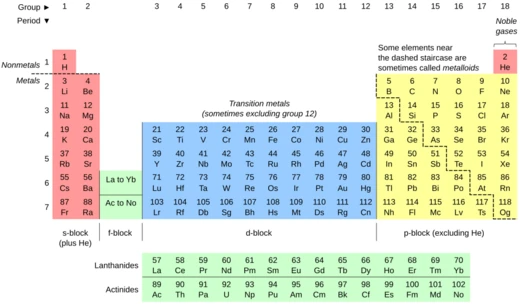
Argon is a chemical element with symbol Ar and atomic number 18, belonging to group 18 of the periodic table as a noble gas. It is the third most abundant gas in Earth's atmosphere, comprising 0.934% by volume, and is the most abundant noble gas in Earth's crust. Its name derives from the Ancient Greek word for 'lazy' or 'inactive', reflecting its extreme chemical stability.
Quick Facts
- Atomic number
- 18
- Group
- 18 (noble gas)
- Atmospheric abundance
- 0.934% by volume
- Discovery
- 1894 by Lord Rayleigh and Sir William Ramsay
- Name origin
- Ancient Greek ἀργόν meaning 'lazy' or 'inactive'
Facts from the source article.
History
The name argon comes from an ancient Greek word meaning "lazy" or "inactive," chosen because this element is chemically unreactive. It was the first noble gas discovered, and this property impressed those who named it. Henry Cavendish had already suspected in 1785 that an unreactive gas existed in air. Argon was first isolated from air in 1894 by Lord Rayleigh and Sir William Ramsay at University College London.
They removed oxygen, carbon dioxide, water, and nitrogen from a sample of clean air by repeating an experiment Cavendish had done. They placed a mixture of air and extra oxygen in a test-tube upside down over a dilute alkali solution, then sent an electric current through wires sealed in U-shaped glass tubes. The alkali absorbed the nitrogen oxides and carbon dioxide created by the electric arc. They kept the arc running until the gas volume stopped shrinking and nitrogen spectral lines vanished.
The leftover oxygen was removed with alkaline pyrogallate, leaving a gas that seemed unreactive, which they named argon. Before isolating it, they found that nitrogen from chemical compounds was 0.5% lighter than nitrogen from air, a small difference that held their attention for months. They concluded another gas was mixed with the nitrogen. Argon was also encountered in 1882 by H. F. Newall and W. N. Hartley, who each saw new lines in air's emission spectrum that did not match any known element.
Until 1957, argon's symbol was "A," but it was changed to "Ar" after the International Union of Pure and Applied Chemistry released its nomenclature rules that year.
Isotopes
The main isotopes of argon found on Earth are argon-40 (99.6%), argon-38 (0.34%), and argon-36 (0.06%). Naturally occurring potassium-40, with a half-life of 1.25 years, decays to stable argon-40 (11.2%) by electron capture or positron emission, and to stable calcium-40 (88.8%) by beta decay; these properties are used in K–Ar dating to determine the age of rocks. In Earth's atmosphere, argon-39 is made by cosmic ray activity, primarily by neutron capture of argon-40 followed by two-neutron emission.
In the subsurface environment, it is also produced through neutron capture by potassium-39, followed by proton emission. The isotopic composition of argon varies greatly across the Solar System. Where the major source is decay of potassium-40 in rocks, argon-40 dominates, as on Earth. Argon produced directly by stellar nucleosynthesis is dominated by argon-36.
Solar argon contains 84.6% argon-36, and the ratio of the three isotopes in the atmospheres of the outer planets is 8400:1600:1 for argon-36, argon-38, and argon-40. The atmospheres of Mars, Mercury, and Titan contain argon, predominantly as argon-40.
Compounds
Argon’s electrons fill its outer shell completely, giving it a full set of s and p subshells. This stable configuration makes the element highly resistant to forming chemical bonds. For many years, up until 1962, argon and its fellow noble gases were thought to be completely inert, but later chemists managed to create compounds with heavier noble gases. The first argon compound, involving tungsten pentacarbonyl (W(CO)5Ar), was isolated in 1975, though it did not gain wide recognition at the time.
In August 2000, a team at the University of Helsinki produced argon fluorohydride (HArF) by exposing frozen argon mixed with a small amount of hydrogen fluoride and caesium iodide to ultraviolet light; this compound remains stable only up to 17 kelvins. A metastable dication, ArCF2^2+, which shares its valence electron count with carbonyl fluoride and phosgene, was observed in 2010. In space, argon-36 has been found as argonium ions in the interstellar medium near the Crab Nebula supernova, marking the first detection of a noble-gas molecule beyond Earth.
Solid argon hydride, Ar(H2)2, adopts the same crystal structure as the MgZn2 Laves phase and forms under pressures ranging from 4.3 to 220 GPa.
Applications
Argon is a gas that doesn't react with other chemicals. It's the cheapest choice when nitrogen isn't inert enough, and it conducts heat poorly while having useful electronic properties. Because it's a natural part of air and easily collected as a byproduct when making liquid oxygen and nitrogen on a large scale, it's inexpensive. Most of its uses come down to being both inert and cheap.
In high-temperature industrial work, where normally stable substances become reactive, argon creates an atmosphere that stops graphite from burning in electric furnaces. It's also used in certain arc welding methods and when processing reactive elements like titanium.
Growing silicon and germanium crystals happens inside an argon atmosphere. The poultry industry uses argon to asphyxiate birds, either for mass culling during disease outbreaks or as a more humane slaughter method than electric stunning; being non-reactive makes it safe for food, and since it replaces oxygen in the dead bird, it extends shelf life. Argon can also put out fires in places where water or foam would damage valuable equipment.
Did You Know?
- Argon has approximately the same solubility in water as oxygen and is 2.5 times more soluble in water than nitrogen.
- Argon is 38% more dense than air and is considered a dangerous asphyxiant in closed areas.
- About 700,000 tonnes of argon are produced worldwide every year.
More in Periodic Table & Elements
Sources
Compiled from Wikipedia and the sources listed below. Text from Wikipedia is available under CC BY-SA 4.0; this entry is adapted from it.
- Wikipedia: Argon (CC BY-SA 4.0).
- Word definitions: the , each quoted from its Wikipedia article.
Spotted an error? Know more?
Reader corrections go straight into our review queue. Suggest an edit · How this site is sourced