Caesium
Soft, silvery-golden alkali metal used in atomic clocks.
Last updated
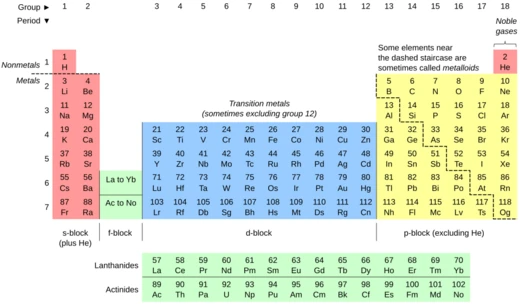
Caesium is a chemical element with the symbol Cs and atomic number 55, classified as an alkali metal. It is notable for being one of only five elemental metals that are liquid at or near room temperature, with a melting point of 28.5 °C. Caesium is the least electronegative stable element and has the largest atomic radius of any element whose radius has been measured, and its isotope caesium-133 defines the international standard for the second.
Quick Facts
- Atomic number
- 55
- Discovered by
- Robert Bunsen and Gustav Kirchhoff
- Year of discovery
- 1860
- Melting point
- 28.5 °C
- Boiling point
- 641 °C
- Stable isotope
- caesium-133
Facts from the source article.
History
Robert Bunsen and Gustav Kirchhoff discovered caesium in 1860 in mineral water from Dürkheim, Germany, naming it after the Latin word caesius meaning 'bluish grey' due to the bright blue lines in its emission spectrum. It was the first element discovered using a spectroscope, which they had invented the previous year. To obtain a pure sample, 44,000 litres of mineral water were evaporated to yield 240 kg of concentrated salt solution. After precipitating alkaline earth metals and removing lithium, potassium, rubidium, and caesium were precipitated as hexachloroplatinates; fractional crystallization separated the less-soluble caesium and rubidium salts.
Reduction with hydrogen and separation by solubility of their carbonates in alcohol yielded 7.3 g of caesium chloride. The scientists estimated the atomic weight at 123.35, compared to the modern value of 132.9. Attempts to produce elemental caesium by electrolysis of molten caesium chloride gave a blue substance, likely a colloidal mixture. The pure metal was isolated in 1882 by Carl Setterberg, who electrolysed caesium cyanide.
Characteristics
Caesium is the softest element that is solid at room temperature, with a Mohs hardness of 0.2. It is a very ductile, pale metal that darkens when exposed to trace oxygen; when stored in mineral oil, it loses its metallic lustre and becomes dull grey. Its melting point of 28.5 °C makes it one of the few elemental metals liquid near room temperature, alongside rubidium, francium, mercury, and gallium. Mercury is the only stable elemental metal with a known melting point lower than caesium.
Caesium also has a low boiling point of 641 °C, the lowest of all stable metals except mercury. It forms alloys with other alkali metals, gold, and mercury, but below 650 °C it does not alloy with cobalt, iron, molybdenum, nickel, platinum, tantalum, or tungsten. It forms photosensitive intermetallic compounds with antimony, gallium, indium, and thorium. An alloy of 41% caesium, 47% potassium, and 12% sodium has the lowest melting point of any known metal alloy, at −78 °C. The golden colour of caesium arises because its plasmonic frequency enters the blue–violet end of the spectrum, so it transmits and partially absorbs violet light while reflecting lower-frequency colours.
Its compounds burn with a blue or violet colour. Caesium exists as different allotropes, including a dimer called dicaesium.
Production
Mining and refining pollucite ore is a selective process done on a smaller scale than for most metals. The ore is crushed, hand-sorted, and ground, then caesium is extracted primarily by acid digestion, alkaline decomposition, or direct reduction. In acid digestion, pollucite is dissolved with strong acids such as hydrochloric, sulfuric, hydrobromic, or hydrofluoric acid; with hydrochloric acid, soluble chlorides form, and insoluble chloride double salts of caesium are precipitated, then decomposed to yield pure CsCl.
The sulfuric acid method yields caesium alum directly, which is roasted with carbon to convert aluminium sulfate to insoluble aluminium oxide, then leached with water. Roasting pollucite with calcium carbonate and calcium chloride gives insoluble calcium silicates and soluble caesium chloride, which can be leached to produce a CsCl solution. Most mined caesium salts are converted into caesium formate for oil drilling. Caesium metal can be obtained by reducing caesium chloride or other halides with calcium or barium at 700 to 800 °C, distilling the metal; similarly, the aluminate, carbonate, or hydroxide may be reduced by magnesium.
Applications
The largest present-day use of nonradioactive caesium is in caesium formate drilling fluids for the oil industry. These aqueous solutions, made by reacting caesium hydroxide with formic acid, were developed in the mid-1990s. The high density of caesium formate brine, up to 2.3 g/cm³, reduces the need for toxic high-density suspended solids, offering environmental advantages. It is biodegradable, can be recycled, and is safe to handle, though costly at about $4,000 per barrel in 2001.
Caesium-based atomic clocks use hyperfine transitions of caesium-133 atoms as a reference. The first accurate caesium clock was built by Louis Essen in 1955. These clocks measure frequency with an error of 2 to 3 parts in 10¹⁴, corresponding to an accuracy of 2 nanoseconds per day, or one second in 1.4 million years; newer versions exceed 1 part in 10¹⁵. The caesium standard is the primary standard for time and frequency measurements, regulating cell phone networks and the Internet.
Did You Know?
- Caesium is spelled 'cesium' in American English, a spelling used by the American Chemical Society since 1921.
- The median lethal dose (LD50) for caesium chloride in mice is 2.3 g/kg, comparable to that of potassium chloride and sodium chloride.
- Caesium is so reactive that it can explode violently even when exposed to cold water.
More in Periodic Table & Elements
Sources
Compiled from Wikipedia and the sources listed below. Text from Wikipedia is available under CC BY-SA 4.0; this entry is adapted from it.
- Wikipedia: Caesium (CC BY-SA 4.0).
- Word definitions: the , each quoted from its Wikipedia article.
Spotted an error? Know more?
Reader corrections go straight into our review queue. Suggest an edit · How this site is sourced