Helium
A noble gas essential for cryogenics and cosmology.
Last updated
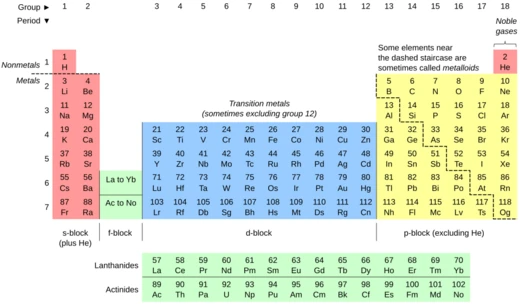
Helium is a chemical element with the symbol He and atomic number 2, belonging to the noble gas group. It is a colorless, odorless, non-toxic, inert, monatomic gas with the lowest boiling point of any element and no melting point at standard pressures. As the second-lightest and second-most abundant element in the observable universe, it constitutes about 24% of total elemental mass, largely due to the stability of its helium-4 isotope.
Quick Facts
- Atomic number
- 2
- Group
- noble gas
- Boiling point
- lowest among all elements
- Abundance in universe
- second-most abundant, ~24% of elemental mass
- Most common isotope
- helium-4
- Discovery year
- 1868 (detected), 1895 (isolated)
Facts from the source article.
Did You Know?
- Helium can form unstable excimer compounds with tungsten, iodine, fluorine, sulfur, and phosphorus under glow discharge or electron bombardment.
- The molecular ion HeH+ is the strongest Brønsted acid known and can exist only in isolation.
- Inhaling helium changes voice timbre because the speed of sound in helium is nearly three times that in air, raising resonant frequencies of the vocal tract.
History
The first evidence of helium came on August 18, 1868, when French astronomer Jules Janssen observed a bright yellow spectral line at 587.49 nanometers in the Sun's chromosphere during a total solar eclipse in Guntur, India. Initially thought to be sodium, the line was also seen on October 20, 1868, by English astronomer Norman Lockyer, who named it D3 due to its proximity to the sodium D1 and D2 Fraunhofer lines. Lockyer concluded it came from an unknown element in the Sun and named it helium after the Greek word for the Sun, ἥλιος.
The ending "-ium" was unusual for a non-metal, possibly because Lockyer was unaware of chemical naming conventions. In 1881, Italian physicist Luigi Palmieri detected helium on Earth via its D3 line in material from a Mount Vesuvius eruption. On March 26, 1895, Scottish chemist Sir William Ramsay isolated helium by treating the mineral cleveite with mineral acids; he had been seeking argon but noticed the D3 line, which Lockyer and William Crookes confirmed as helium.
Independently, Per Teodor Cleve and Abraham Langlet in Uppsala, Sweden, isolated helium from cleveite that same year and determined its atomic weight. Ramsay had originally planned to name the gas krypton. American geochemist William Francis Hillebrand had also observed unusual spectral lines in uraninite earlier but attributed them to nitrogen.
Characteristics
In quantum mechanics, helium is the second simplest atom to model after hydrogen, with two electrons in orbitals around a nucleus containing two protons and usually two neutrons. Because systems with more than two particles cannot be solved exactly analytically, numerical methods are required; computational chemistry has produced a quantum mechanical picture of helium's electron binding accurate to within 2% of the correct value. Each electron partly screens the nucleus from the other, so the effective nuclear charge each sees is about 1.69 units rather than the full 2.
The nucleus of helium-4 is identical to an alpha particle, and electron-scattering experiments show its charge density decreases exponentially from a central point, mirroring the electron cloud. This symmetry arises because the two neutrons and two protons in the nucleus, like the two electrons, fully occupy 1s orbitals in pairs with no orbital angular momentum and opposite spins, making the arrangement energetically stable. Adding another particle would consume energy, so systems with mass number 5 and beryllium-8 are unbound.
Occurrence and production
Helium is the second most abundant element in the known universe, constituting 23% of its baryonic mass, with only hydrogen more plentiful. Most helium was formed by Big Bang nucleosynthesis one to three minutes after the Big Bang, and its abundance informs cosmological models. The first molecular bonds formed when primordial helium combined with protons to create helium hydride ions. In stars, helium is produced by hydrogen fusion via the proton–proton chain and the CNO cycle.
On Earth, the atmospheric concentration is only 5.2 parts per million, remaining low because most helium escapes into space. Most terrestrial helium comes from radioactive decay: uranium and thorium minerals such as uraninite, cleveite, pitchblende, carnotite, and monazite emit alpha particles (helium nuclei) that capture electrons when stopped. An estimated 3000 metric tons of helium are generated annually in the lithosphere. The crustal concentration is 8 parts per billion, and seawater contains 4 parts per trillion.
Small amounts occur in mineral springs, volcanic gas, and meteoric iron. Commercial helium is extracted from natural gas, where it is trapped; concentrations range from a few ppm to over 7% in a field in San Juan County, New Mexico. As of 2021, world reserves were estimated at 31 billion cubic meters, with a third in Qatar, and additional probable reserves were announced under the Rocky Mountains and in the East African Rift.
Applications
The largest use of helium, about 32% of 2014's total production of 32 million kg, is in cryogenic applications, primarily cooling superconducting magnets in medical MRI scanners and NMR spectrometers. Other major uses include pressurizing and purging systems, welding, maintenance of controlled atmospheres, and leak detection. Helium serves as a protective gas in growing silicon and germanium crystals, in titanium and zirconium production, and in gas chromatography due to its inertness.
Its thermally and calorically perfect nature, high speed of sound, and high heat capacity ratio make it useful in supersonic wind tunnels and impulse facilities. In arc welding, helium is used as a shielding gas for materials like aluminium or copper that have high heat conductivity, where it is preferred over cheaper argon. For leak detection, helium diffuses through solids three times faster than air and is used as a tracer gas to find leaks in high-vacuum equipment and high-pressure containers; a helium mass spectrometer can detect leak rates as small as 10⁻⁹ mbar·L/s. The tested object is placed in an evacuated chamber filled with helium, and escaping helium is detected automatically in a helium integral test, or manually with a hand-held device.
Helium permeation through bulk materials is distinct from leakage through cracks; while it permeates glasses, ceramics, and synthetics, it does not permeate most bulk metals.
More in Periodic Table & Elements
Sources
Compiled from Wikipedia and the sources listed below. Text from Wikipedia is available under CC BY-SA 4.0; this entry is adapted from it.
- Wikipedia: Helium (CC BY-SA 4.0).
- Word definitions: the , each quoted from its Wikipedia article.
Spotted an error? Know more?
Reader corrections go straight into our review queue. Suggest an edit · How this site is sourced