Niobium
A transition metal vital for steel and superconductors.
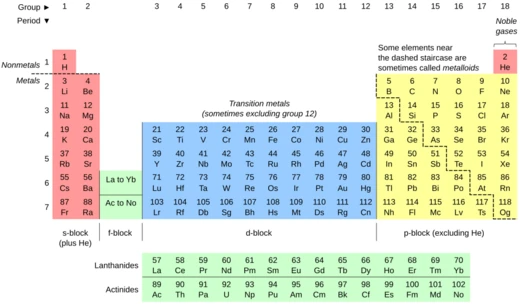
Niobium is a light grey, crystalline transition metal with atomic number 41 and the symbol Nb. It oxidizes very slowly in air, making it useful as a hypoallergenic jewelry metal, and it is a key component in high-strength low-alloy steels and superconducting alloys. The element was first reported in 1801 and its name derives from Niobe, daughter of Tantalus, reflecting its close similarity to tantalum.
Quick Facts
- Atomic number
- 41
- Discovered by
- Charles Hatchett
- Year of first report
- 1801
- Group
- 5
- Mohs hardness
- similar to pure titanium
- Superconducting critical temperature
- 9.2 K
Facts from the source article.
Did You Know?
- Niobium dust is an eye and skin irritant and a potential fire hazard, but elemental niobium is physiologically inert and harmless.
- Rats given a single injection of niobium pentachloride or niobates showed a median lethal dose between 10 and 100 mg/kg.
History
Charles Hatchett identified a new element in 1801 from a mineral sample sent from Connecticut to England in 1734 by John Winthrop. He named the mineral columbite and the element columbium after Columbia, a poetic name for the United States. The columbium was likely a mixture with tantalum. In 1809, William Hyde Wollaston compared oxides from columbite and tantalite and, despite a density difference, concluded they were identical, retaining the name tantalum.
Heinrich Rose disputed this in 1846, arguing that tantalite contained two elements, which he named niobium and pelopium after children of Tantalus. Confusion persisted with claimed new elements pelopium, ilmenium, and dianium later shown to be niobium or mixtures. In 1864–1866, Christian Wilhelm Blomstrand, Henri Étienne Sainte-Claire Deville, Louis J. Troost, and Jean Charles Galissard de Marignac proved only two elements existed. Articles on ilmenium appeared until 1871.
Characteristics
Niobium is a lustrous, grey, ductile, paramagnetic metal in group 5. Its electron configuration in the outermost shells is atypical for the group, similar to ruthenium and rhodium. It is thought to have a body-centered cubic crystal structure from absolute zero to its melting point, but high-resolution thermal expansion measurements show anisotropies inconsistent with a cubic structure, so further research is expected. At atmospheric pressure, niobium becomes a superconductor at 9.2 K, the highest critical temperature among elemental superconductors, and has the greatest magnetic penetration depth of any element.
It is one of three elemental type II superconductors, along with vanadium and technetium. Superconductive properties depend strongly on purity. Very pure niobium is soft and ductile; impurities make it harder. It has a low neutron capture cross-section, making it useful in nuclear industries.
The metal takes on a bluish tinge after extended air exposure. It is less dense than other refractory metals, corrosion-resistant, and forms dielectric oxide layers.
Compounds
Niobium reacts with most nonmetals at high temperatures, with fluorine at room temperature, with chlorine at 150 °C, with hydrogen at 200 °C, and with nitrogen at 400 °C, often forming interstitial and nonstoichiometric products. It begins to oxidize in air at 200 °C. The metal resists corrosion by many acids, including aqua regia, hydrochloric, sulfuric, nitric, and phosphoric acids, but is attacked by hot concentrated sulfuric acid, hydrofluoric acid, and hydrofluoric/nitric mixtures, as well as hot saturated alkali metal hydroxide solutions.
The most common oxidation state is +5; compounds in lower states display Nb–Nb bonding. In aqueous solution, only the +5 state occurs, and it readily hydrolyzes, precipitating hydrous Nb oxide. The pentoxide is the most common oxide and precursor to most niobium compounds. Niobates are formed by dissolving the pentoxide in basic solutions or melting it with alkali metal oxides.
Niobium forms halides in +5 and +4 states and substoichiometric compounds. The pentahalides have octahedral Nb centers; niobium pentafluoride melts at 79 °C and niobium pentachloride at 203.4 °C. Both hydrolyze to oxides and oxyhalides. The tetrahalides are dark-colored polymers with Nb–Nb bonds.
Applications
About 90% of the 44,500 tonnes of niobium mined in 2006 went into high-grade structural steel. Niobium is an effective microalloying element, forming carbides and nitrides that improve grain refining, retard recrystallization, and enhance toughness, strength, formability, and weldability. It is used in amounts below 0.1% in high-strength low-alloy steels for automobiles and in pipeline construction. Higher proportions, up to 6.5%, appear in nickel-, cobalt-, and iron-based superalloys for jet engines, gas turbines, rocket subassemblies, and heat-resisting equipment.
Inconel 718 contains about 5% niobium. Such superalloys were used in the Gemini program and the Apollo Service Module nozzle. The C-103 alloy, composed of 89% niobium, 10% hafnium, and 1% titanium, was developed in the early 1960s for liquid-rocket thruster nozzles, including the Apollo Lunar Module descent engine. Because niobium oxidizes above 400 °C, protective coatings are needed for these applications.
More in Periodic Table & Elements
Spotted an error? Know more?
Reader corrections go straight into our review queue. Suggest an edit · How this site is sourced