Neon
A noble gas known for its bright red-orange glow.
Last updated
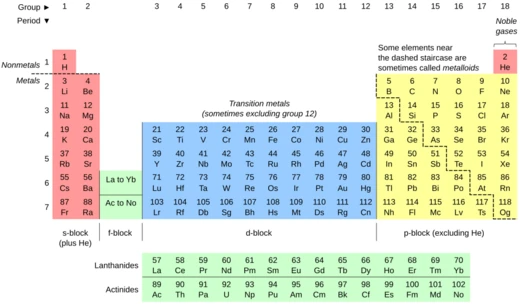
Neon is a chemical element with the symbol Ne and atomic number 10, the second noble gas in the periodic table. It is a colorless, odorless, inert monatomic gas under standard conditions, with about two-thirds the density of air. Discovered in 1898, neon is notable for its distinctive bright red emission spectrum, which led to its immediate recognition as a new element and later to its use in advertising signs and lasers.
Quick Facts
- Atomic number
- 10
- Discovered
- 1898
- Discoverers
- Sir William Ramsay and Morris Travers
- Group
- noble gas
Facts from the source article.
History
Neon was discovered in 1898 by British chemists Sir William Ramsay and Morris Travers in London. They chilled a sample of air to liquid, then warmed it and captured the gases as they boiled off. After nitrogen, oxygen, and argon were removed, the remaining gases were isolated in order of abundance over six weeks starting in late May 1898. The first identified was krypton; the next, after krypton was removed, gave a brilliant red light under spectroscopic discharge.
This gas, identified in June, was named neon, from the Greek word for 'new', suggested by Ramsay's son. Travers later wrote that the blaze of crimson light from the tube was a sight to dwell upon and never forget. A second gas, metargon, was reported but later found to be argon contaminated with carbon monoxide. Xenon was discovered by the same team in September 1898.
Neon's scarcity delayed its use in lighting until after 1902, when Georges Claude's company Air Liquide produced industrial quantities as a byproduct of air liquefaction. In December 1910, Claude demonstrated modern neon lighting using a sealed tube. Initial attempts to sell neon tubes for indoor lighting failed due to the color, but by 1912 they were sold as advertising signs. Neon tubes reached the U.S. in 1923 with two large signs bought by a Los Angeles Packard dealership, transforming urban advertising.
Isotopes
Neon has three stable isotopes: 20Ne (90.48%), 21Ne (0.27%), and 22Ne (9.25%). 21Ne and 22Ne are partly primordial and partly nucleogenic, produced by nuclear reactions of other nuclides with neutrons or other particles. Their natural abundance variations are well understood. 20Ne, the chief primordial isotope from stellar nucleosynthesis, is not known to be nucleogenic or radiogenic except from rare decay of oxygen-20 from cluster decay of thorium-228, so its variation on Earth is debated.
Nucleogenic neon isotopes are generated from 24Mg and 25Mg after neutron capture and alpha emission, with neutrons from secondary spallation from alpha particles from uranium-series decay. This yields lower 20Ne/22Ne and higher 21Ne/22Ne ratios in uranium-rich rocks like granites. Cosmogenic production of 21Ne occurs via spallation on magnesium, sodium, silicon, and aluminum. Analyzing all three isotopes separates cosmogenic, magmatic, and nucleogenic neon, making it useful for determining cosmic exposure ages of surface rocks and meteorites.
Solar wind neon has a higher proportion of 20Ne, and volcanic gases and diamonds show enriched 20Ne, suggesting a primordial, possibly solar origin.
Characteristics
Neon is the second-lightest noble gas, after helium. It is colorless and odorless, and glows reddish-orange in a vacuum discharge tube. It has over 40 times the refrigerating capacity per unit volume of liquid helium and three times that of liquid hydrogen, and is often a less expensive refrigerant than helium. Although helium surpasses neon in ionization energy, neon is theorized to be the chemically least reactive of all elements.
Multiple computational studies suggest helium can form stable chemical species under extreme conditions, such as HeH⁺ and Na2He, and theoretical works predict HHeF could be stable under pressure, whereas the analogous HNeF appears unbound. No stable neutral or covalent neon compounds are known under any pressure or temperature. A neon-containing anion complex [B12(CN)11Ne]- has been predicted but not experimentally confirmed, leaving neon as the only noble gas with no definitively confirmed compounds.
Neon plasma has the most intense light discharge at normal voltages and currents of all noble gases; the average color to the human eye is red-orange due to many lines, though it also contains a strong green line visible only with a spectroscope.
Occurrence
Stable isotopes of neon are produced in stars. The most abundant isotope, 20Ne (90.48%), is created by nuclear fusion of carbon and carbon in the carbon-burning process of stellar nucleosynthesis, requiring temperatures above 500 megakelvins in cores of stars over 8 solar masses. Neon is the fifth most abundant chemical element in the universe by mass, after hydrogen, helium, oxygen, and carbon. Its rarity on Earth is due to its lightness, high vapor pressure at very low temperatures, and chemical inertness, which prevented it from being trapped in the condensing gas and dust that formed the smaller, warmer solid planets.
Neon is monatomic, making it lighter than diatomic nitrogen and oxygen; a neon-filled balloon rises in air, though more slowly than a helium balloon. Its universal abundance is about 1 part in 750 by mass; in the Sun and its proto-solar nebula, about 1 part in 600. The Galileo spacecraft found that Jupiter's upper atmosphere has neon depleted by about a factor of 10, to 1 part in 6,000 by mass, possibly because the ice-planetesimals that brought neon to Jupiter formed in a region too warm to retain it, or because neon is sequestered in the planet's interior.
On Earth, neon comprises 1 part in 55,000 of the atmosphere (18.2 ppm by volume) and a smaller fraction in the crust. It is industrially produced by cryogenic fractional distillation of liquefied air. In 2015, NASA reported detection of neon in the exosphere of the Moon based on LADEE spacecraft studies.
Did You Know?
- Neon is the first p-block noble gas and the first element with a true octet of electrons.
- Solid neon clathrate hydrate can be produced from water ice and neon gas at pressures 350–480 MPa and temperatures about −30 °C.
- Before the 2022 Russian invasion of Ukraine, about 70% of the global neon supply was produced in Ukraine as a by-product of steel production in Russia.
More in Periodic Table & Elements
Sources
Compiled from Wikipedia and the sources listed below. Text from Wikipedia is available under CC BY-SA 4.0; this entry is adapted from it.
- Wikipedia: Neon (CC BY-SA 4.0).
- Word definitions: the , each quoted from its Wikipedia article.
Spotted an error? Know more?
Reader corrections go straight into our review queue. Suggest an edit · How this site is sourced