Lanthanum
A soft, silvery-white metal that lies hidden in rare-earth minerals.
Last updated
Lanthanum is a chemical element with symbol La and atomic number 57, a soft, ductile, silvery-white metal that tarnishes slowly in air. It is the first member of the lanthanide series and is traditionally counted among the rare-earth elements, though it is the 28th most abundant element in the Earth's crust. Lanthanum has no biological role in humans but is used by some bacteria and shows antimicrobial activity.
Quick Facts
- Atomic number
- 57
- Discovered by
- Carl Gustaf Mosander
- Year of discovery
- 1839
- Element category
- lanthanide, rare-earth element
- Common oxidation state
- +3
Facts from the source article.
Characteristics
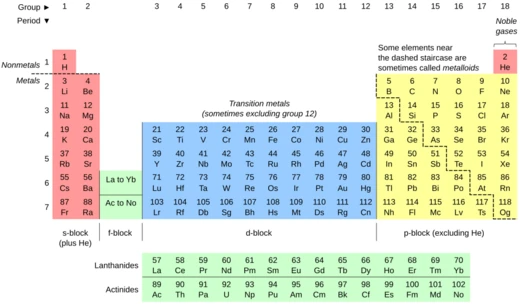
Lanthanum, with symbol La and atomic number 57, is a soft, silvery-white metal that tarnishes slowly in air. It is the first element of the lanthanide series and is traditionally counted among the rare-earth elements. Its usual oxidation state is +3, though some +2 compounds exist. Lanthanum has no biological role in humans but is used by some bacteria and shows antimicrobial activity.
It was discovered in 1839 by Carl Gustaf Mosander as an impurity in cerium nitrate, its name derived from the Greek for "to lie hidden." Despite being classified as a rare-earth, it is the 28th most abundant element in Earth's crust, nearly three times as abundant as lead. Lanthanum occurs in minerals like monazite and bastnäsite, making up about a quarter of their lanthanide content. Pure lanthanum metal was not isolated until 1923 due to the complexity of extraction.
Its compounds are used in catalysts, glass additives, carbon arc lamps, lighter flints, electron cathodes, scintillators, and welding electrodes. Lanthanum carbonate treats high blood phosphate levels in kidney failure.
Compounds
Lanthanum oxide is a white solid prepared by direct reaction of its elements; it adopts a hexagonal 7-coordinate structure that changes to 6-coordinate at high temperature. Reaction with water yields lanthanum hydroxide with heat evolution and a hissing sound; the hydroxide reacts with atmospheric carbon dioxide to form the basic carbonate. Lanthanum fluoride is insoluble in water and used as a qualitative test for La³⁺; heavier halides are very soluble deliquescent compounds.
Anhydrous halides are produced by direct reaction of elements, as heating hydrates causes hydrolysis. Lanthanum reacts exothermically with hydrogen to produce the dihydride LaH₂, a black, pyrophoric, brittle, conducting compound with calcium fluoride structure; further hydrogen absorption yields the more salt-like LaH₃. Due to large ionic radius and electropositivity, lanthanum has limited coordination chemistry; oxygen is the most common donor atom, and complexes are mostly ionic with high coordination numbers over 6, often 8, forming square antiprismatic and dodecadeltahedral structures. Organolanthanum chemistry is limited; the best characterized compound is the cyclopentadienyl complex La(C₅H₅)₃.
Occurrence and production
Lanthanum makes up 39 mg/kg of the Earth's crust, behind neodymium at 41.5 mg/kg and cerium at 66.5 mg/kg. Despite being called a rare-earth metal, it is not rare but was historically named so because it was rarer than common earths like lime and magnesia, and few deposits were known at the time. Lanthanum is rarely the dominant lanthanide in rare-earth minerals; cerium usually precedes it. Rare examples of La-dominant minerals are monazite-(La) and lanthanite-(La).
The La³⁺ ion is similarly sized to early lanthanides of the cerium group and occurs with them in phosphate, silicate, and carbonate minerals such as monazite and bastnäsite. Bastnäsite is usually lacking in thorium and heavy lanthanides, making purification less involved. The ore is crushed, ground, treated with hot concentrated sulfuric acid, then dried and leached with water, leaving early lanthanide ions including lanthanum in solution.
Applications
The first historical application of lanthanum was in gas lantern mantles; Carl Auer von Welsbach used a mixture of lanthanum oxide and zirconium oxide called Actinophor, patented in 1886, but the mantles gave green-tinted light and were not successful. Modern uses include anodic material for nickel–metal hydride batteries, where a mischmetal with over 50% lanthanum is used; the 2008 Toyota Prius NiMH battery requires 10 to 15 kg of lanthanum. Hydrogen sponge alloys containing lanthanum can store up to 400 times their volume of hydrogen gas reversibly.
Mischmetal for lighter flints contains 25% to 45% lanthanum. Lanthanum oxide and lanthanum boride are used as hot cathode materials in electronic vacuum tubes; crystals of LaB₆ are used in electron microscopes and Hall-effect thrusters. Lanthanum trifluoride is a component of ZBLAN glass for fiber-optical communication. Cerium-doped lanthanum bromide and lanthanum chloride are inorganic scintillators with high light yield and energy resolution, used in detectors of neutrons or gamma rays.
Carbon arc lamps using rare earth elements, including lanthanum, were used by the motion picture industry for studio lighting and projection.
Also in the Codexery
More in Periodic Table & Elements
Sources
Compiled from Wikipedia and the sources listed below. Text from Wikipedia is available under CC BY-SA 4.0; this entry is adapted from it.
- Wikipedia: Lanthanum (CC BY-SA 4.0).
- Word definitions: the , each quoted from its Wikipedia article.
Spotted an error? Know more?
Reader corrections go straight into our review queue. Suggest an edit · How this site is sourced