Nitrogen
A colourless, odourless diatomic gas forming 78% of Earth's atmosphere.
Last updated
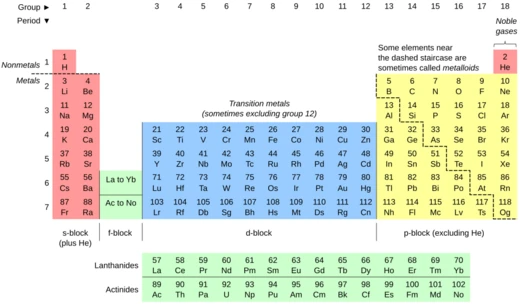
Nitrogen is a chemical element with the symbol N and atomic number 7, classified as a nonmetal and the lightest member of group 15 of the periodic table. It is the most abundant chemical species in Earth's atmosphere, forming about 78% of the air as a colourless and odourless diatomic gas (N2). Discovered in 1772 by Scottish physician Daniel Rutherford and independently by others, nitrogen is essential for life as a constituent of organic compounds and is a key component of industrial fertilisers.
Quick Facts
- Atomic number
- 7
- Group
- 15 (pnictogens)
- Discovered by
- Daniel Rutherford (1772)
- Named by
- Jean-Antoine-Claude Chaptal (1790)
- Abundance in atmosphere
- 78% by volume
Facts from the source article.
History
Nitrogen compounds have been known since antiquity, with ammonium chloride mentioned by Herodotus. Alchemists of the Middle Ages were familiar with nitric acid, which they called aqua fortis, and other nitrogen-containing substances such as ammonium and nitrate salts. The mixture of nitric and hydrochloric acids, known as aqua regia, was prized for its ability to dissolve gold. The element itself was first isolated in 1772 by Scottish physician Daniel Rutherford, who termed it noxious air; he distinguished it from carbon dioxide but did not recognise it as a distinct element.
Around the same time, Carl Wilhelm Scheele, Henry Cavendish, and Joseph Priestley also studied nitrogen, referring to it as burnt air or phlogisticated air. Antoine Lavoisier proposed the name azote, from the Greek word for 'no life', because the gas is asphyxiant; this name persists in many languages and appears in English terms such as hydrazine and azide. The English name nitrogen was adopted in 1794 from the French nitrogène, coined in 1790 by Jean-Antoine-Claude Chaptal, who derived it from nitre (potassium nitrate) and the Greek suffix meaning 'producing', reflecting nitrogen's role as the essential part of nitric acid.
Properties
A nitrogen atom has seven electrons arranged in the ground state as 1s²2s²2p³, giving it five valence electrons, three of which are unpaired. Its electronegativity on the Pauling scale is 3.04, exceeded only by chlorine, oxygen, and fluorine. The single-bond covalent radius of nitrogen is 71 pm, smaller than that of boron and carbon but larger than that of oxygen and fluorine. The nitride anion (N³⁻) has a much larger radius of 146 pm, similar to oxide and fluoride anions.
The first three ionisation energies are 1.402, 2.856, and 4.577 MJ·mol⁻¹, and the sum of the fourth and fifth is also very high, so nitrogen has no simple cationic chemistry. The 2p subshell lacks radial nodes, which contributes to many anomalous properties of first-row p-block elements, including very high electronegativity and difficulty in forming hypervalent compounds. This makes nitrogen's chemistry markedly different from that of its heavier group 15 congeners phosphorus, arsenic, antimony, and bismuth. Nitrogen can be compared diagonally to sulfur, but similarities are mostly limited to sulfur nitride ring compounds.
Chemistry and compounds
The first dinitrogen complex discovered was [Ru(NH₃)₅(N₂)]²⁺, and many similar complexes have since been identified. In these compounds, a nitrogen molecule donates at least one lone pair of electrons to a central metal cation, illustrating how N₂ might bind in nitrogenase and in the Haber process catalyst. Dinitrogen can coordinate to metals in five ways: end-on (η¹), bridging end-on (μ, bis-η¹), side-on (η²), bridging side-on (μ, bis-η²), and a unique triple-coordination mode (μ₃-N₂) donating all three electron pairs.
N₂ is isoelectronic with carbon monoxide and acetylene, and its bonding in complexes resembles that in carbonyl compounds, though N₂ is a weaker σ-donor and π-acceptor than CO. Theoretical studies indicate that σ donation is more important than π back-donation for forming the metal–nitrogen bond. Dinitrogen complexes are now known for almost all transition metals, numbering several hundred compounds. They are typically prepared by replacing labile ligands with nitrogen, reducing metal complexes under nitrogen gas, or converting a ligand with N–N bonds (such as hydrazine or azide) into a dinitrogen ligand.
Applications
Two-thirds of industrially produced nitrogen is sold as gas, and one-third as liquid. The gas is primarily used as an inert atmosphere to prevent fire, explosion, or oxidation where oxygen would be hazardous. Examples include modified atmosphere packaging for foods (labelled E941 in the EU), incandescent light bulbs, fire suppression for IT equipment, stainless steel manufacture, case-hardening of steel by nitriding, aircraft fuel system inerting, and inflation of race car and aircraft tires.
In chemical analysis, nitrogen gas is used to concentrate liquid samples by evaporating solvent. Nitrogen is also employed to pressurise kegs of beer, especially stouts and British ales, producing smaller bubbles for a smoother texture; a pressure-sensitive nitrogen capsule called a 'widget' allows such beers to be packaged in cans and bottles. Nitrogen tanks serve as the power source for paintball guns, though they require higher pressure than carbon dioxide.
Some construction equipment uses pressurised nitrogen to boost hydraulic systems, and nitrogen gas from sodium azide decomposition inflates automotive airbags.
Did You Know?
- Nitrogen makes up about 78.1% of the volume of Earth's atmosphere, equivalent to roughly 3.89 million gigatonnes.
- Commercial nitrogen gas is often called OFN (oxygen-free nitrogen) and typically contains at most 20 ppm oxygen.
Also in the Codexery
More in Periodic Table & Elements
Sources
Compiled from Wikipedia and the sources listed below. Text from Wikipedia is available under CC BY-SA 4.0; this entry is adapted from it.
- Wikipedia: Nitrogen (CC BY-SA 4.0).
- Word definitions: the , each quoted from its Wikipedia article.
Spotted an error? Know more?
Reader corrections go straight into our review queue. Suggest an edit · How this site is sourced