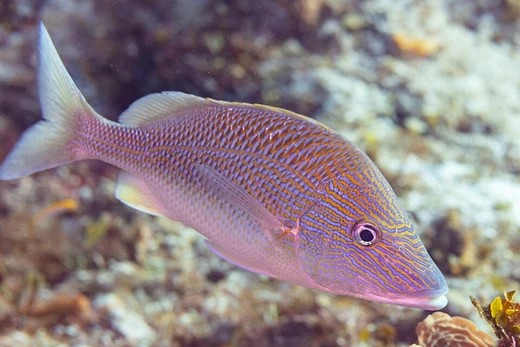
Pristipomoides filamentosus
A deepwater snapper prized in Hawaii as opakapaka.
Last updated

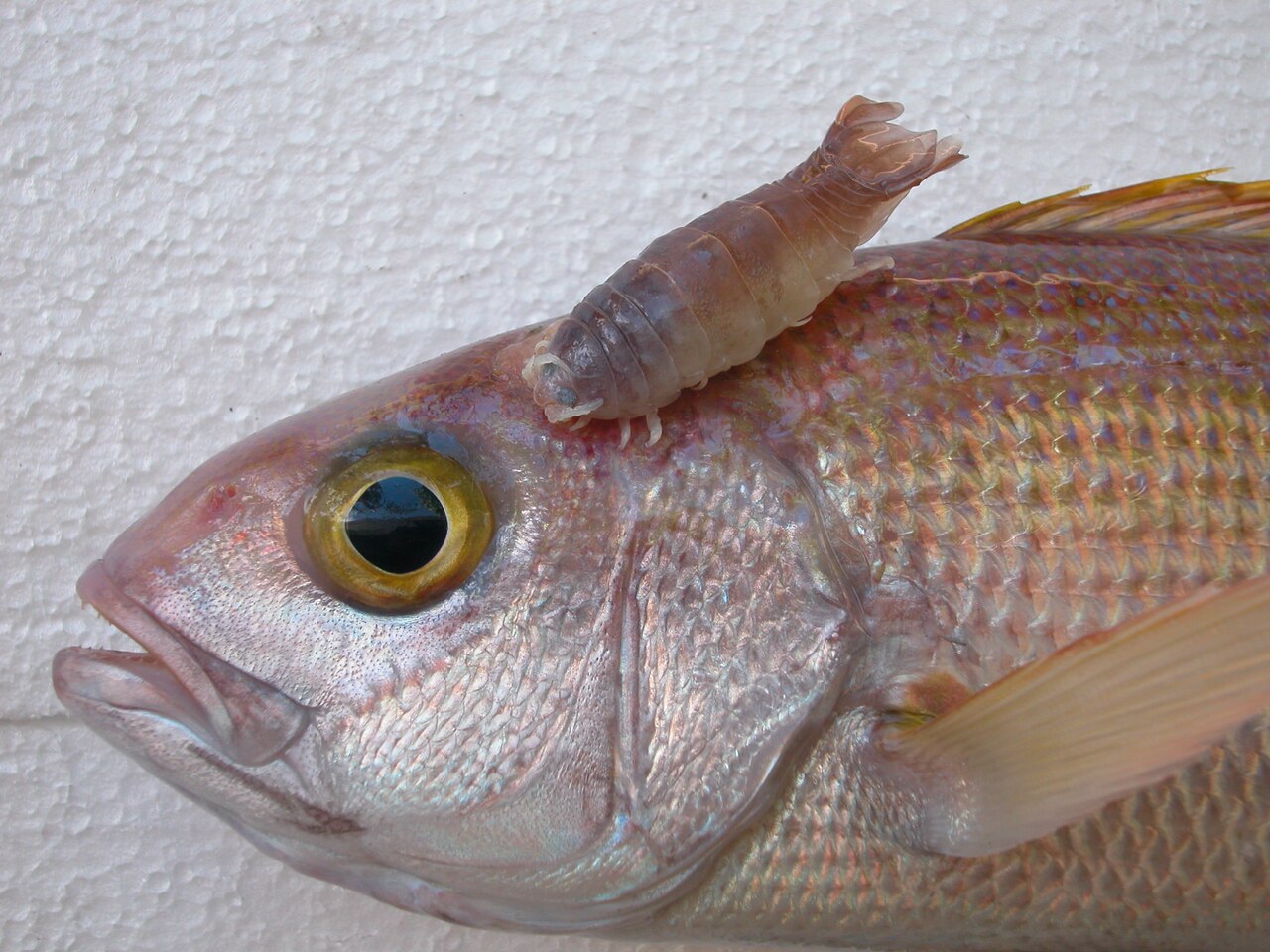
Jean-Lou Justine · CC BY 2.0
Pristipomoides filamentosus, known as the crimson jobfish, rosy snapper, or opakapaka, is a species of ray-finned fish in the family Lutjanidae. It is found in the Indian Ocean and Pacific Ocean as far east as Hawaii and Tahiti, and is very important to local commercial fisheries and sought as a game fish, being one of the Deep Seven species of Hawaiʻi.
Scientific classification
- KingdomAnimalia
- PhylumChordata
- ClassActinopterygii
- DivisionTeleostei
- OrderAcanthuriformes
- FamilyLutjanidae
- GenusPristipomoides
- SpeciesPristipomoides filamentosus
Named by (Valenciennes, 1830)
Close relatives
Other species of Pristipomoides with a Codexery entry.
- Pristipomoides auricilla Pristipomoides auricilla
- Pristipomoides flavipinnis Pristipomoides flavipinnis
- Pristipomoides macrophthalmus Pristipomoides macrophthalmus
- Pristipomoides multidens Pristipomoides multidens
- Pristipomoides sieboldii Pristipomoides sieboldii
- Pristipomoides typus Pristipomoides typus
Sources: Wikipedia taxobox: Pristipomoides filamentosus (CC BY-SA 4.0) · differs from this box at order: WoRMS AphiaID 218511 (CC BY 4.0)
Conservation status
Least Concern (LC)
- LC▲ this species
- NT
- VU
- EN
- CR
- EW
- EX
Source: IUCN Red List assessment · GBIF copy of the Red List category
Where the pristipomoides filamentosus has been recorded
Each dot is a place where the species has been observed and reported (2,329 records, half-degree grid) — not a modelled range. 27 inland records left out (institution coordinates).
Map: drawn by Codexery. Data: GBIF occurrence search (records CC0 / CC BY) · Natural Earth basemap (public domain) · place coordinates: Wikipedia (CC BY-SA 4.0)
Quick Facts
- Peak fishing season hawaii
- October to February
Facts from the source article.
Background
Pristipomoides filamentosus was first formally described as Serranus filamentosus in 1830 by French zoologist Achille Valenciennes, with the type locality given as Saint-Denis on Réunion. The specific name filamentosus means 'filamentous' and refers to the filament-like last soft rays in the dorsal and anal fins. The species has an elongated, robust body with a depth of roughly a third of its standard length, a flat space between the eyes, and a slightly protruding lower jaw. Its colour may be brownish to pinkish, lavender or reddish-purple, marked with slender yellow lines and blue spots on its snout and the flat space between its eyes.
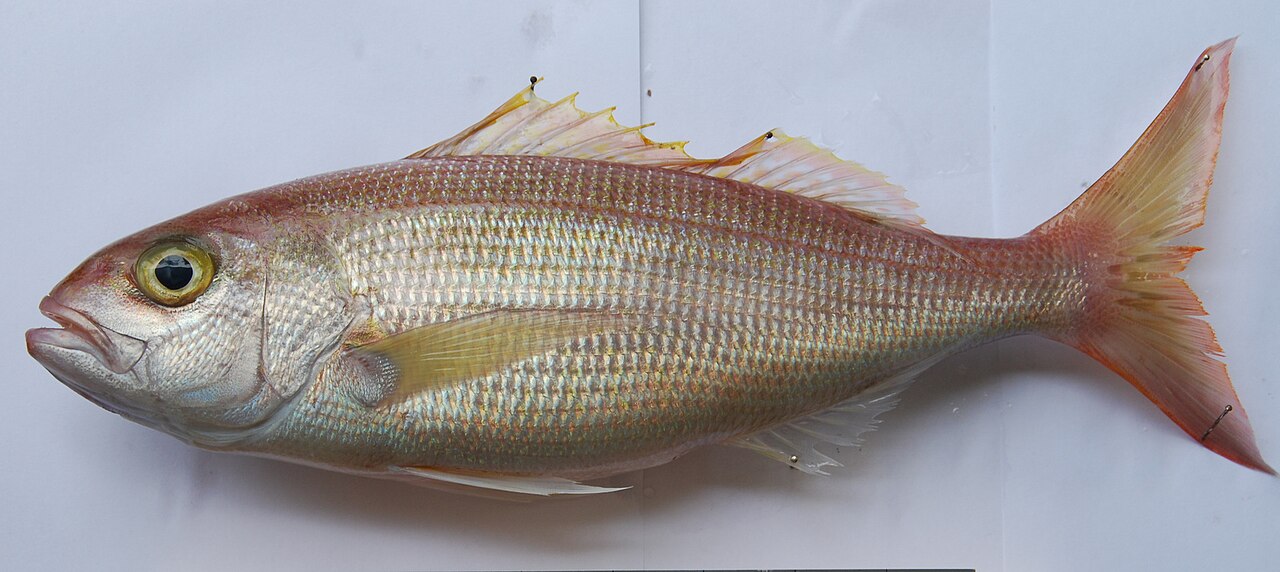
The dorsal and caudal fins are pale blue to lavender with reddish-orange margins. This benthopelagic species is found over rocky substrates and rocky reefs at depths between 40 and 360 m. It has a wide Indo-Pacific distribution, occurring from the Red Sea and eastern Africa across the Indian Ocean into the Pacific, as far east as Hawaii and Tahiti, north to Japan, and south to Australia.
In Australia, it ranges from Leeman, Western Australia, north to Darwin, and east to the Great Barrier Reef, south at least to Seal Rocks, New South Wales, and also at Lord Howe Island. Pristipomoides filamentosus is a nocturnal feeder, migrating upward through the water column to prey on small fishes, crustaceans, ascidians, and salps. In the Seychelles, spawning occurs between October and April, peaking from February to April and again in November; in Hawaii, it takes place between March and December, peaking from May to September. It is a slow-growing, long-lived species, with the oldest recorded fish at 44 years old.
More in Snappers
Elsewhere in Snappers and Grunts
Test yourself
Three questions drawn from this entry’s sources. Pick an answer to check it.
Answers checked against the source article
Sources
Compiled from Wikipedia and the sources listed below. Text from Wikipedia is available under CC BY-SA 4.0; this entry is adapted from it.
- Wikipedia: Pristipomoides filamentosus (CC BY-SA 4.0).
- Classification: the source article's taxobox; compare WoRMS, the World Register of Marine Species (CC BY 4.0).
- Conservation status: IUCN Red List assessment.
- Occurrence records: GBIF (CC0 / CC BY). Basemap: Natural Earth (public domain).
- Word definitions: the , each quoted from its Wikipedia article.
Spotted an error? Know more?
Reader corrections go straight into our review queue. Suggest an edit · How this site is sourced