Francium
A highly radioactive alkali metal, the last element discovered in nature.
Last updated
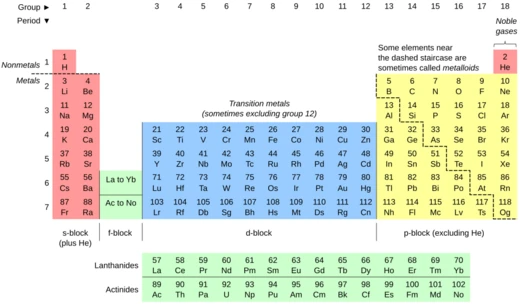
Francium is a chemical element with the symbol Fr and atomic number 87. It is extremely radioactive, with its most stable isotope, francium-223, having a half-life of only 22 minutes. It is the second rarest naturally occurring element and the second most electropositive element, behind only caesium.
Quick Facts
- Atomic number
- 87
- Most stable isotope
- Francium-223 (half-life 22 minutes)
- Element classification
- Alkali metal
- Discoverer
- Marguerite Perey
- Discovery date
- January 7, 1939
Facts from the source article.
History
As early as 1870, chemists thought there should be an alkali metal beyond caesium with atomic number 87, referred to as eka-caesium. In 1914, Stefan Meyer, Viktor F. Hess, and Friedrich Paneth measured alpha radiation from various substances including 227Ac, observing a possible minor alpha branch, but could not announce discovery due to World War I. Soviet chemist Dmitry Dobroserdov claimed to have found eka-caesium in 1925 after observing weak radioactivity in a potassium sample, incorrectly attributing it to the new element; he named it russium. In 1930, Fred Allison claimed to have discovered element 87 while analyzing pollucite and lepidolite using his magneto-optical machine, requesting the name virginium. In 1934, H.G. MacPherson disproved the effectiveness of Allison's device and the validity of his discovery.
Characteristics
Francium is highly unstable, with its most stable natural isotope, francium-223, lasting only 22 minutes before decaying. All francium isotopes break down into astatine, radium, or radon. This element’s longest-lived isotope has a shorter half-life than the most stable isotope of any element up through dubnium, element 105. Chemically, francium is an alkali metal similar to caesium.
It has the highest equivalent weight of any element. If it could be made liquid, its surface tension at the melting point would be 0.05092 N/m. The melting point is not certain: estimates include 8.0 C, 27 C, 20 C, and 24.861 C. The boiling point is also unclear, with estimates of 620 C, 598 C, 677 C, and 640 C. Density is predicted around 2.48 g/cm3, though another calculation gives 3.57 g/cm3. Francium’s bulk modulus is thought to be between 2.1 and 2.6 GPa.
Linus Pauling assigned francium an electronegativity of 0.7 on the Pauling scale, matching caesium at the time, but caesium’s value has since been updated to 0.79. Francium has a slightly higher ionization energy than caesium: 392.811(4) kJ/mol versus 375.7041(2) kJ/mol, suggesting caesium is actually less electronegative. Francium is also expected to have a higher electron affinity than caesium, and the Fr- ion should be more polarizable than Cs-.
Compounds
Because francium is highly unstable, only a limited number of its salts have been studied. Francium tends to precipitate alongside several caesium salts, including caesium perchlorate, which yields small quantities of francium perchlorate. This co-precipitation, based on a method by Lawrence E. Glendenin and C. M. Nelson for radiocaesium, can help isolate francium. Francium also co-precipitates with caesium iodate, picrate, tartrate, chloroplatinate, and silicotungstate, as well as with silicotungstic acid and perchloric acid when no other alkali metal is present.
Francium perchlorate forms when francium chloride reacts with sodium perchlorate, but this method is not reliable for separating thallium, which also co-precipitates with caesium. The expected entropy of francium perchlorate is 42.7 e.u. All francium halides dissolve in water and are predicted to be white solids, created by reacting francium with the appropriate halogen. Francium chloride has been explored as a way to separate francium from other elements due to its high vapour pressure, though francium fluoride would have an even higher vapour pressure.
Production
Francium can be synthesized by a fusion reaction bombarding a gold-197 target with a beam of oxygen-18 atoms from a linear accelerator, a process developed at the physics department of the State University of New York at Stony Brook in 1995. Depending on the oxygen beam energy, the reaction yields francium isotopes with masses 209, 210, and 211. The francium atoms leave the gold target as ions, are neutralized by collision with yttrium, and isolated in a magneto-optical trap in a gaseous unconsolidated state.
Atoms remain in the trap for about 30 seconds, but a steady state of fresh atoms is maintained. The original apparatus trapped up to a few thousand atoms; a later design trapped over 300,000 at a time. The research project relocated to TRIUMF in 2012, where over 106 francium atoms have been held at a time.
Other synthesis methods include bombarding radium with neutrons, and bombarding thorium with protons, deuterons, or helium ions. 223Fr can be isolated from samples of its parent 227Ac by elution with NH4Cl–CrO3 from an actinium-containing cation exchanger and purified through a silicon dioxide compound loaded with barium sulfate. Francium has not been synthesized in amounts large enough to weigh.
Did You Know?
- Francium has 37 known isotopes ranging in atomic mass from 197 to 233, with seven metastable nuclear isomers.
- Francium is a prospective candidate for searching for CP violation.
Also in the Codexery
More in Periodic Table & Elements
Sources
Compiled from Wikipedia and the sources listed below. Text from Wikipedia is available under CC BY-SA 4.0; this entry is adapted from it.
- Wikipedia: Francium (CC BY-SA 4.0).
- Word definitions: the , each quoted from its Wikipedia article.
Spotted an error? Know more?
Reader corrections go straight into our review queue. Suggest an edit · How this site is sourced