Cerium
The most abundant lanthanide, used in polishing and lighters.
Last updated
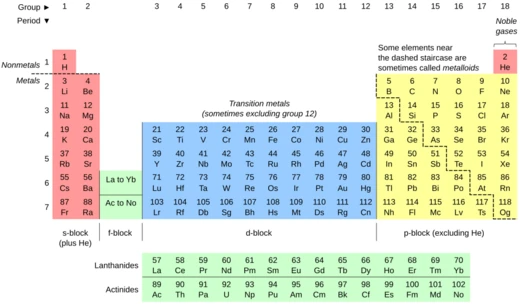
Cerium is a chemical element with the symbol Ce and atomic number 58, a soft, ductile, silvery-white metal that tarnishes in air. It is the second element in the lanthanide series and is considered one of the rare-earth elements, though it is the most abundant of the lanthanides. Cerium is notable for having a stable +4 oxidation state in addition to the common +3 state, and it was the first lanthanide to be discovered.
Quick Facts
- Atomic number
- 58
- Discovered
- 1803
- Discovered by
- Jöns Jakob Berzelius and Wilhelm Hisinger (Sweden); Martin Heinrich Klaproth (Germany)
- Abundance in earth's crust
- 68 ppm
- Common oxidation states
- +3, +4
Facts from the source article.
Characteristics
Cerium sits between lanthanum and praseodymium in the periodic table, above thorium. Its 58 electrons are arranged as [Xe]4f5d6s, with the four outer electrons being valence electrons; the 4f, 5d, and 6s levels are very close in energy, and strong interelectronic repulsion in the compact 4f shell can push one electron to the 5d orbital. This effect reverses upon positive ionization, so isolated cerium atoms have the configuration [Xe]4f, though in some solid solutions it may be [Xe]4f5d.
Because the empty f-shell in Ce is stable and the nuclear charge is low enough until neodymium, cerium can lose a fourth valence electron chemically, unlike most lanthanides. The energy of the 4f electron is nearly equal to that of the delocalized 5d and 6s electrons, so only a small energy shift changes their relative occupancy, giving dual valence states. A volume change of about 10% occurs under high pressure or low temperature; in the high-pressure α phase, 4f electrons become delocalized and itinerant, whereas in the low-pressure γ phase they are localized.
The valence appears to change from about 3 to 4 upon cooling or compression. Cerium metal is a good reducing agent with a standard reduction potential of −2.34 V for the Ce/Ce couple. It tarnishes in air, forming a passivating oxide layer, and a centimeter-sized sample corrodes completely in about a year. Metallic cerium can be highly pyrophoric.
Being highly electropositive, it reacts with water, slowly in cold water but faster with heat, producing cerium(III) hydroxide and hydrogen gas. Four allotropic forms (α to δ) exist at standard pressure.
Compounds
Cerium has two main oxidation states, Ce(III) and Ce(IV). Aqueous Ce(IV) solutions can be made by oxidizing Ce(III) with peroxodisulfate or bismuthate; the reduction potential E(Ce/Ce) varies with conditions but is typically about +1.72 V. Cerium is the only lanthanide with important aqueous and coordination chemistry in the +4 state. It forms all four trihalides CeX (X = F, Cl, Br, I) by reacting the oxides with hydrogen halides; these are pale, paramagnetic, hygroscopic solids that form aquo complexes upon hydration.
Unlike most lanthanides, cerium forms a white tetrafluoride and a bronze-colored diiodide with metallic properties. Anionic halide complexes exist, such as Ce(IV) fluoride derivatives and an orange chloride complex. Cerium(IV) oxide (ceria) has the fluorite structure and is nonstoichiometric, with a real formula near CeO, where x is about 0.2. Ceria reduces to cerium(III) oxide with hydrogen gas.
Nonstoichiometric chalcogenides and trivalent CeZ (Z = S, Se, Te) are known; the monochalcogenides conduct electricity and are better formulated as CeZe. Cerium(IV) derivatives of S, Se, and Te are unknown.
Occurrence and production
Cerium is the 25th most abundant element in the Earth's crust at 68 ppm, equal to copper and far more abundant than lead (13 ppm) or tin (2.1 ppm). Soil cerium content averages 50 ppm, and seawater contains 1.5 parts per trillion. The main commercial sources are monazite and bastnäsite minerals, in which cerium makes up about half of the lanthanide content; monazite-(Ce) and bastnäsite-(Ce) are the most common representatives. Cerium is the easiest lanthanide to extract because it alone can reach a stable +4 oxidation state in aqueous solution.
Its decreased solubility in the +4 state can deplete cerium from rocks relative to other rare earths, and it may be incorporated into zircon, as Ce4+ and Zr4+ share the same charge and similar ionic radii. In extreme cases, cerium(IV) forms its own minerals such as cerianite-(Ce).
Bastnäsite, LnCOF, lacks thorium and heavy lanthanides beyond samarium and europium, simplifying extraction. The ore is purified with dilute hydrochloric acid to remove calcium carbonate, then roasted in air to oxidize lanthanides to sesquioxides and cerium to CeO2. The insoluble CeO2 is leached with 0.5 M hydrochloric acid, leaving other lanthanides behind.
Applications
Cerium's two main applications both use CeO2: industrial polishing (especially chemical-mechanical planarization) and glass decolorization, where it converts green-tinted ferrous impurities to nearly colorless ferric oxides. Ceria has replaced radioactive thoria in gas tungsten arc welding electrodes, improving arc stability and ease of starting while reducing burn-off. The first use of cerium was in gas mantles, invented by Carl Auer von Welsbach.
In 1885 he experimented with magnesium, lanthanum, and yttrium oxides, but these gave green light; six years later he found that pure thorium oxide produced a better blue light, and mixing it with cerium dioxide gave a bright white light. Cerium dioxide also catalyzes the combustion of thorium oxide. This created great demand for thorium, producing lanthanide by-products that found use in mischmetal, a pyrophoric alloy of 50% cerium, 25% lanthanum, and the rest other lanthanides, used for lighter flints.
Iron is often added to form ferrocerium, also invented by von Welsbach. Mischmetal is added to steel as an inclusion modifier and used as a catalyst for petroleum cracking. Writer Primo Levi survived Auschwitz by bartering a supply of ferrocerium alloy for food.
Did You Know?
- Cerium was named after the asteroid Ceres, discovered two years earlier, which was initially considered a planet.
- The early lanthanides, including cerium, are essential to some methanotrophic bacteria living in volcanic mudpots.
- Cerium nitrate is an effective topical antimicrobial treatment for third-degree burns, though large doses can cause cerium poisoning and methemoglobinemia.
More in Periodic Table & Elements
Sources
Compiled from Wikipedia and the sources listed below. Text from Wikipedia is available under CC BY-SA 4.0; this entry is adapted from it.
- Wikipedia: Cerium (CC BY-SA 4.0).
- Word definitions: the , each quoted from its Wikipedia article.
Spotted an error? Know more?
Reader corrections go straight into our review queue. Suggest an edit · How this site is sourced