Potassium
Soft alkali metal essential for life and widely used in fertilizers.
Last updated
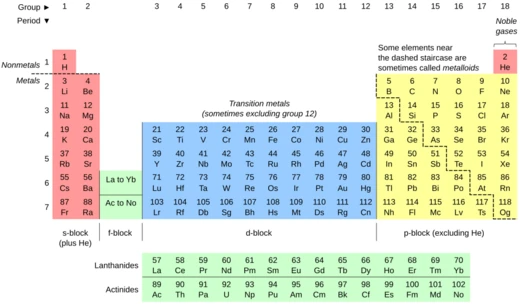
It is a soft, silvery white metal that reacts rapidly with atmospheric oxygen and water.[1][2] The element potassium, which has the symbol K (derived from Neo-Latin kalium) and atomic number 19, is categorized as one of the alkali metals.[1][2] Only in ionic salt form does potassium exist naturally, and it ranks as the seventh most abundant element within the Earth's crust, constituting roughly 2.6% of its weight.[2][3]
Quick Facts
- Atomic number
- 19
- Element category
- Alkali metal
- First isolated by
- Humphry Davy
- Year of first isolation
- 1807
- Method of first isolation
- Electrolysis of molten caustic potash
- Key biological role
- Vital for nerve transmission and cell function
Facts from the source article.
Key facts and history
In 1702, Georg Ernst Stahl suggested that sodium and potassium salts were fundamentally different, a difference proven by Henri Louis Duhamel du Monceau in 1736.[4] Martin Klaproth discovered in 1797 that potash contained a new element, which he proposed calling kali.[5] Humphry Davy first isolated potassium metal in 1807 via electrolysis of molten caustic potash.[6] The English term "potassium" originates from "potash," which describes the method of extracting potassium salts from the ashes of burnt plants by placing them in a pot with water and heating.[2][7]
The chemical symbol K comes from "kalium," a name suggested in 1809 by Ludwig Wilhelm Gilbert for the element Davy had called potassium.[5] Through nucleosynthesis involving lighter atoms, potassium is produced during Type II supernovae, likely via an oxygen-consuming nuclear reaction in the explosive stage.[8] Of all potassium chemicals produced globally, 95% is used in agricultural fertilizers, with potassium chloride being the primary form supplied.[9]
What the research sources say
The Anthoni seawater composition table lists potassium at 390 ppm in seawater at 3.5% salinity.[10] The same source identifies potassium as one of the main nutrients for plant growth.[10] Springer Berlin/Heidelberg published the "Handbook of the Chemical Elements" in 2024.[12] Walter De Gruyter Inc published "Lehrbuch Der Anorganischen Chemie, 91-100" in December 1984.[13]
References
- Wikipedia, "Potassium" (CC BY-SA 4.0), which cites: Augustyn, "Potassium/ Chemical element" (original not read by us) en.wikipedia.org
- Wikipedia, "Potassium" (CC BY-SA 4.0), which cites: Webb, "The Sodium and Potassium Content of Sea Water", Journal of Experimental Biology, April 1939, p. 178–183; Anthoni, "Detailed composition of seawater at 3.5% salinity", seafriends.org.nz, 2006; Halperin, "Potassium", The Lancet, July 1998, p. 135–140 (we also read that source) en.wikipedia.org
- Wikipedia, "Potassium" (CC BY-SA 4.0), which cites: Greenwood, p. 69; Webb, "The Sodium and Potassium Content of Sea Water", Journal of Experimental Biology, April 1939, p. 178–183; Micale, "Seawater Desalination: Conventional and Renewable Energy Processes", Springer, 2009, p. 3; Prud'homme, "Industrial minerals & rocks: commodities, markets, and uses", Society for Mining, Metallurgy, and Exploration, 2006, p. 723–740 (we also read that source) en.wikipedia.org
- Wikipedia, "Potassium" (CC BY-SA 4.0), which cites: Marggraf, "Chymische Schriften", 1761, p. 167; du Monceau, "Sur la Base de Sel Marin", Mémoires de l'Académie Royale des Sciences, 1702–1797, p. 65–68; Weeks, "The discovery of the elements. IX. Three alkali metals: Potassium, sodium, and lithium", Journal of Chemical Education, 1932, p. 1035; Siegfried, "The Discovery of Potassium and Sodium, and the Problem of the Chemical Elements", Isis, 1963, p. 247–258; Browne, "Historical notes upon the domestic potash industry in early colonial and later times", Journal of Chemical Education, 1926, p. en.wikipedia.org
- Wikipedia, "Potassium" (CC BY-SA 4.0), which cites: Klaproth, M. (1797) "Nouvelles données relatives à l'histoire naturelle de l'alcali végétal" (New data regarding the natural history of the vegetable alkali), M; Davy, Humphry, "Ueber einige neue Erscheinungen chemischer Veränderungen, welche durch die Electricität bewirkt werden; insbesondere über die Zersetzung der feuerbeständigen Alkalien, die Darstellung der neuen Körper, we; Berzelius, J. Jacob (1814) Försök, att, genom användandet af den electrokemiska theorien och de kemiska proportionerna, grundlägga ett rent vettenskapligt syste (or en.wikipedia.org
- Wikipedia, "Potassium" (CC BY-SA 4.0), which cites: Enghag, "Encyclopedia of the elements", Wiley-VCH Weinheim, 2004; Weeks, "The discovery of the elements. IX. Three alkali metals: Potassium, sodium, and lithium", Journal of Chemical Education, 1932, p. 1035; Siegfried, "The Discovery of Potassium and Sodium, and the Problem of the Chemical Elements", Isis, 1963, p. 247–258; Davy, "On some new phenomena of chemical changes produced by electricity, in particular the decomposition of the fixed alkalies, and the exhibition of the new substances that constitute their bases; and on the general na; en.wikipedia.org
- Wikipedia, "Potassium" (CC BY-SA 4.0), which cites: Davy, "On some new phenomena of chemical changes produced by electricity, in particular the decomposition of the fixed alkalies, and the exhibition of the new substances that constitute their bases; and on the general na (original not read by us) en.wikipedia.org
- Wikipedia, "Potassium" (CC BY-SA 4.0), which cites: Shimansky, "Observational constraints on potassium synthesis during the formation of stars of the Galactic disk", Astronomy Reports, September 2003, p. 750–762; Takeda, "Determination of Potassium Abundances for Giant and Dwarf Stars in the Galactic Disk", Stars and Galaxies, 2020; The, "A New Study of s -Process Nucleosynthesis in Massive Stars", The Astrophysical Journal, 20 April 2000, p. 998–1015 (original not read by us) en.wikipedia.org
- Wikipedia, "Potassium" (CC BY-SA 4.0), which cites: Greenwood, p. 73 (original not read by us) en.wikipedia.org
- Anthoni, "Detailed composition of seawater at 3.5% salinity", seafriends.org.nz, 2006. facts only, no text reused. seafriends.org.nz
- Open Library record, ISBN 9780873352338 ("Diamonds"). CC0 (metadata); book content not read. openlibrary.org
- Open Library record, ISBN 9783662689202 ("Handbook of the Chemical Elements"). CC0 (metadata); book content not read. openlibrary.org
- Open Library record, ISBN 9783110075113 ("Lehrbuch Der Anorganischen Chemie, 91-100"). CC0 (metadata); book content not read. openlibrary.org
Each numbered sentence above was checked against the source it cites before publication. Sentences citing Wikipedia adapt text from the English Wikipedia article Potassium (contributors), used under CC BY-SA 4.0; this entry is available under the same licence. Other sources were used for facts only; no text or images are copied from them.
Also in the Codexery
More in Periodic Table & Elements
Sources
Compiled from Wikipedia and the sources listed below. Text from Wikipedia is available under CC BY-SA 4.0; this entry is adapted from it.
- Wikipedia: Potassium (CC BY-SA 4.0).
- Word definitions: the , each quoted from its Wikipedia article.
Spotted an error? Know more?
Reader corrections go straight into our review queue. Suggest an edit · How this site is sourced