Radium
Radioactive alkaline earth metal discovered by the Curies.
Last updated
Pure radium is a volatile, lustrous silvery-white metal that rapidly turns black upon exposure to air.[1] Among the alkaline earth metals, radium has the greatest atomic mass and is the sole radioactive element within that group.[2] Barium is the element whose physical and chemical attributes are most similar to radium's.[2]
Quick Facts
- Atomic number
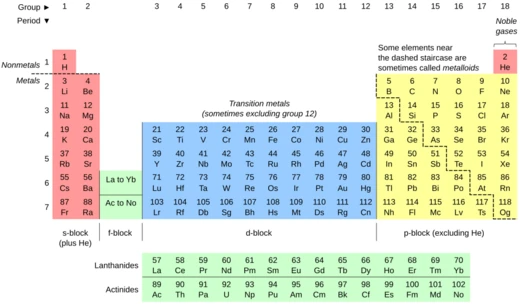
- 88
- Group
- 2 (alkaline earth metals)
- Most stable isotope
- radium-226 (half-life 1,600 years)
- Discovered by
- Marie and Pierre Curie
- Year discovered
- 1898
- Key property
- radioactive, emits ionizing radiation
Facts from the source article.
Key facts and history
Radium has 33 known isotopes, all of which are radioactive.[3] Four isotopes occur naturally in the decay chains of primordial thorium and uranium.[3] Radium was formerly used in self-luminous paints for watches, clocks, and instrument dials.[4] Because of the radiation it releases, a piece of radium metal stays warmer than the environment around it.[5]
The application of radium-based paint ended starting in the 1960s.[6]
What the research sources say
Hamilton reports that biologist Hermann Muller abandoned radium after a vial shattered and instead used X-rays for mutation experiments.[7] Frame describes that by itself, radium in high enough concentrations will glow blue, a phenomenon first observed by Marie and Pierre Curie.[8] Frame notes that the first company to produce radioluminescent paint in the United States was the Radium Luminous Material Corporation in Newark, New Jersey.[8] According to Hamilton, the American biologist Daniel MacDougal employed radium to cause mutations as early as 1904.[7]
References
- Wikipedia, "Radium" (CC BY-SA 4.0), which cites: Greenwood Earnshaw 1997; Kirby Salutsky 1964; ; "CRC Handbook of Chemistry and Physics", CRC Press, 2004; Weigel, "Zur Kristallchemie des Radiums", Radiochim. Acta, 1968, p. 78; Young, David A., "Phase Diagrams of the Elements", University of California Press, 1991, p. 85; "Crystal structures of the chemical elements at 1 bar", uni-bielefeld.de (original not read by us) en.wikipedia.org
- Wikipedia, "Radium" (CC BY-SA 4.0), which cites: Greenwood Earnshaw 1997 (original not read by us) en.wikipedia.org
- Wikipedia, "Radium" (CC BY-SA 4.0), which cites: Kirby Salutsky 1964; Peppard, "Occurrence of the (4 + 1) series in nature", Journal of the American Chemical Society, 1952, p. 6081–6084 (original not read by us) en.wikipedia.org
- Wikipedia, "Radium" (CC BY-SA 4.0), which cites: Terrill, "Radium in the healing arts and in industry: Radiation exposure in the United States", Public Health Reports, 1954, p. 255–262; Coursey, "The National Bureau of Standards and the Radium Dial Painters", Journal of Research of the National Institute of Standards and Technology, 2021; Frame, Paul, "Radioluminescent paint", Museum of Radiation and Radioactivity, 1999; "Radiation protection", epa.gov (we also read that source) en.wikipedia.org
- Wikipedia, "Radium" (CC BY-SA 4.0), which cites: Strutt, "The Becquerel Rays and the Properties of Radium", Courier Corporation, 7 September 2004, p. 133 (original not read by us) en.wikipedia.org
- Wikipedia, "Radium" (CC BY-SA 4.0), which cites: "Radiation protection", epa.gov; Eyrolle, "An updated review on tritium in the environment", Journal of Environmental Radioactivity, January 2018, p. 128–137; Lavrukhina, Nauka, 1966, p. 118; Zerriffi, Hisham, "Tritium: The environmental, health, budgetary, and strategic effects of the Department of Energy's decision to produce tritium", Institute for Energy and Environmental Research, January 1996; "Physical and Chemical Properties of Tritium", Nuclear Regulatory Commission; Hinderer, "Radioisotopic Impurities in Promethium-147 Produced at the en.wikipedia.org
- Hamilton, "The Secrets of Life: Historian Luis Campos resurrects radium's role in early genetics research", Distillations, 2016, p. 44–45. facts only, no text reused. sciencehistory.org
- Frame, Paul, "Radioluminescent paint", Museum of Radiation and Radioactivity, 1999. facts only, no text reused. orau.org
Each numbered sentence above was checked against the source it cites before publication. Sentences citing Wikipedia adapt text from the English Wikipedia article Radium (contributors), used under CC BY-SA 4.0; this entry is available under the same licence. Other sources were used for facts only; no text or images are copied from them.
Also in the Codexery
More in Periodic Table & Elements
Sources
Compiled from Wikipedia and the sources listed below. Text from Wikipedia is available under CC BY-SA 4.0; this entry is adapted from it.
- Wikipedia: Radium (CC BY-SA 4.0).
- Word definitions: the , each quoted from its Wikipedia article.
Spotted an error? Know more?
Reader corrections go straight into our review queue. Suggest an edit · How this site is sourced