Copper
A highly conductive metal essential to civilization and life.
Last updated
Copper is a chemical element with the symbol Cu and atomic number 29. It is a soft, malleable, and ductile metal noted for its very high thermal and electrical conductivity, with a freshly exposed surface displaying a pinkish-orange color. As one of the few metals that occur naturally in a directly usable metallic form, copper has been used by humans since around 8000 BC and was the first metal to be smelted from sulfide ores, cast into a mold, and alloyed with tin to create bronze.
Quick Facts
- Atomic number
- 29
- Group
- 11
- Period
- 4
Facts from the source article.
Did You Know?
- The name of the metal derives from aes cyprium, meaning 'metal of Cyprus' in Latin, which became cuprum in Late Latin, then coper in Old English, and finally copper in the 12th century.
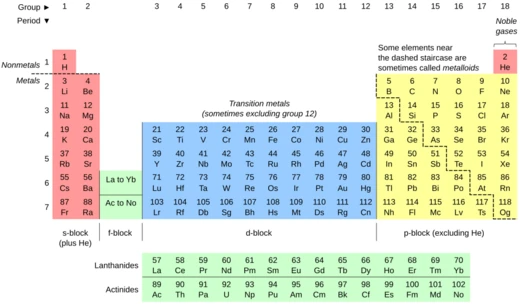
- Copper, silver, and gold are in group 11 of the periodic table; they have one s-orbital electron on top of a filled d-electron shell and are characterized by high ductility and electrical and thermal conductivity.
- Copper forms a rich variety of compounds, usually with oxidation states +1 (cuprous) and +2 (cupric), which promote or catalyse numerous chemical and biological processes.
Production
Copper is primarily obtained from copper sulfides mined in large open pits, often found in porphyry deposits with copper concentrations between 0.4 and 1.0 percent. Major mining sites include Chuquicamata in Chile, Bingham Canyon Mine in Utah, and El Chino Mine in New Mexico. In 2005, Chile produced at least one-third of the world’s copper, followed by the United States, Indonesia, and Peru. As of 2024, Chile supplies 70 percent of the refined copper and alloy imports to the United States, with Canada contributing 17 percent and Peru 7 percent, together making up 94 percent of U.S. imports.
Copper can also be extracted through in-situ leaching, and several locations in Arizona are well-suited for this method. Global copper use is rising, and current supplies are barely enough to bring all nations up to developed-world consumption levels. Researchers are exploring polymetallic nodules on the Pacific Ocean floor, between 3,000 and 6,500 meters deep, as an alternative source; these nodules also contain cobalt and nickel.
Reserves and prices
Humans have used copper for at least 10,000 years, but over 95 percent of all copper ever mined and smelted has been extracted since 1900. The Earth’s crust holds vast amounts of copper—about 10^14 tons in the top kilometer—but only a tiny fraction is economically recoverable with today’s prices and technology. Estimates for mineable reserves range from 25 to 60 years, depending on assumptions like growth rates. Recycling now provides a major portion of the copper in use.
Copper prices are volatile: after a peak in 2022, the price fell unexpectedly, then hit an all-time high above $11,000 per ton on the London Metal Exchange by May 2024. The global copper market is heavily commodified and financialized. The top exporters of raw copper are Zambia ($6.95 billion) and Chile ($2.16 billion), followed by the Democratic Republic of the Congo ($1.41 billion). The leading importers are China ($6.13 billion), Switzerland ($3.15 billion), and India ($2.05 billion).
Biological role
Copper's role in biology began when oxygen first appeared in Earth's atmosphere. Its proteins are key to moving electrons and carrying oxygen, thanks to copper's ability to easily switch between Cu(I) and Cu(II). Every eukaryote needs copper for aerobic respiration; in mitochondria, it appears in cytochrome c oxidase, the final protein in oxidative phosphorylation that produces ATP. During electron transfer to oxygen, copper atoms flip back and forth between reduced and oxidized states.
Copper also turns up in many superoxide dismutases, enzymes that break down superoxides by turning them into oxygen and hydrogen peroxide. Hemocyanin, a blue protein, carries oxygen in most mollusks and some arthropods like the horseshoe crab, giving these creatures blue blood instead of red. Laccases and tyrosinases are structurally similar to hemocyanin but hydroxylate substrates rather than binding oxygen reversibly. Some copper proteins, such as the blue copper proteins, are not enzymes; they simply relay electrons through electron transfer.
A unique center with four copper atoms has been found in nitrous-oxide reductase. Cells, both prokaryotic and eukaryotic, tightly control copper levels to meet essential needs while avoiding toxicity. Copper is a vital trace element for plants and animals, though not all microorganisms require it. In humans, copper concentration ranges from about 1.4 to 2.1 mg per kilogram of body mass.
History
Copper is one of the few metals that can be found in its pure, metallic form in nature, and ancient peoples were aware of it. The earliest known use of this native copper dates back to around 9000 BC in the Middle East, with a pendant from northern Iraq specifically dated to 8700 BC. Before humans learned to work copper with heat, the only metals they used were gold and iron that fell from the sky as meteorites. The development of copper metallurgy is believed to have happened in stages: first, people hammered native copper cold, then they discovered annealing, followed by smelting ore, and finally casting molten metal.
The oldest archaeological evidence for hot metallurgy in Eurasia comes from the Balkans and Carpathian Mountains, where copper objects made by casting and smelting have been found dating between 6200 and 5000 BC. The earliest known lost-wax casting in copper is an amulet from Mehrgarh, Pakistan, dated to 4000 BC. Ötzi the Iceman, who lived between 3300 and 3200 BC and was found in the Alps, carried an axe head that was 99.7% pure copper; the high arsenic levels in his hair suggest he was involved in smelting.
Smelting likely emerged in China before 2800 BC, in Central America around 600 AD, and in West Africa during the 9th or 10th century AD. Carbon dating places copper mining at Alderley Edge in Cheshire, UK, between 2280 and 1890 BC. Working with copper helped humans learn to handle other metals, and it is thought that copper smelting paved the way for discovering how to smelt iron. In North America, the Old Copper Complex in Michigan and Wisconsin produced non-smelted native copper objects between 6500 and 3000 BC, with a spearpoint from Wisconsin dated to 6500 BC.
Radiometric dating shows indigenous peoples around the Great Lakes used native copper as far back as 7500 BC, and they may have found veins that were 99% pure. Evidence from prehistoric lead pollution in Michigan lakes indicates copper mining began there around 6000 BC. Over time, the Old Copper Complex shifted from making practical tools to producing more decorative copper items.
Applications
Copper’s biggest job is conducting electricity, with about 60% of it going into electrical wire. Another 20% is used for roofing and plumbing, and 15% goes into industrial machinery. Most of the time, copper is used in its pure form, but when a harder material is needed, it’s mixed into alloys like brass and bronze, which account for 5% of total use. For over two hundred years, copper paint has been applied to boat hulls to stop plants and shellfish from growing on them.
A tiny amount of copper also ends up in nutritional supplements and agricultural fungicides. Pure copper is tricky to machine because it’s soft, ductile, and creates a lot of friction between chips and cutting tools, so alloys are usually chosen when machinability matters. Copper cookware can react with acidic or alkaline foods, giving them a metallic taste, but it’s great for whipping egg whites. Even with other materials competing, copper is still the top choice for nearly all electrical wiring, except for overhead power lines, where aluminum is often used instead.
Copper wire shows up in power generation, transmission, distribution, telecommunications, electronics, and countless other electrical devices. About half of all mined copper becomes electrical wire and cable.
For a short time in the late 1960s through the late 1970s, aluminum wiring replaced copper in many American homes, but poor design led to fire hazards. Those problems were fixed by using thicker aluminum wire, and properly installed aluminum wiring is still used today. For instance, the Airbus A380 uses aluminum wire instead of copper for its electrical power transmission.
More in Periodic Table & Elements
Sources
Compiled from Wikipedia and the sources listed below. Text from Wikipedia is available under CC BY-SA 4.0; this entry is adapted from it.
- Wikipedia: Copper (CC BY-SA 4.0).
- Word definitions: the , each quoted from its Wikipedia article.
Spotted an error? Know more?
Reader corrections go straight into our review queue. Suggest an edit · How this site is sourced