Molybdenum
A transition metal essential for steel alloys and nitrogen fixation.
Last updated
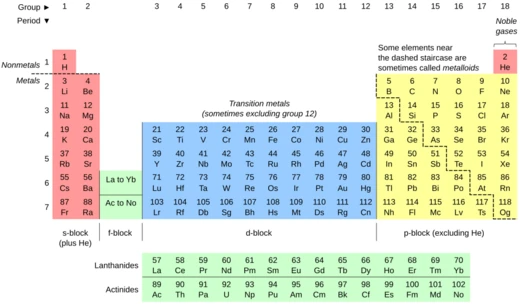
Molybdenum is element 42, symbol Mo, a silvery-grey metal with the sixth-highest melting point. Its name comes from a Greek word for lead. About 80% of production goes into steel alloys, where it forms hard, stable carbides.
Quick Facts
- Atomic number
- 42
- Melting point
- 2623 °C
- Mohs hardness
- 5.5
- Standard atomic weight
- 95.95 g/mol
- Electronegativity
- 2.16 (Pauling scale)
Facts from the source article.
History
The principal ore molybdenite was once confused with graphite and the lead ore galena; its name derives from the Ancient Greek word for lead. In 1754 Bengt Andersson Qvist examined molybdenite and determined it contained no lead. Carl Wilhelm Scheele stated in 1778 that molybdena was neither galena nor graphite and proposed it was an ore of a new element. Peter Jacob Hjelm isolated the metal in 1781 using carbon and linseed oil.
For the next century molybdenum had no industrial use due to scarcity and extraction difficulties. Early steel alloys showed promise but suffered from brittleness and inconsistent results. In 1906 William D. Coolidge patented a method to render molybdenum ductile, leading to uses in high-temperature furnaces and light bulb filament supports. Frank E. Elmore developed a froth flotation process in 1913 to recover molybdenite from ores, a method still used.
Occurrence and production
Molybdenum is the 54th most abundant element in Earth's crust at 1.5 parts per million and the 25th most abundant in oceans at 10 parts per billion. The Soviet Luna 24 mission found a molybdenum-bearing grain in a pyroxene fragment from the Moon. The main commercial ore is molybdenite (MoS2), though it also occurs in wulfenite and powellite. Molybdenum is mined as a principal ore and as a byproduct of copper and tungsten mining.
World production in 2011 was 250,000 tonnes, led by China, the United States, Chile, Peru, and Mexico. Total reserves are estimated at 10 million tonnes, concentrated in China, the US, and Chile. In processing, molybdenite is roasted in air at 700 °C to produce molybdenum(VI) oxide and sulfur dioxide. The oxide is extracted with aqueous ammonia to give ammonium molybdate, which is converted to ammonium dimolybdate and then to molybdenum trioxide.
Metallic molybdenum is produced by reduction of the oxide with hydrogen; for steel production, aluminothermic reduction with iron yields ferromolybdenum containing 60% molybdenum.
Applications
About 86% of molybdenum produced is used in metallurgy, with the rest in chemical applications. Global use includes structural steel, stainless steel, chemicals, tool and high-speed steels, cast iron, elemental metal, and superalloys. Molybdenum withstands extreme temperatures without significant expansion or softening, making it useful in military armor, aircraft parts, electrical contacts, industrial motors, and light bulb filament supports. Most high-strength steel alloys contain 0.25% to 8% molybdenum, contributing corrosion resistance and weldability.
It enhances corrosion resistance in type-300 stainless steels and superaustenitic grades. Molybdenum is sometimes used in place of tungsten due to lower density and more stable price, as in the M series of high-speed steels. It can serve as a flame-resistant coating for other metals, though it rapidly oxidizes above 760 °C and is best used in vacuum environments.
Biological role
Molybdenum is critically important for Earth's biosphere as a component of the most common nitrogenases, which fix atmospheric nitrogen. Without it, nitrogen fixation would be greatly reduced. At least 50 molybdenum-containing enzymes have been identified, mostly in bacteria, including aldehyde oxidase, sulfite oxidase, and xanthine oxidase. With the exception of nitrogenase, which uses the FeMoco cofactor (Fe7MoS9C), molybdenum in proteins is bound by molybdopterin.
Molybdoenzymes catalyze oxidation and reduction of small molecules in regulating nitrogen, sulfur, and carbon cycles. In humans, xanthine oxidase catalyzes the oxidation of xanthine to uric acid; its activity is proportional to molybdenum levels, though very high concentrations can inhibit purine catabolism. Molybdenum concentration also affects protein synthesis, metabolism, and growth. A 2008 research paper speculated that a scarcity of molybdenum in early oceans may have influenced the evolution of eukaryotic life.
Did You Know?
- Gaseous molybdenum consists of the diatomic species Mo2, which has a sextuple bond.
- Molybdenum has one of the lowest coefficients of thermal expansion among commercially used metals.
- A species of sponge, Theonella conica, is known for hyperaccumulation of molybdenum.
Also in the Codexery
More in Periodic Table & Elements
Sources
Compiled from Wikipedia and the sources listed below. Text from Wikipedia is available under CC BY-SA 4.0; this entry is adapted from it.
- Wikipedia: Molybdenum (CC BY-SA 4.0).
- Word definitions: the , each quoted from its Wikipedia article.
Spotted an error? Know more?
Reader corrections go straight into our review queue. Suggest an edit · How this site is sourced