Magnesium
A lightweight metal essential to life and industry.
Last updated
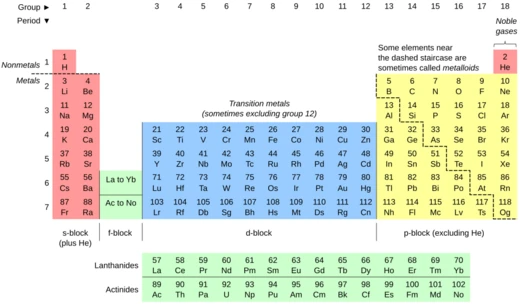
Magnesium is a chemical element with the symbol Mg and atomic number 12. It is a shiny gray metal of low density and high reactivity, occurring naturally only in combination with other elements. As an alkaline earth metal, it is essential to all cells and is used primarily in lightweight alloys.
Quick Facts
- Atomic number
- 12
- Group
- alkaline earth metals
- Discovered by
- Sir Humphry Davy
- Year of isolation
- 1808
- Abundance in earth's crust
- eighth most abundant element
- Abundance in human body
- eleventh most abundant element by mass
Facts from the source article.
Characteristics
Elemental magnesium is a gray-white lightweight metal with a density two-thirds that of aluminium. It has the lowest melting point (923 K) and lowest boiling point (1363 K) among the alkaline earth metals. Pure polycrystalline magnesium is brittle and fractures along shear bands, but becomes much more malleable when alloyed with small amounts of other metals, such as 1% aluminium, or when its grain size is reduced to about 1 μm or less. Magnesium oxidises in air but forms a protective layer of magnesium oxide, so it does not require an inert atmosphere for storage.
Direct reaction with air or oxygen at ambient pressure yields only the normal oxide MgO, which can be combined with hydrogen peroxide to form magnesium peroxide, and at low temperature with ozone to form magnesium superoxide. Powdered magnesium heated to just below its melting point reacts with nitrogen to form magnesium nitride. Magnesium reacts with water at room temperature, more slowly than calcium, producing hydrogen bubbles; the reaction is faster with powdered magnesium and at higher temperatures.
The reversible reaction with water can be used to store energy and run a magnesium-based engine. Magnesium also reacts exothermically with most acids, such as hydrochloric acid, producing magnesium chloride and hydrogen gas.
Although difficult to ignite in bulk, magnesium metal will ignite and can serve as an igniter for thermite. When finely powdered, magnesium reacts with water to form magnesium hydroxide and hydrogen gas, but the reaction is inhibited by the buildup of magnesium hydroxide on the metal surface. With steam, magnesium produces magnesium oxide and hydrogen.
Production
Magnesium is the eighth-most-abundant element in Earth's crust by mass and is found in large deposits of magnesite, dolomite, and other minerals, as well as in mineral waters. Although it occurs in more than 60 minerals, only dolomite, magnesite, brucite, carnallite, talc, and olivine are commercially important. The magnesium cation is the second-most-abundant cation in seawater, making seawater and sea salt attractive commercial sources. World production was approximately 1,100 kt in 2017, with the bulk produced in China (930 kt) and Russia (60 kt).
The United States supplied 45% of world production as recently as 1995, but after China mastered the Pidgeon process, the US market share fell to 7%, with only one US producer left as of 2013: US Magnesium, a Renco Group company on the shores of the Great Salt Lake. In September 2021, China reduced magnesium production due to a government initiative to limit energy availability for manufacturing, causing a significant price increase. The Pidgeon process and the Bolzano process both use magnesium oxide as a precursor, produced by calcining dolomite.
Reduction occurs at high temperatures with a ferrosilicon alloy; the calcium oxide combines with silicon as an oxygen scavenger, yielding stable calcium silicate. The Pidgeon process dominates worldwide production, is less technologically complex, and yields high-purity product via distillation and vapour deposition. China relies almost completely on the silicothermic Pidgeon process.
Uses
Magnesium ranks third among structural metals in common use, behind iron and aluminium. Its primary uses are, in descending order, in aluminium alloys, die-casting with zinc, removing sulfur during iron and steel production, and making titanium via the Kroll process. When nanoparticles of silicon carbide are added, magnesium becomes exceptionally strong for its weight. This metal was a key material in aerospace early on, appearing in German military planes from World War I and heavily in World War II aircraft; the Germans gave magnesium alloy the name "Elektron," which remains in use.
In commercial aviation, magnesium was mostly limited to engine parts because of fire and corrosion risks, though its use has grown in the 21st century to improve fuel efficiency. The Wright R-3350 Duplex Cyclone engine had a magnesium crankcase, which caused trouble in early Boeing B-29 Superfortress models: an engine fire could ignite the crankcase, producing heat up to 5,600 °F (3,100 °C) strong enough to cut the wing spar from the fuselage. Mercedes-Benz used Elektron for the body of the 300 SLR, a car that won the Mille Miglia and competed at Le Mans in 1955, where burning fragments of the alloy showered spectators during the disaster.
Porsche built the 917/053 that won Le Mans in 1971 with a magnesium frame and still uses magnesium alloys for engine blocks to save weight. Volkswagen Group has long used magnesium in engine parts, Mitsubishi Motors puts it in paddle shifters, BMW employed magnesium alloy blocks in the N52 engine, and Chevrolet used the AE44 magnesium alloy in the 2006 Corvette Z06.
Biological roles
Magnesium is vital for life because its ions interact with phosphate to support the basic nucleic acid chemistry in all cells. Over 300 enzymes depend on magnesium to work, including every enzyme that uses or makes ATP and those involved in building DNA and RNA. The ATP molecule itself usually exists as a chelate with a magnesium ion. Getting magnesium from food may slightly lower blood pressure and reduce the risk of stroke and sudden cardiac death, but the evidence is mixed and the effects are modest, so more research is needed.
Good dietary sources include nuts, cereals, cocoa, vegetables, and green leafy vegetables like spinach. In the UK, recommended daily intakes are set by the Dietary Reference Intake; in the US, the Recommended Dietary Allowances differ by age and sex. Most people get enough magnesium from a healthy diet, but supplements can help with specific issues such as magnesium deficiency, pregnancy complications, or certain chronic conditions. A 2014 review found limited support for oral magnesium supplements in preventing migraines, suggesting that increasing dietary intake might work better for those open to lifestyle changes.
An adult body holds magnesium, with 60% in the skeleton, 39% inside cells (20% in skeletal muscle), and 1% outside cells. Serum magnesium levels can appear normal even when cells are deficient. The body maintains serum levels by adjusting how much is absorbed in the gut and excreted by the kidneys. Both low and high protein intake hinder magnesium absorption, as do phosphate, phytate, and fat in the gut.
Did You Know?
- The name magnesium originates from the Greek word for locations related to the tribe of the Magnetes, either a district in Thessaly called Magnesia or Magnesia ad Sipylum, now in Turkey.
- The addition of about one in three hundred parts arsenic reduces the corrosion rate of magnesium in a salt solution by a factor of nearly ten.
Also in the Codexery
More in Periodic Table & Elements
Sources
Compiled from Wikipedia and the sources listed below. Text from Wikipedia is available under CC BY-SA 4.0; this entry is adapted from it.
- Wikipedia: Magnesium (CC BY-SA 4.0).
- Word definitions: the , each quoted from its Wikipedia article.
Spotted an error? Know more?
Reader corrections go straight into our review queue. Suggest an edit · How this site is sourced