Platinum
A dense, unreactive precious metal used in catalysis and jewelry.
Last updated
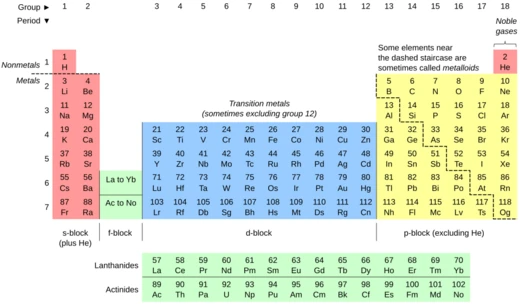
The element with atomic number 78 is designated by the symbol Pt.[1] This transition metal is silverish-white, precious, highly unreactive, ductile, malleable, and dense.[1] The Spanish word "platina", a diminutive form of "silver", is the origin of the element's name.[1]
Quick Facts
- Atomic number
- 78
- Group
- 10 (platinum group)
- Natural isotopes
- 6
- Crustal abundance
- approximately 5 μg/kg
- Annual production
- barely a few hundred metric tonnes
- Discovery recognized
- 1748 (Antonio de Ulloa)
Facts from the source article.
Key facts and history
Platinum does not corrode, and bulk platinum does not oxidize in air at any temperature.[2] The most common oxidation states of platinum are +2 and +4.[3] The first European reference to platinum appears in 1557 in the writings of the Italian humanist Julius Caesar Scaliger.[4] Within the periodic table, this element is situated in group 10 and is part of the platinum group of elements.[5][6]
Six isotopes of this element occur naturally.[5][6] Earth's crust contains this element only rarely, with its average abundance being roughly 5 μg/kg.[5][6] Applications for this metal include jewelry, dentistry equipment, platinum resistance thermometers, electrodes and electrical contacts, laboratory equipment, and catalytic converters.[7] Certain cancers are treated with chemotherapy drugs that contain platinum, for instance carboplatin, oxaliplatin, and cisplatin.[8]
What the research sources say
The CRC Handbook of Chemistry and Physics, 88th Edition, published by CRC on June 25, 2007, is a source for platinum's most common oxidation states.[9][3] The book "Exploring chemical elements and their compounds", published by Tab Books in 1992, describes that platinum is paramagnetic, whereas nickel and iron are both ferromagnetic.[10][11] The Alaska Community Database Online account notes that between 1927 and 1934, several small placer mines operated on creeks in the Platinum area, mining some 3,000 troy ounces of platinum.[12] The 2024 Springer Berlin / Heidelberg publication "Handbook of the Chemical Elements" verifies that platinum belongs to group 10 of the periodic table and is a member of the platinum group of elements.[6][5]
References
- Wikipedia, "Platinum" (CC BY-SA 4.0), which cites: "platinum (Pt)", Encyclopædia Britannica, 2012; (original not read by us) en.wikipedia.org
- Wikipedia, "Platinum" (CC BY-SA 4.0), which cites: Chaston, "Reaction of Oxygen with the Platinum Metals: I—The Oxidation of Platinum", Platinum Metals Review, April 1, 1964, p. 50–54 (original not read by us) en.wikipedia.org
- Wikipedia, "Platinum" (CC BY-SA 4.0), which cites: Sir Norman Lockyer, "Nature", Macmillan Journals Limited, 1891, p. 625–; Kauffman, "Inorganic Syntheses", 1967, p. 182–185; ((CRC contributors)), "CRC Handbook of Chemistry and Physics", CRC Press, 2007–2008, p. 26 (we also read that source) en.wikipedia.org
- Wikipedia, "Platinum" (CC BY-SA 4.0), which cites: Weeks, M. E., "Discovery of the Elements", Journal of Chemical Education, 1968, p. 385–407 (original not read by us) en.wikipedia.org
- Wikipedia, "Platinum" (CC BY-SA 4.0), which cites: Sicius, "Handbook of the Chemical Elements", Springer Berlin Heidelberg, 2024; Sicius, "Handbook of the Chemical Elements", Springer Berlin Heidelberg, 2024 (we also read that source) en.wikipedia.org
- Open Library record, ISBN 9783662689202 ("Handbook of the Chemical Elements"). CC0 (metadata); book content not read. openlibrary.org
- Wikipedia, "Platinum" (CC BY-SA 4.0), which cites: Preston, "Platinum in the Glass Industry", Platinum Metals Review, 1960, p. 2–9 (original not read by us) en.wikipedia.org
- Wikipedia, "Platinum" (CC BY-SA 4.0), which cites: Wheate, "The status of platinum anticancer drugs in the clinic and in clinical trials", Dalton Transactions, 2010, p. 8113–27 (original not read by us) en.wikipedia.org
- Open Library record, ISBN 9780849304880 ("CRC Handbook of Chemistry and Physics, 88th Edition (Crc Handbook of Chemistry and Physics)"). CC0 (metadata); book content not read. openlibrary.org
- Open Library record, ISBN 9780830630189 ("Exploring chemical elements and their compounds"). CC0 (metadata); book content not read. openlibrary.org
- Wikipedia, "Platinum" (CC BY-SA 4.0), which cites: Heiserman, "Exploring Chemical Elements and their Compounds", TAB Books, 1992, p. 272–4 (we also read that source) en.wikipedia.org
- "The History of Platinum", Alaska Community Database Online. facts only, no text reused. explorenorth.com
Each numbered sentence above was checked against the source it cites before publication. Sentences citing Wikipedia adapt text from the English Wikipedia article Platinum (contributors), used under CC BY-SA 4.0; this entry is available under the same licence. Other sources were used for facts only; no text or images are copied from them.
Also in the Codexery
More in Periodic Table & Elements
Sources
Compiled from Wikipedia and the sources listed below. Text from Wikipedia is available under CC BY-SA 4.0; this entry is adapted from it.
- Wikipedia: Platinum (CC BY-SA 4.0).
- Word definitions: the , each quoted from its Wikipedia article.
Spotted an error? Know more?
Reader corrections go straight into our review queue. Suggest an edit · How this site is sourced