Hafnium
A neutron-absorbing metal used in nuclear reactor control rods.
Last updated
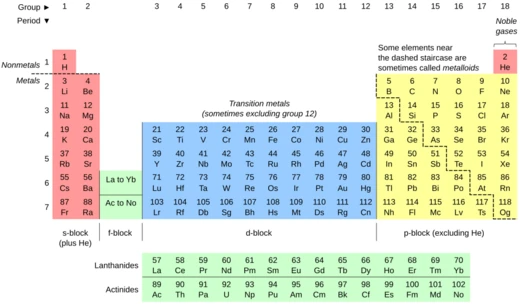
Hafnium is a chemical element with symbol Hf and atomic number 72, a lustrous, silvery gray transition metal that closely resembles zirconium. Its existence was predicted by Dmitri Mendeleev in 1869, but it was not identified until 1922 by Dirk Coster and George de Hevesy, who named it after the Latin name for Copenhagen. The element is obtained only by separation from zirconium and is most often used in alloys with nickel and in control rods for nuclear reactors.
Quick Facts
- Atomic number
- 72
- Discovered by
- Dirk Coster and George de Hevesy
- Year of discovery
- 1922
- Named after
- Hafnia (Latin for Copenhagen)
- Classification
- transition metal
Facts from the source article.
History
Dmitri Mendeleev implicitly predicted a heavier analog of titanium and zirconium in his 1869 report on the Periodic Law. In 1871, he placed lanthanum below zirconium based on atomic masses. Henry Moseley's X-ray spectroscopy in 1914 showed a direct relationship between spectral line and effective nuclear charge, leading to the use of atomic number to determine an element's place in the periodic table. Moseley identified gaps at atomic numbers 43, 61, 72, and 75.
In 1914, several people claimed discovery of element 72 after Moseley predicted the gap. Georges Urbain asserted he had found it in rare earth elements in 1907 and published results on celtium in 1911, but neither the spectra nor chemical behavior matched the later-discovered element, and his claim was rejected after a long controversy. Chemists favored chemical techniques that led to celtium, while physicists relied on X-ray spectroscopy showing Urbain's substances lacked element 72.
In 1921, Charles R. Bury suggested element 72 should resemble zirconium and not be part of the rare earths. By early 1923, Niels Bohr and others agreed with Bury, based on Bohr's atomic theories, Moseley's spectroscopy, and Friedrich Paneth's chemical arguments.
Characteristics
Hafnium is a shiny, silvery, ductile metal that resists corrosion and is chemically similar to zirconium, sharing the same number of valence electrons and group. The expected expansion of atomic radii from period 5 to 6 is nearly canceled by the lanthanide contraction, and relativistic effects are similar for both elements. At 2388 K, hafnium changes from a hexagonal close-packed lattice (alpha form) to a body-centered cubic lattice (beta form). Zirconium impurities markedly affect the physical properties of hafnium samples, especially nuclear properties, because the two are among the most difficult elements to separate chemically.
A notable physical difference is density: zirconium has about half the density of hafnium. Hafnium's high thermal neutron capture cross section is roughly three orders of magnitude greater than that of zirconium, and several hafnium isotopes can absorb two or more neutrons each. In air, hafnium forms a protective film of monoclinic hafnium oxide that inhibits further corrosion, though the metal is attacked by hydrofluoric acid and concentrated sulfuric acid and can be oxidized with halogens or burn in air. Finely divided hafnium can ignite spontaneously in air, and the metal resists concentrated alkalis.
Production
Most hafnium comes from processing heavy mineral sands that contain ilmenite, rutile, and zircon, where it is a byproduct of zirconium production. Because even small amounts of hafnium make zirconium unsuitable for use as nuclear fuel rod cladding—due to hafnium’s strong neutron absorption—these two elements must be almost completely separated. Their nearly identical chemistry makes this separation challenging. Early industrial methods, like fractional crystallization of ammonium fluoride salts or fractional distillation of the chloride, were not workable on a large scale.
In the 1940s, liquid–liquid extraction using various solvents was developed and is still used; other techniques include molten salt extraction and crystallization of fluorozirconates. Roughly half of all hafnium metal produced comes from zirconium refining. The separation process yields hafnium(IV) chloride, which is then reduced with magnesium or sodium in the Kroll process to produce the metal. For further purification, a chemical transport method is employed: hafnium reacts with iodine at 500 degrees Celsius to form hafnium(IV) iodide, which then decomposes at a tungsten filament heated to 1700 degrees Celsius, depositing pure hafnium and freeing the iodine for reuse.
Applications
Much hafnium is used in control rods for nuclear reactors and as an additive in nickel alloys to increase heat resistance. Hafnium has limited applications because it closely resembles the more abundant zirconium, pure hafnium was not widely available until the late 1950s, and it is rare and expensive. After the Fukushima disaster reduced demand for hafnium-free zirconium, hafnium's price rose from about $500–600/kg in 2014 to around $1000/kg in 2015.
Several hafnium isotopes can each absorb multiple neutrons, making it suitable for control rods; its neutron capture cross section is about 600 times that of zirconium. Excellent mechanical properties and corrosion resistance allow its use in pressurized water reactors. The German research reactor FRM II uses hafnium as a neutron absorber, and it is common in military reactors, particularly US naval submarine reactors, to slow excessive reaction rates.
Hafnium is used in alloys with iron, titanium, niobium, tantalum, and other metals. The C103 alloy, used for liquid-rocket thruster nozzles such as in the Apollo Lunar Modules' main engine, consists of 89% niobium, 10% hafnium, and 1% titanium. Small hafnium additions improve corrosion resistance of nickel-based alloys, especially under cyclic temperature conditions, and an alloy with as little as 1% hafnium can withstand temperatures 50 °C higher than the same alloy without hafnium.
Did You Know?
- Hafnium powder is often wetted with at least 25% water by weight to be considered safe because the metal is pyrophoric.
- Hafnium tetrachloride releases acidic fumes on contact with water and has been observed to cause liver damage at high exposure levels.
Also in the Codexery
More in Periodic Table & Elements
Sources
Compiled from Wikipedia and the sources listed below. Text from Wikipedia is available under CC BY-SA 4.0; this entry is adapted from it.
- Wikipedia: Hafnium (CC BY-SA 4.0).
- Word definitions: the , each quoted from its Wikipedia article.
Spotted an error? Know more?
Reader corrections go straight into our review queue. Suggest an edit · How this site is sourced