Lutetium
Last updated
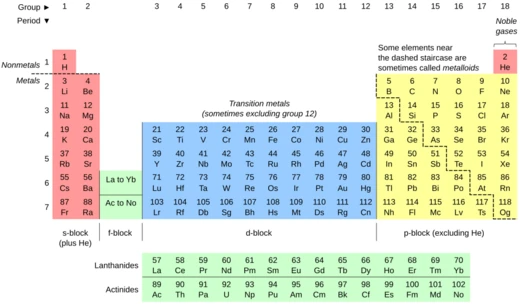
It is the last element in the lanthanide series and is traditionally counted among the rare earth elements.[1] The element with symbol Lu and atomic number 71 is a silvery-white metal that is dense and hard, classified among the rare earth metals.[1][2] Because the lanthanide contraction makes the lutetium atom the smallest in the lanthanide series, lutetium is the densest and hardest of the rare earth metals.[2]
Quick Facts
- Atomic number
- 71
Facts from the source article.
Key facts and history
Urbain was the first to publish, followed by Welsbach, while James gave up his claim upon learning of Urbain's work.[3] The International Commission on Atomic Weights settled the priority dispute in 1909 by granting priority to Urbain and adopting his name.[4] In 1949, the International Union of Pure and Applied Chemistry recommended the name lutetium, changing the spelling from lutecium.[5] Its principal commercial source is as a by-product from processing the mineral monazite.[6]
In 1907, three researchers—Georges Urbain, Carl Auer von Welsbach, and Charles James—each independently identified lutetium.[7][8] The element was isolated from ytterbium oxide (ytterbia) by all three discoverers.[7][8] Although lutetium is not especially abundant, its concentration in the Earth's crust exceeds that of silver.[9]
What the research sources say
The EBSCO Research Starters account states that lutetium is a silvery-white, dense metal with a high melting point of 1663 °C, making it the densest and hardest among the rare earth metals.[2] The Chemistry Learner source notes that lutetium is the hardest and densest element in the lanthanide group.[10] The EBSCO account reports that lutetium is utilized in specialized alloys, as a catalyst in petroleum refining, and in positron emission tomography detectors.[2] The EBSCO account describes lutetium as paramagnetic over a wide range of temperatures and capable of becoming a superconductor at high pressure and extremely low temperatures.[2]
The Chemistry Learner source states that the pure form of lutetium costs about $350 per gram.[10]
References
- Wikipedia, "Lutetium" (CC BY-SA 4.0), which cites: Scerri, "Mendeleev's Periodic Table Is Finally Completed and What To Do about Group 3?", Chemistry International, 2012 (original not read by us) en.wikipedia.org
- "Lutetium (Lu)", EBSCO Research Starters. ebsco.com
- Wikipedia, "Lutetium" (CC BY-SA 4.0), which cites: Kragh, "Episodes from the History of the Rare Earth Elements", Kluwer Academic Publishers, 1996, p. 67–90; Emsley, "Nature's building blocks: an A-Z guide to the elements", Oxford University Press, 2001, p. 240–242 (we also read that source) en.wikipedia.org
- Wikipedia, "Lutetium" (CC BY-SA 4.0), which cites: Weeks, "The discovery of the elements", Journal of Chemical Education, 1956; Weeks, Mary Elvira, "The discovery of the elements: XVI. The rare earth elements", Journal of Chemical Education, 1932, p. 1751–1773; Clarke, "REPORT OF THE INTERNATIONAL COMMITTEE ON ATOMIC WEIGHTS. 1909.", Journal of the American Chemical Society, 1909-01-01, p. 1–6; Urbain, "Un nouvel élément: le lutécium, résultant du dédoublement de l'ytterbium de Marignac", C. R. Acad. Sci., 4 November 1907, p. 759-762; Welsbach, "Die Zerlegung des Ytterbiums in seine Elem en.wikipedia.org
- Wikipedia, "Lutetium" (CC BY-SA 4.0), which cites: Jensen, "Chemical Nomenclature", American Chemical Society, 1953, p. 38–48; Emsley, "Nature's building blocks: an A-Z guide to the elements", Oxford University Press, 2001, p. 240–242 (we also read that source) en.wikipedia.org
- Wikipedia, "Lutetium" (CC BY-SA 4.0), which cites: Krebs, "The history and use of our earth's chemical elements: a reference guide", Greenwood Publishing Group, 2006, p. 303–304 (we also read that source) en.wikipedia.org
- Wikipedia, "Lutetium" (CC BY-SA 4.0), which cites: "Lutetium Element Facts / Chemistry" (we also read that source) en.wikipedia.org
- "Lutetium Element Facts / Chemistry". chemicool.com
- Wikipedia, "Lutetium" (CC BY-SA 4.0), which cites: "lutetium - Dictionary Definition", Vocabulary.com (we also read that source) en.wikipedia.org
- Ghosh, "History of Lutetium", Chemistry Learner, 25 May 2018. chemistrylearner.com
Each numbered sentence above was checked against the source it cites before publication. Sentences citing Wikipedia adapt text from the English Wikipedia article Lutetium (contributors), used under CC BY-SA 4.0; this entry is available under the same licence. Other sources were used for facts only.
More in Periodic Table & Elements
Sources
Compiled from Wikipedia and the sources listed below. Text from Wikipedia is available under CC BY-SA 4.0; this entry is adapted from it.
- Wikipedia: Lutetium (CC BY-SA 4.0).
- Word definitions: the Codexery glossary, each quoted from its Wikipedia article.
Spotted an error? Know more?
Reader corrections go straight into our review queue. Suggest an edit · How this site is sourced