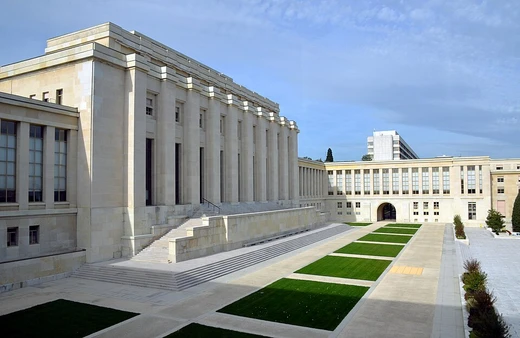
International Union of Pure and Applied Chemistry
International authority for chemical nomenclature and standards.
The chemical sciences are advanced by the International Union of Pure and Applied Chemistry (IUPAC), a global federation whose members are National Adhering Organizations, primarily through the creation of nomenclature and terminology.[1] Succeeding the International Congress of Applied Chemistry, IUPAC came into being in 1919.[1]
Quick Facts
- Abbreviation
- IUPAC
- Headquarters
- Research Triangle Park, North Carolina, United States
- Region served
- Worldwide
- Language
- English
- Leader
- Mary Garson
- Affiliations
- International Science Council
Facts from the source article.
Key facts and history
IUPAC as such was established in 1919.[2] Nazi Germany was removed from IUPAC during World War II, and East and West Germany were readmitted in 1973.[3] National chemistry societies, national academies of sciences, or other representative bodies for chemists can serve as IUPAC's National Adhering Organizations.[1] In 1860, a committee led by German scientist Friedrich August Kekulé von Stradonitz first tackled the need for international chemistry standards.[2]
Due to prejudice from Allied powers after World War I, Germany was kept out of early IUPAC and only gained admission in 1929.[4]
What the cited sources add
The letter stated that the indiscriminate attacks were of concern to chemical scientists and engineers around the globe.[5] The Homeland Preparedness News account notes that IUPAC is a world authority on chemical nomenclature and a leader in providing objective scientific expertise.[5]
References
- Wikipedia, "International Union of Pure and Applied Chemistry" (CC BY-SA 4.0), which cites: "IUPAC National Adhering Organizations", Iupac.org, 2 June 2011 (original not read by us) en.wikipedia.org
- Wikipedia, "International Union of Pure and Applied Chemistry" (CC BY-SA 4.0), which cites: Fennel, "History of IUPAC, 1919–1987", Blackwell Science, 1994; Fennel, "History of IUPAC, 1919–1987", Blackwell Science, 1994; Fennel, "History of IUPAC, 1919–1987", Blackwell Science, 1994; International Union of Pure and Applied Chemistry: About . IUPAC. Retrieved on 29 July 2013.; Brown, "Chemistry The Central Science Tenth Edition", Pearson Books, 2006 (we also read that source) en.wikipedia.org
- Wikipedia, "International Union of Pure and Applied Chemistry" (CC BY-SA 4.0), which cites: Kaderas, "Wissenschaften und Wissenschaftspolitik: Bestandsaufnahmen zu Formationen, Brüchen und Kontinuitäten im Deutschland des 20. Jahrhunderts", Franz Steiner Verlag, 2002; O'Sullivan, "IUPAC raises dues, ponders industry's role", Chemical & Engineering News, 1973, p. 10 (we also read that source) en.wikipedia.org
- Wikipedia, "International Union of Pure and Applied Chemistry" (CC BY-SA 4.0), which cites: Kaderas, "Wissenschaften und Wissenschaftspolitik: Bestandsaufnahmen zu Formationen, Brüchen und Kontinuitäten im Deutschland des 20. Jahrhunderts", Franz Steiner Verlag, 2002 (we also read that source) en.wikipedia.org
- "International chemical industry condemns the use of chlorine as a weapon", Homeland Preparedness News, 1 December 2016. facts only, no text reused. homelandprepnews.com
Each numbered sentence above was checked against the source it cites before publication. Sentences citing Wikipedia adapt text from the English Wikipedia article International Union of Pure and Applied Chemistry (contributors), used under CC BY-SA 4.0; this entry is available under the same licence. Other sources were used for facts only; no text or images are copied from them.
More in International Organizations And Agreements
Spotted an error? Know more?
Reader corrections go straight into our review queue. Suggest an edit · How this site is sourced