Seaborgium
Last updated
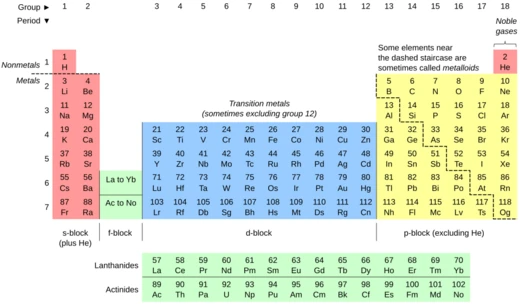
Within group 6 of the periodic table, seaborgium sits below chromium, molybdenum, and tungsten, making it the heaviest member of that group.[1]
Quick Facts
- Atomic number
- 106
- Named after
- Glenn T. Seaborg
- Discovery year
- 1974
- Group
- 6
Facts from the source article.
Key facts and history
A few months later in 1974, researchers at the University of California, Berkeley, including Glenn T. Seaborg, also synthesized the element by bombarding californium-249 with oxygen-18 ions.[2] The Berkeley team observed at least seventy alpha decays from the isotope seaborgium-263m with a half-life of 0.9 seconds.[2] The TWG recognized the Berkeley team as official discoverers in their 1993 report.[3] The name seaborgium and symbol Sg were announced at the 207th national meeting of the American Chemical Society in March 1994.[4]
After public protest and compromise, IUPAC adopted the name seaborgium for element 106 in August 1997.[5] Seaborg died a year and a half later on 25 February 1999 at the age of 86.[4] In 1974, a Russian team from Dubna, headed by Yuri Oganessian, bombarded lead-208 and lead-207 targets with chromium-54 ions and reported the first evidence of element 106.[3] The Transfermium Working Group's 1993 report stated that the American synthesis of seaborgium-263 was convincing because it was firmly anchored to known daughter nuclei.[3]
What the research sources say
A 2014 study in Science demonstrated that seaborgium forms seaborgium hexacarbonyl, Sg(CO)6, similarly to its lighter congeners.[6]
References
- Wikipedia, "Seaborgium" (CC BY-SA 4.0) en.wikipedia.org
- Wikipedia, "Seaborgium" (CC BY-SA 4.0), which cites: Ghiorso, "Element 106", Physical Review Letters, December 1974, p. 1490 (original not read by us) en.wikipedia.org
- Wikipedia, "Seaborgium" (CC BY-SA 4.0), which cites: Barber, "Discovery of the transfermium elements. Part II: Introduction to discovery profiles. Part III: Discovery profiles of the transfermium elements", Pure and Applied Chemistry, 1993, p. 1757 (original not read by us) en.wikipedia.org
- Wikipedia, "Seaborgium" (CC BY-SA 4.0), which cites: "106 Seaborgium", Elements.vanderkrogt.net (original not read by us) en.wikipedia.org
- Wikipedia, "Seaborgium" (CC BY-SA 4.0), which cites: Hoffman, D.C., Ghiorso, A., Seaborg, G. T. The Transuranium People: The Inside Story, (2000), 369–399 (original not read by us) en.wikipedia.org
- Wikipedia, "Seaborgium" (CC BY-SA 4.0), which cites: Even, "Synthesis and detection of a seaborgium carbonyl complex", Science, 2014, p. 1491–3 (original not read by us) en.wikipedia.org
Each numbered sentence above was checked against the source it cites before publication. Sentences citing Wikipedia adapt text from the English Wikipedia article Seaborgium (contributors), used under CC BY-SA 4.0; this entry is available under the same licence. Other sources were used for facts only.
More in Periodic Table & Elements
Sources
Compiled from Wikipedia and the sources listed below. Text from Wikipedia is available under CC BY-SA 4.0; this entry is adapted from it.
- Wikipedia: Seaborgium (CC BY-SA 4.0).
- Word definitions: the Codexery glossary, each quoted from its Wikipedia article.
Spotted an error? Know more?
Reader corrections go straight into our review queue. Suggest an edit · How this site is sourced