Promethium
Last updated
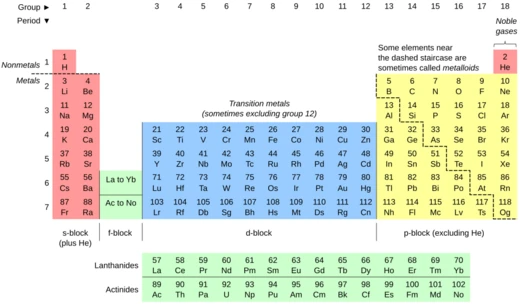
Promethium is a radioactive lanthanide element with atomic number 61 that has no stable isotopes.[1] It was first produced in 1945 at Oak Ridge National Laboratory from uranium fission products.[2] Only promethium-147 has industrial applications, mainly in luminous paint and atomic batteries.[3][4]
Quick Facts
- Atomic number
- 61
- Category
- Lanthanide
- Discovery location
- Oak Ridge National Laboratory
- Most stable isotope
- Promethium-145 (half-life 17.7 years)
- Primary application isotope
- Promethium-147
Facts from the source article.
Key facts and history
In 1902, Bohuslav Brauner predicted an element between neodymium and samarium based on property differences.[5] Henry Moseley identified atomic number 61 as a gap in the periodic table in 1914.[5] Luigi Rolla and Lorenzo Fernandes claimed discovery in 1926, naming it "florentium" after Florence.[6] Smith Hopkins and Len Yntema also claimed discovery in 1926, naming it "illinium"[6][7]
Both claims were later shown erroneous because the spectrum lines matched didymium and impurities.[7] Josef Mattauch's isobar rule in 1934 indicated element 61 could not form stable isotopes.[1] In 1963, promethium metal was first made using promethium(III) fluoride and lithium.[8] Promethium was first produced and characterized in 1945 by Jacob A. Marinsky, Lawrence E. Glendenin and Charles D. Coryell at Oak Ridge National Laboratory.[2]
Grace Mary Coryell suggested the name "prometheum", derived from Prometheus, the Titan in Greek mythology who stole fire from Mount Olympus and brought it down to humans.[2] By the 1960s, Oak Ridge National Laboratory's annual promethium output reached 650 grams, and it was the sole facility worldwide producing it in large volumes.[9]
References
- Wikipedia, "Promethium" (CC BY-SA 4.0), which cites: Lavrukhina Pozdnyakov 1966, p. 120; Thyssen, "Handbook on the Physics and Chemistry of Rare Earths", Elsevier, 2011, p. 63 (we also read that source) en.wikipedia.org
- Wikipedia, "Promethium" (CC BY-SA 4.0), which cites: Marinsky, "The chemical identification of radioisotopes of neodymium and of element 61", Journal of the American Chemical Society, 1947, p. 2781–5; "Discovery of Promethium", Oak Ridge National Laboratory Review, 2003; Emsley 2011, p. 429; Emsley 2011, p. 429; Wiberg, "Inorganic Chemistry", John Wiley and Sons, 2001, p. 1694; Emsley 2011, p. 429 (original not read by us) en.wikipedia.org
- Wikipedia, "Promethium" (CC BY-SA 4.0), which cites: Emsley 2011, p. 429; Lavrukhina Pozdnyakov 1966, p. 120; Emsley 2011, p. 429; Lavrukhina Pozdnyakov 1966, p. 120 (original not read by us) en.wikipedia.org
- Wikipedia, "Promethium" (CC BY-SA 4.0), which cites: promethium. Encyclopædia Britannica Online; Hammond, C. R., "CRC Handbook of Chemistry and Physics", CRC Press, 2011, p. 4.28; Emsley 2011, p. 429; Flicker, "Construction of a promethium-147 atomic battery", IEEE Transactions on Electron Devices, 1964, p. 2 (we also read that source) en.wikipedia.org
- Wikipedia, "Promethium" (CC BY-SA 4.0), which cites: Laing, "A Revised Periodic Table: With the Lanthanides Repositioned", Foundations of Chemistry, 2005, p. 203–233; Littlefield, "Atomic and Nuclear Physics: An Introduction in S.I. Units", Van Nostrand, 1968, p. 109; Lavrukhina Pozdnyakov 1966, p. 120; Weeks, "The discovery of the elements", Journal of Chemical Education, 1956; Marshall, "Rediscovery of the elements: The Rare Earths–The Last Member", The Hexagon, 2016, p. 4–9 (original not read by us) en.wikipedia.org
- Wikipedia, "Promethium" (CC BY-SA 4.0), which cites: Rolla, "Über das Element der Atomnummer 61", Zeitschrift für Anorganische und Allgemeine Chemie, 1926, p. 371–381; Noyes, "Florentium or Illinium?", Nature, 1927, p. 14; Rolla, "Florentium or Illinium?", Nature, 1927, p. 637; Rolla, "Florentium. II", Zeitschrift für Anorganische und Allgemeine Chemie, 1928, p. 319–320; Rolla, "Florentium", Zeitschrift für Anorganische und Allgemeine Chemie, 1927, p. 40–42; Rolla, "Über Das Element der Atomnummer 61 (Florentium)", Zeitschrift für Anorganische und Allgemeine Chemie, 1927, p. 190–192 (original en.wikipedia.org
- Wikipedia, "Promethium" (CC BY-SA 4.0), which cites: Harris, "The Element of Atomic Number 61; Illinium", Nature, 1926, p. 792; Brauner, "The New Element of Atomic Number 61: Illinium", Nature, 1926, p. 84–85; Meyer, "Über das Element 61 (Illinium)", Naturwissenschaften, 1926, p. 771; Lavrukhina Pozdnyakov 1966, p. 120 (original not read by us) en.wikipedia.org
- Wikipedia, "Promethium" (CC BY-SA 4.0), which cites: Emsley 2011, p. 429; Lavrukhina Pozdnyakov 1966, p. 120 (original not read by us) en.wikipedia.org
- Wikipedia, "Promethium" (CC BY-SA 4.0), which cites: Lavrukhina Pozdnyakov 1966, p. 120; Gerber, "On the Home Front: The Cold War Legacy of the Hanford Nuclear Site", University of Nebraska Press, 2007, p. 162 (original not read by us) en.wikipedia.org
Each numbered sentence above was checked against the source it cites before publication. Sentences citing Wikipedia adapt text from the English Wikipedia article Promethium (contributors), used under CC BY-SA 4.0; this entry is available under the same licence. Other sources were used for facts only.
Also in the Codexery
More in Periodic Table & Elements
Sources
Compiled from Wikipedia and the sources listed below. Text from Wikipedia is available under CC BY-SA 4.0; this entry is adapted from it.
- Wikipedia: Promethium (CC BY-SA 4.0).
- Word definitions: the Codexery glossary, each quoted from its Wikipedia article.
Spotted an error? Know more?
Reader corrections go straight into our review queue. Suggest an edit · How this site is sourced