Rutherfordium
Last updated
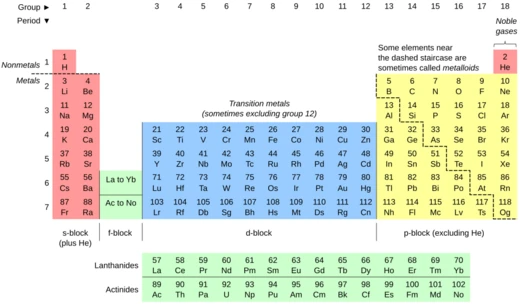
Rutherfordium is a synthetic, radioactive element with no stable isotopes.[1] The element's official name was established by IUPAC in 1997 after a long naming dispute.[2] The Joint Institute for Nuclear Research in Dubna (then part of the Soviet Union) reported a first detection of rutherfordium in 1964.[3]
Quick Facts
- Atomic number
- 104
- Element category
- synthetic
- Group
- 4
- Period
- 7
Facts from the source article.
Key facts and history
The Berkeley team measured the alpha decay of 257Rf and correlated it with the daughter decay of 253No.[4] They could not confirm the 0.3-second half-life and instead found a 10–30 millisecond half-life for 260Rf.[5] The American synthesis was independently confirmed in 1973 by observing K-alpha X-rays from the decay product 253No.[6] The Soviet team had proposed the name kurchatovium, while the Americans proposed rutherfordium.[7]
IUPAC adopted the temporary systematic name unnilquadium before settling on rutherfordium in 1997.[8][9]
What the research sources say
The article stated that rutherfordium-265 ended the decay chain by spontaneous fission after about two and a half minutes.[10] The discovery team for element 106 unanimously selected the name seaborgium, which IUPAC initially rejected.[11] The Berkeley Lab News Center article described the discovery as a major step toward understanding the region of enhanced stability near element 114.[10] A 2010 Berkeley Lab News Center article reported the detection of six new isotopes of superheavy elements, including rutherfordium-265, which ended the decay chain by spontaneous fission.[10]
References
- Wikipedia, "Rutherfordium" (CC BY-SA 4.0), which cites: Sonzogni, Alejandro, "Interactive Chart of Nuclides", Brookhaven National Laboratory; "Six New Isotopes of the Superheavy Elements Discovered", Berkeley Lab News Center, 26 October 2010 (we also read that source) en.wikipedia.org
- Wikipedia, "Rutherfordium" (CC BY-SA 4.0), which cites: "Rutherfordium - Element information, properties and uses Periodic Table", www.rsc.org (original not read by us) en.wikipedia.org
- Wikipedia, "Rutherfordium" (CC BY-SA 4.0), which cites: Barber, R. C., "Discovery of the transfermium elements. Part II: Introduction to discovery profiles. Part III: Discovery profiles of the transfermium elements", Pure and Applied Chemistry, 1993, p. 1757–1814 (original not read by us) en.wikipedia.org
- Wikipedia, "Rutherfordium" (CC BY-SA 4.0), which cites: Ghiorso, "Positive Identification of Two Alpha-Particle-Emitting Isotopes of Element 104", Physical Review Letters, 1969, p. 1317–1320 (original not read by us) en.wikipedia.org
- Wikipedia, "Rutherfordium" (CC BY-SA 4.0), which cites: Ghiorso, "Responses on 'Discovery of the transfermium elements' by Lawrence Berkeley Laboratory, California; Joint Institute for Nuclear Research, Dubna; and Gesellschaft fur Schwerionenforschung, Darmstadt followed by r (original not read by us) en.wikipedia.org
- Wikipedia, "Rutherfordium" (CC BY-SA 4.0), which cites: Bemis, C. E., "X-Ray Identification of Element 104", Physical Review Letters, 1973, p. 647–650 (original not read by us) en.wikipedia.org
- Wikipedia, "Rutherfordium" (CC BY-SA 4.0), which cites: "Rutherfordium", Rsc.org (original not read by us) en.wikipedia.org
- Wikipedia, "Rutherfordium" (CC BY-SA 4.0), which cites: "Names and symbols of transfermium elements (IUPAC Recommendations 1994)", Pure and Applied Chemistry, 1994, p. 2419–2421 (original not read by us) en.wikipedia.org
- Wikipedia, "Rutherfordium" (CC BY-SA 4.0), which cites: Yarris, "Naming of element 106 disputed by international committee", 1994 (we also read that source) en.wikipedia.org
- "Six New Isotopes of the Superheavy Elements Discovered", Berkeley Lab News Center, 26 October 2010. newscenter.lbl.gov
- Yarris, "Naming of element 106 disputed by international committee", 1994. www2.lbl.gov
Each numbered sentence above was checked against the source it cites before publication. Sentences citing Wikipedia adapt text from the English Wikipedia article Rutherfordium (contributors), used under CC BY-SA 4.0; this entry is available under the same licence. Other sources were used for facts only.
More in Periodic Table & Elements
Sources
Compiled from Wikipedia and the sources listed below. Text from Wikipedia is available under CC BY-SA 4.0; this entry is adapted from it.
- Wikipedia: Rutherfordium (CC BY-SA 4.0).
- Word definitions: the Codexery glossary, each quoted from its Wikipedia article.
Spotted an error? Know more?
Reader corrections go straight into our review queue. Suggest an edit · How this site is sourced