Neptunium
First transuranic element, radioactive and used in spacecraft power.
Last updated
Neptunium is a radioactive actinide metal with atomic number 93, the first transuranic element. It is named after Neptune, the planet beyond Uranus, and was first synthesized in 1940 by Edwin McMillan and Philip H. Abelson at the Berkeley Radiation Laboratory. Most neptunium is produced as a by-product in nuclear reactors and is used as a precursor for plutonium-238, which powers spacecraft.
Quick Facts
- Atomic number
- 93
- Element category
- actinide
- Discoverers
- Edwin McMillan and Philip H. Abelson
- Year of first synthesis
- 1940
- Most stable isotope
- neptunium-237
Facts from the source article.
History
Dmitri Mendeleev's early 1870s periodic table showed a blank after uranium, as did later tables such as Kasimir Fajans' 1913 listing of radioactive isotopes. Before and after the neutron's discovery in 1932, most scientists did not seriously consider elements heavier than uranium, though nuclear theory did not forbid them. The discovery of induced radioactivity by Irène and Frédéric Joliot-Curie in late 1933 opened new research methods, inspiring Enrico Fermi's group in Italy to begin neutron bombardment experiments.
Fermi realized neutrons, being uncharged, would likely outperform alpha particles. In March 1934, he began systematically bombarding all known elements with neutrons to induce radioactivity. After months, his group determined that lighter elements emitted a proton or alpha particle after neutron capture, while heavier elements emitted a gamma ray, later leading to beta decay and an increase in atomic number.
Bombarding uranium produced this behavior, suggesting an atomic number of 93. Fermi hesitated to publicize but, after observing unknown half-lives in the products, published a paper in June 1934 titled Possible Production of Elements of Atomic Number Higher than 92. He proposed the name ausenium (symbol Ao) for element 93, after the Greek name for Italy.
Characteristics
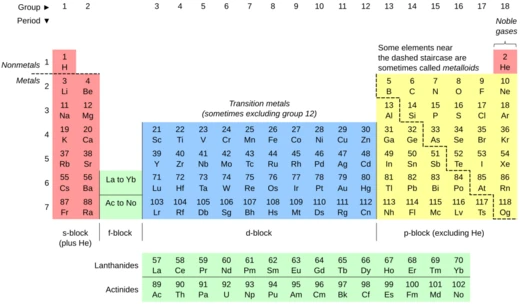
Neptunium is a hard, silvery, ductile radioactive actinide metal. In the periodic table, it sits between uranium and plutonium, below promethium. Its bulk modulus is 118 GPa, comparable to manganese, and it is similar to uranium in physical workability.
At normal temperatures, air exposure forms a thin oxide layer, which thickens more rapidly as temperature rises. Neptunium melts at 639 ± 3 °C, a low point shared with plutonium (639.4 °C), due to hybridization of 5f and 6d orbitals and directional bonding. Its boiling point is not empirically known; the commonly cited value of 4174 °C is extrapolated from vapor pressure, which would give neptunium the largest liquid range of any element (3535 K). The element exists in at least three allotropes, with a fourth unproven.
The crystal structures of neptunium, protactinium, uranium, and plutonium lack clear lanthanide analogs and resemble those of 3d transition metals. α-neptunium has an orthorhombic structure, each atom coordinated to four others with bond lengths of 260 pm. It is the densest actinide and the fifth-densest naturally occurring element, behind rhenium, platinum, iridium, and osmium. α-neptunium shows semimetallic properties, with strong covalent bonding and high electrical resistivity, closer to metalloids than true metals. Densities of different isotopes in the alpha phase vary: α-235Np at 20.303 g/cm³, α-236Np at 20.389 g/cm³, and α-237Np at 20.476 g/cm³.
Production
Almost all neptunium on Earth is produced artificially in nuclear reactions. Neptunium-237 is the most commonly synthesized isotope because it can be produced via neutron capture and has a half-life long enough for easy isolation. When 235U captures a neutron, it becomes excited 236U; about 85.5% of these nuclei fission, while the rest decay to ground state 236U by gamma emission.
Further neutron capture yields 237U, which has a 7-day half-life and beta decays to 237Np. 237U is also produced via an (n,2n) reaction with 238U using very energetic neutrons. 237Np also results from alpha decay of 241Am, which comes from neutron irradiation of uranium-238.
Heavier neptunium isotopes decay quickly; lighter ones cannot be made by neutron capture, so chemical separation of cooled spent nuclear fuel yields nearly pure 237Np. Short-lived 238Np and 239Np are produced by neutron irradiation of 237Np and 238U respectively; longer-lived 235Np and 236Np come from irradiating 235U with protons and deuterons in a cyclotron. Artificial 237Np metal is isolated by reacting 237NpF3 with liquid barium or lithium at about 1200 °C. Neptunium-237 discharges are about 5% of plutonium discharges and about 0.05% of spent nuclear fuel, amounting to over fifty tons per year globally.
Chemistry and compounds
In aqueous solution, neptunium can exist in any of its five oxidation states (+3 to +7), each with a characteristic color. Stability depends on factors such as oxidizing or reducing agents, pH, ligands, and neptunium concentration. In acidic solutions, the ions are Np3+, Np4+, NpO2+, NpO2^2+, and NpO3^+; in basic solutions, they form oxides and hydroxides Np(OH)3, NpO2, NpO2OH, NpO2(OH)2, and NpO3(OH)3^2-.
Np3+ and Np4+ can be easily reduced or oxidized to each other, as can NpO2+ and NpO2^2+. Np(III) exists as hydrated complexes, dark blue-purple, analogous to Pm3+. It oxidizes quickly in oxygen unless strong reducing agents are present, and is the second-least easily hydrolyzed neptunium ion, forming NpOH2+.
Np3+ dominates at pH 4–5. Np(V) is green-blue, a strong Lewis acid, and the most common neptunium ion in aqueous solutions. Unlike its neighbors, NpO2+ does not spontaneously disproportionate except at very low pH and high concentration. It hydrolyzes in basic solutions to NpO2OH and NpO2(OH)2^-.
Np(VI) appears light pink or reddish in acid, yellow-green otherwise; it is a strong Lewis acid, main at pH 3–4, but less stable than uranyl or plutonyl ions. It hydrolyzes to NpO2OH+, (NpO2)2(OH)2^2+, and NpO2(OH)3^-. Np(VII) is dark green in strong base, first prepared in 1967; in strong acid it exists as NpO3+, quickly reduced to Np(VI).
Did You Know?
- Neptunium accumulates in household ionization-chamber smoke detectors from decay of americium-241; after 20 years, about 3% of the americium becomes neptunium.
- Under oxidizing conditions, neptunium-237 is the most mobile actinide in the deep geological repository environment of the Yucca Mountain project.
- Finely divided neptunium metal is pyrophoric; small grains ignite spontaneously in air at room temperature.
More in Periodic Table & Elements
Sources
Compiled from Wikipedia and the sources listed below. Text from Wikipedia is available under CC BY-SA 4.0; this entry is adapted from it.
- Wikipedia: Neptunium (CC BY-SA 4.0).
- Word definitions: the Codexery glossary, each quoted from its Wikipedia article.
Spotted an error? Know more?
Reader corrections go straight into our review queue. Suggest an edit · How this site is sourced