Indium
A soft, silvery post-transition metal used in displays and electronics.
Last updated
Indium is a chemical element with the symbol In and atomic number 49, a silvery-white post-transition metal and one of the softest elements. It was discovered in 1863 by Ferdinand Reich and Hieronymous Theodor Richter, who named it for the indigo blue line in its spectrum. Indium is used primarily in flat-panel displays as indium tin oxide, a transparent conductive coating, and is produced exclusively as a by-product of processing other metal ores.
Quick Facts
- Atomic number
- 49
- Discovered by
- Ferdinand Reich and Hieronymous Theodor Richter
- Year discovered
- 1863
- Group
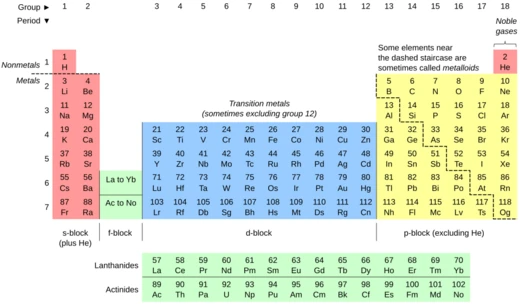
- 13
- Melting point
- 156.60 °C
- Boiling point
- 2072 °C
Facts from the source article.
Properties
Indium is a shiny silvery-white, highly ductile post-transition metal with a bright luster and a Mohs hardness of 1.2, soft enough to be cut with a knife or bitten by human teeth. It leaves a visible line like a pencil when rubbed on paper. Its properties are mostly intermediate between gallium and thallium, and like tin, it emits a high-pitched cry when bent due to crystal twinning. Indium can wet glass and has a low melting point of 156.60 °C, higher than gallium but lower than thallium and tin.
Its boiling point is 2072 °C, higher than thallium but lower than gallium, a trend attributed to weak metallic bonding with few delocalized electrons. The density is 7.31 g/cm³, greater than gallium but less than thallium. Below 3.41 K, indium becomes a superconductor. It crystallizes in a body-centered tetragonal system with space group I4/mmm and lattice parameters a = 325 pm and c = 495 pm, a slightly distorted face-centered cubic structure where each atom has four neighbors at 324 pm and eight at 336 pm.
Indium has greater solubility in liquid mercury than any other metal, exceeding 50 mass percent at 0 °C. It displays a ductile viscoplastic response that is size-independent in tension and compression but has a size effect in bending and indentation, with a length-scale of 50–100 μm. Indium has 39 known isotopes from mass 97 to 135, with two primordial nuclides: stable indium-113 and indium-115, which has a half-life of 4.41 years, four orders of magnitude greater than the age of the Universe.
Indium-115 makes up 95.7% of all indium, and indium is one of three elements where the stable isotope is less abundant than a long-lived primordial radioisotope.
Chemistry
Indium has 49 electrons with the configuration [Kr]4d⁵5s²5p¹. It most commonly donates its three outermost electrons to form indium(III), but can also form indium(I) by retaining the 5s pair, a stabilization attributed to the inert pair effect from relativistic effects. Thallium shows a stronger effect, while gallium rarely exhibits +1. Indium(III) is not a strong oxidizing agent, and many indium(I) compounds are powerful reducing agents.
The energy to involve the 5s electrons in bonding is lowest for indium among group 13, but bond energies decrease down the group, so forming two additional bonds for the +3 state is not always energetically favorable. Indium(I) oxide and hydroxide are more basic, while indium(III) oxide and hydroxide are more acidic. Standard electrode potentials vary, reflecting the decreased stability of the +3 state. Indium metal does not react with water but is oxidized by halogens to indium(III) compounds.
It does not form a boride, silicide, or carbide. In aqueous solution, indium is rather basic with slight amphoteric characteristics and is insoluble in alkaline solutions. The hydride has only a transitory existence in ethereal solutions at low temperatures and polymerizes without bases; Lewis bases stabilize indium hydrides of the form LInH₃. Chlorination, bromination, and iodination produce colorless InCl₃, InBr₃, and yellow InI₃, which are Lewis acids similar to aluminium trihalides; InCl₃ is polymeric.
Indium halides dissolve in water to give aquo complexes like [In(H₂O)₆]³⁺, and similar complexes form from nitrates and acetates, following a pattern like aluminium(III).
Production and availability
Indium is produced exclusively as a by-product during processing of other metal ores, mainly sulfidic zinc ores where it is hosted by sphalerite, with minor amounts from sulfidic copper ores. In zinc smelting via the roast-leach-electrowinning process, indium accumulates in iron-rich residues and can be extracted in various ways or recovered directly from process solutions, with further purification by electrolysis. Production is constrained by the amount of sulfidic zinc and copper ores extracted annually, so availability is discussed in terms of supply potential—the amount economically extractable per year under current market conditions.
Reserves and resources are not relevant for by-products. Recent estimates put supply potential at a minimum of 1,300 t/yr from sulfidic zinc ores and 20 t/yr from sulfidic copper ores, significantly above 2016 production of 655 t, suggesting major future increases are possible without significant cost or price rises. The average indium price in 2016 was 240/kg, down from 705/kg in 2014. China led production in 2016 with 290 tonnes, followed by South Korea (195 t), Japan (70 t), and Canada (65 t).
The Teck Resources refinery in Trail, British Columbia, produced 32.5 tonnes in 2005, 41.8 tonnes in 2004, and 36.1 tonnes in 2003. Primary consumption worldwide is for LCD production, with demand rising from the late 1990s to 2010; LCDs now account for 50% of consumption. Increased manufacturing efficiency and recycling, especially in Japan, balance demand and supply, though the end-of-life recycling rate is less than 1%.
Applications
Indium was first used significantly for stabilizing non-ferrous metals in 1924, and during World War II it coated bearings in high-performance aircraft engines to protect against damage and corrosion, though this is no longer a major use. It found applications in fusible alloys, solders, and electronics; in the 1950s, tiny indium beads served as emitters and collectors in PNP alloy-junction transistors. The development of indium phosphide semiconductors and indium tin oxide thin films for liquid-crystal displays in the mid-to-late 1980s generated interest, and by 1992 thin-film applications became the largest end use.
Indium(III) oxide and indium tin oxide are used as transparent conductive coatings on glass in electroluminescent panels, and ITO serves as an infrared radiation filter in low-pressure sodium-vapor lamps, reflecting infrared back to improve lamp performance. Indium has many semiconductor applications: compounds like indium antimonide and indium phosphide are semiconductors, with trimethylindium as a precursor and dopant; InAs and InSb are used for low-temperature transistors, InP for high-temperature transistors, and InGaN and InGaP for LEDs and laser diodes.
Indium is used in photovoltaics as copper indium gallium selenide for CIGS solar cells, and in PNP bipolar junction transistors with germanium, where low-temperature soldering avoids stressing the germanium.
Did You Know?
- Indium is created by the s-process in low-to-medium-mass stars, where neutron capture on silver-109 leads to indium-115.
- The stable isotope indium-113 is a p-nucleus whose origin is not fully understood, though it is made directly in s- and r-processes and as a daughter of cadmium-113.
Also in the Codexery
More in Periodic Table & Elements
Sources
Compiled from Wikipedia and the sources listed below. Text from Wikipedia is available under CC BY-SA 4.0; this entry is adapted from it.
- Wikipedia: Indium (CC BY-SA 4.0).
- Word definitions: the , each quoted from its Wikipedia article.
Spotted an error? Know more?
Reader corrections go straight into our review queue. Suggest an edit · How this site is sourced