Genetic admixture
Interbreeding of isolated populations produces mixed genetic ancestry.

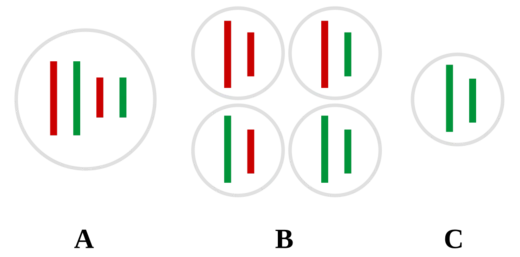
Genetic admixture happens when groups of organisms that were once reproductively separate start breeding together, creating a new population whose genetic makeup comes from both original groups. This mixing can take place between different species, producing hybrids, or within a single species, for instance when individuals from far-off locations move into a new area. The resulting population has a gene pool that blends the ancestry of the source populations. Scientists consider admixture a key driver of fast evolutionary change, whether through gene flow between populations or between species.
Climatic cycles encourage admixture during cold periods and promote genetic diversification when it’s warmer. Natural floods can also cause admixture among migrating fish populations. Admixture may be especially important for the success of groups that settle a new region and interbreed with native individuals. In a similar way, genetic variants linked to climate can spread more quickly through admixture than through the rest of the genome’s background variation.
Admixture mapping is a technique for locating genes that uses a population with mixed ancestry to identify genetic regions responsible for differences in diseases or other traits between ancestral groups. It works best on populations that have recently mixed from two previously isolated groups. The method looks for a correlation between the amount of ancestry near a particular genetic site and the disease or trait being studied, using genetic markers that vary in frequency between the ancestral populations across the genome. This approach assumes that differences in disease rates or traits partly stem from differences in how often disease- or trait-related genetic variants occur in each ancestral population. In an admixed population, these causal variants tend to appear more often on chromosome segments inherited from one ancestral group or the other. The first admixture scans were published in 2005, and since then researchers have mapped genetic factors behind many differences in diseases and traits.
- field
- Genetics and evolutionary biology
- known_for
- Resulting in a population with a mixed gene pool from source populations; contributing to rapid evolutionary responses
Lore & Background
Genetic admixture results in a population with genetic backgrounds, or a gene pool, that is a mix of the source populations. Climatic cycles facilitate genetic admixture in cold periods and genetic diversification in warm periods. Natural flooding can cause genetic admixture within populations of migrating fish species. Genetic admixture may have an important role for the success of populations that colonise a new area and interbreed with individuals of native populations. Similarly, climate-associated genetic variants may move more quickly by admixture than background variation across the genome.
Reader's Guide
Genetic admixture is significant because it can produce rapid evolutionary responses through gene flow between populations and between species. It is recognized as an important contributor to such responses. Admixture mapping is a method of gene mapping that uses a population of mixed ancestry to find genetic loci that contribute to differences in diseases or other phenotypes found between different ancestral populations. The method is best applied to populations with recent admixture from two populations that were previously genetically isolated. It attempts to correlate the degree of ancestry near a genetic locus with the phenotype or disease of interest. The first admixture scans were published in 2005 and since then genetic contributors to a variety of disease and trait differences have been mapped. The method assumes that differences in disease rates or phenotypes are due in part to differences in the frequencies of disease-causing or phenotype-causing genetic variants between populations.
Did You Know?
- Genetic admixture can occur between species, such as with hybrids, or within species.
- Climatic cycles facilitate genetic admixture in cold periods and genetic diversification in warm periods.
- Natural flooding can cause genetic admixture within populations of migrating fish species.
- The first admixture scans were published in 2005.
More in Genetics 1-24
Spotted an error? Know more?
This is a living reference — every entry is fact-audited, and reader corrections feed straight into our audit queue. Suggest an edit · See this site's audit record