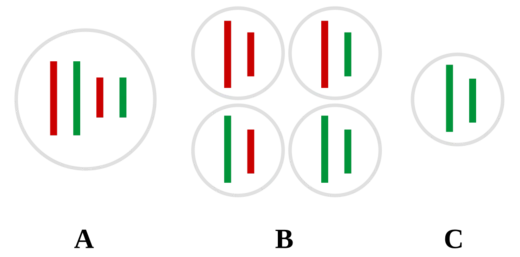
DNA replication
Essential process for copying DNA in all organisms.

Original Image:LadyofHats Mariana Ruiz, Derivative work:Dmtrs32 · CC BY-SA 4.0
DNA replication is how a cell produces identical copies of its DNA. This fundamental process happens across all living organisms and is crucial for passing on genetic information, enabling cells to divide, and repairing damaged tissues. It guarantees that after cell division, each daughter cell gets a complete set of DNA molecules.
DNA usually exists as a double-stranded molecule, with two complementary strands held together by base pairing between their nucleotides. These two linear strands typically twist into a double helix shape. During replication, the strands separate, and each original strand acts as a template to build a new complementary partner strand—this is called semiconservative replication. Consequently, every replicated DNA molecule contains one original strand and one newly made strand. Cells have proofreading and error-checking systems that ensure replication happens with extremely high accuracy.
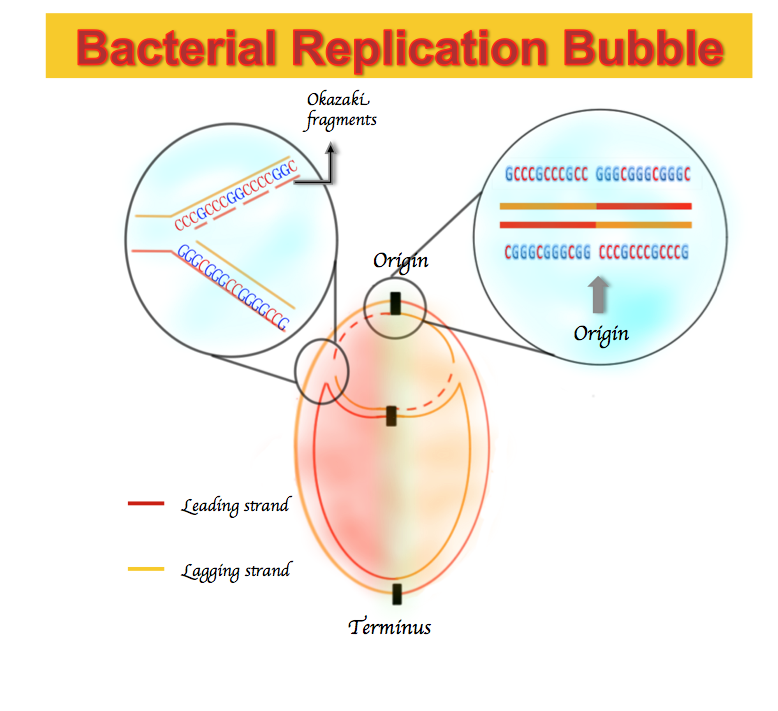
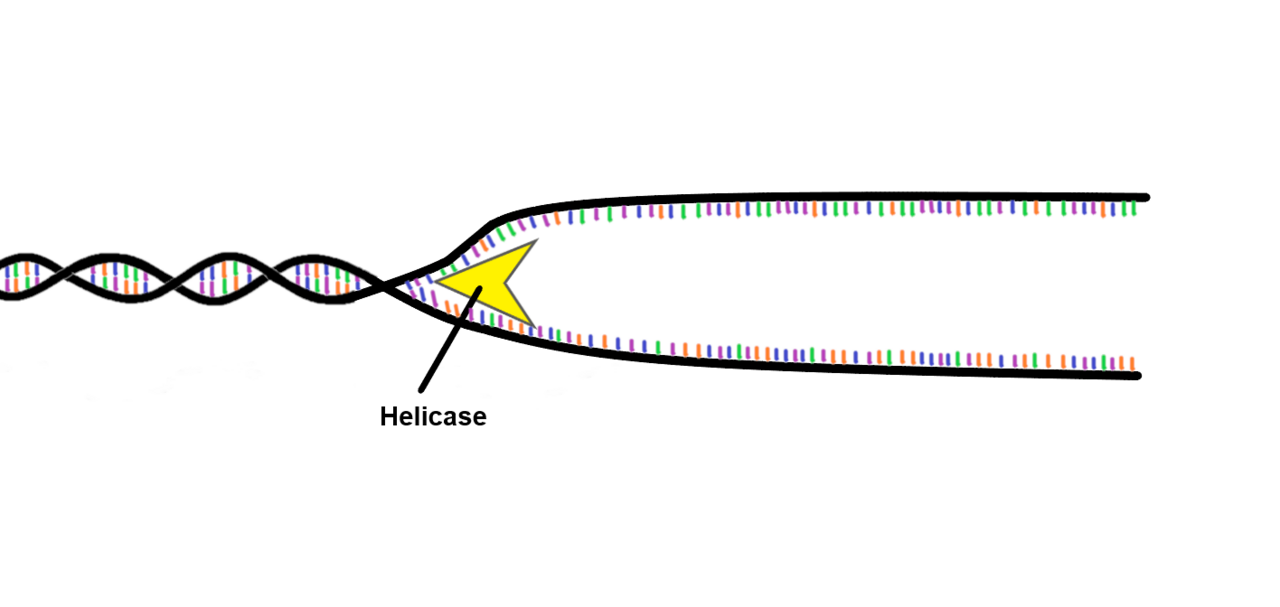
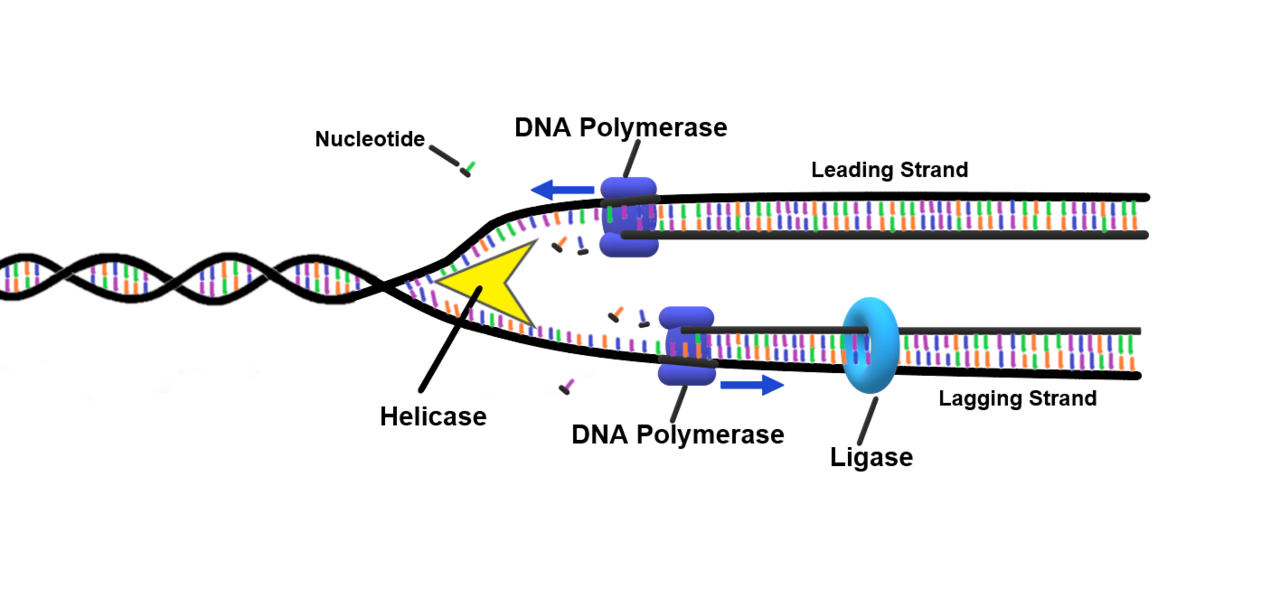
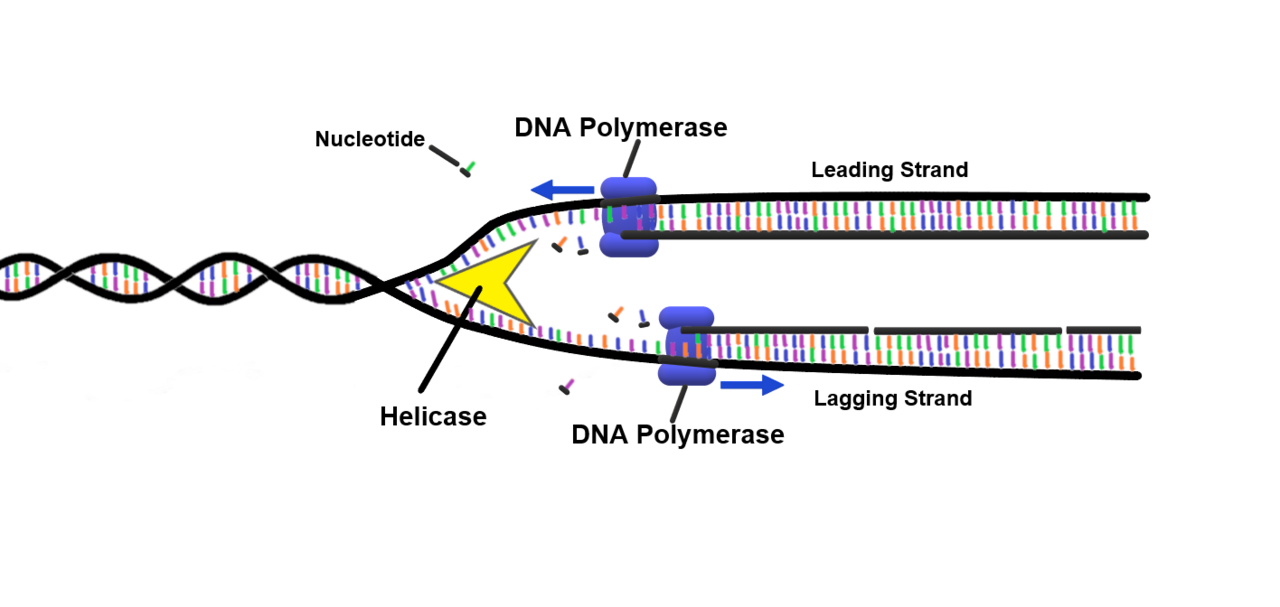
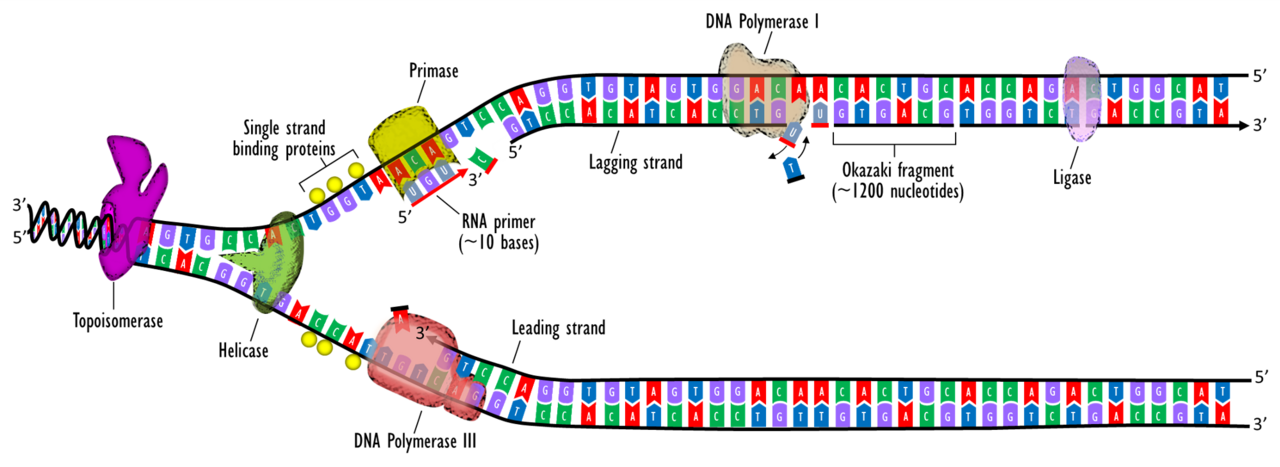
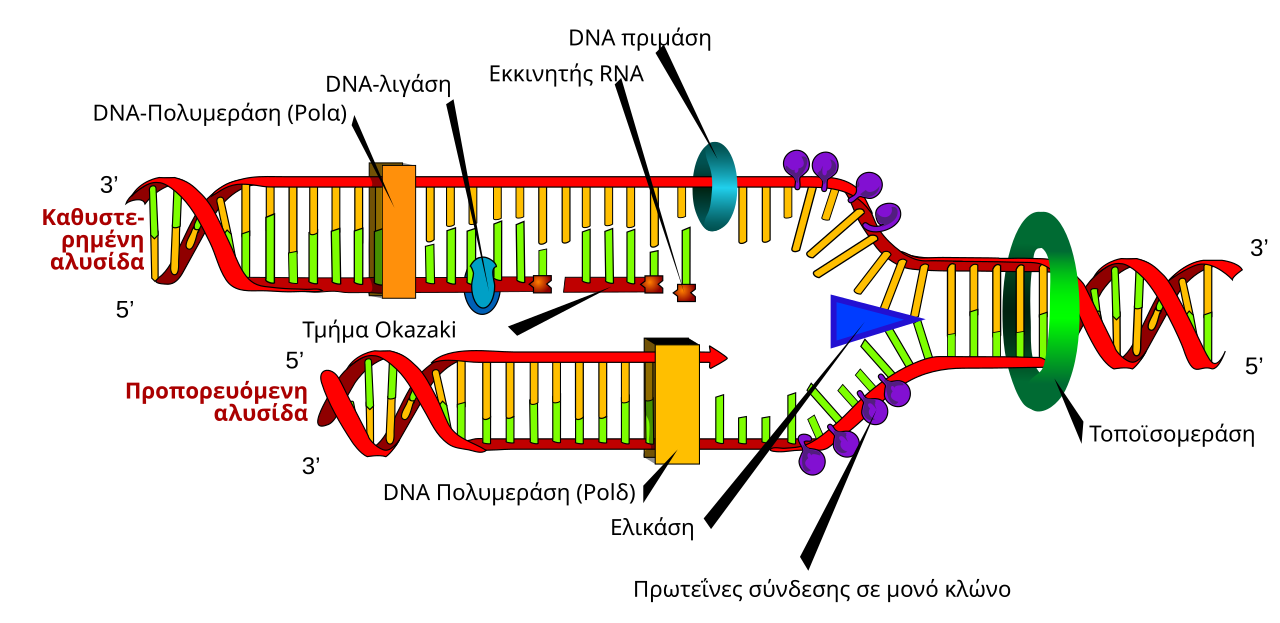
Replication typically starts at specific sites called origins of replication, which are spread throughout the genome. Enzymes called helicases unwind the DNA at these origins, creating replication forks that move outward in both directions. Many proteins gather at the replication fork to start and continue DNA synthesis. The key enzyme, DNA polymerase, builds new strands by adding nucleotides that pair with the template strand’s nucleotides. This replication takes place during the S (synthesis) phase of interphase.
DNA replication can also be done artificially, outside a cell. Scientists use DNA polymerases taken from cells along with artificial DNA primers to begin synthesis at known sequences on a template. Common examples of this technique include polymerase chain reaction (PCR), ligase chain reaction (LCR), and transcription-mediated amplification (TMA). In March 2021, researchers found evidence suggesting that an early form of transfer RNA—a molecule essential for translating genetic code into proteins—might have acted as a replicator during the very first stages of life’s origin.
**DNA structure**
DNA is built from two strands coiled together into a double helix. Each strand is a chain of four types of nucleotides. A nucleotide consists of a deoxyribose sugar, a phosphate group, and a nucleobase. The four nucleobases are adenine, cytosine, guanine, and thymine, often written as A, C, G, and T. Adenine and guanine are purines, while cytos
- field
- Molecular biology
- known_for
- Semiconservative replication, DNA polymerase, proofreading mechanisms
- key_process
- Initiation, elongation, termination
Lore & Background
DNA replication usually begins at specific locations known as origins of replication which are scattered across the genome. Unwinding of DNA at the origin is accommodated by enzymes known as helicases and results in replication forks growing bi-directionally from the origin. Numerous proteins are associated with the replication fork to help in the initiation and continuation of DNA synthesis. Most prominently, DNA polymerase synthesizes the new strands by incorporating nucleotides that complement the nucleotides of the template strand. DNA replication occurs during the S (synthesis) stage of interphase.
During replication, the two strands are separated, and each strand of the original DNA molecule then serves as a template for the production of a complementary counterpart strand, a process referred to as semiconservative replication. As a result, each replicated DNA molecule is composed of one original DNA strand as well as one newly synthesized strand. Cellular proofreading and error-checking mechanisms ensure near-perfect fidelity for DNA replication.
DNA replication can also be performed in vitro (artificially, outside a cell). DNA polymerases isolated from cells and artificial DNA primers can be used to start DNA synthesis at known sequences in a template DNA molecule. Polymerase chain reaction (PCR), ligase chain reaction (LCR), and transcription-mediated amplification (TMA) are all common examples of this technique.
Reader's Guide
DNA replication is fundamental to life, enabling accurate transmission of genetic information from one generation of cells to the next. Its semiconservative nature ensures that each daughter cell inherits one original strand and one newly synthesized strand, preserving genetic continuity. The process relies on high-fidelity enzymes like DNA polymerase, which incorporates nucleotides with an error rate of less than one mistake per 107 nucleotides added, further reduced by proofreading and mismatch repair to less than one per 109. The discovery of origins of replication and the role of helicases in unwinding DNA has deepened understanding of cell cycle regulation. In vitro techniques such as PCR have revolutionized molecular biology, allowing amplification of specific DNA sequences for research, diagnostics, and forensics. The process occurs during the S phase of interphase and is tightly controlled to prevent re-replication within a single cell cycle. Overall, DNA replication is a cornerstone of heredity and cellular function.
Did You Know?
- DNA replication is semiconservative: each new DNA molecule contains one original strand and one newly synthesized strand.
- DNA polymerase can only extend a DNA strand in the 5′ to 3′ direction by adding nucleotides to the 3′ end.
- The rate of DNA replication in phage T4-infected E. coli at 37 °C is 749 nucleotides per second.
- DNA replication can be performed in vitro using techniques such as polymerase chain reaction (PCR).
The Replicon Hypothesis and Its Enduring Framework
In January 1963, Jacob, Brenner, and Cuzin introduced a model that would become foundational to our understanding of how cells control when and where DNA copying begins. Their replicon hypothesis proposed that a mobile, trans-acting protein—called the initiator—recognizes a fixed cis-acting DNA element, the replicator, and together they trigger replication at a nearby origin. Once the initiator binds the replicator, often assisted by co-loader proteins, it deposits replicative helicases onto the double helix, which then recruit the remaining replisome components. This positive-regulation framework elegantly explains why extrachromosomal DNA lacking an origin cannot replicate inside a host cell, and why certain plasmids in E. coli destabilize one another by competing for the same initiation machinery. While later research revealed additional layers of both positive and negative control in both bacteria and eukaryotes, the core logic of the replicon model remains a cornerstone for identifying origin sequences and initiator proteins across the tree of life.
The Cost of Getting It Wrong
Every cell cycle demands that the entire genome be duplicated with extraordinary precision and exactly once. This is not a trivial requirement: incomplete copying, mis-timed initiation, or errors in strand synthesis can spawn mutations, drive chromosomal polyploidy or aneuploidy, and generate gene copy-number variations, all of which are recognized precursors to serious disease, including cancer. To guard against such catastrophic outcomes, replication is not a free-running process. It is tightly coupled to cell-cycle cues and must be coordinated with transcription and DNA repair, all of which act on the same chromatin template. Failure to synchronize these activities risks generating DNA strand breaks and additional damage. The origin itself plays a role in this coordination; organisms do not simply replicate from random positions. Instead, many species favor specific genomic regions as start sites, a choice that likely reflects the need to keep replication from colliding with other processes reading or modifying the same stretch of DNA. The stakes of fidelity and timing are thus woven into the very architecture of the replication origin.
One Rule, Many Solutions: Origins Across the Tree of Life
Despite the universal need to copy genetic material before division, organisms have evolved strikingly different strategies for choosing where replication begins. A shared chemical feature unites them: origin sequences tend to be rich in adenine-thymine base pairs across all kingdoms of life, because the weaker base-stacking interactions between A and T make those regions easier to unwind. Beyond that commonality, the regulatory logic diverges sharply. In bacteria, a single replicator—defined by a consensus DNA sequence—typically governs replication of the entire chromosome. Eukaryotes, whose chromosomes are vastly larger, must fire many origins simultaneously to finish copying in time. Moreover, with the notable exception of budding yeast, eukaryotic replicators are not pinned down by a fixed DNA sequence; instead, they are specified combinatorially through local chromatin structure and other contextual cues. This context-driven approach yields what researchers describe as a relaxed replicon model, granting eukaryotic cells considerable flexibility in their replication program. Notably, far more replicative helicases are loaded onto eukaryotic DNA than are ultimately activated in a given cell cycle, underscoring the layered control at play.
From Initiation to Termination: The Replication Journey
DNA replication unfolds in distinct, sequential phases, each with its own molecular choreography. During initiation, the replisome—the full replication machinery—is assembled at the origin in a bidirectional fashion, meaning two replication forks will proceed in opposite directions along the chromosome. In the elongation phase, these replisomes travel with their forks, unwinding the parental double helix and using each strand as a template to synthesize a new complementary daughter strand. This semiconservative mechanism ensures that each daughter cell ultimately inherits one original and one newly made strand per chromosome. When the forks meet, specific termination signals trigger the disassembly of the replisome, cleanly concluding the copying event. Throughout all three stages, the process must remain synchronized with cell-cycle progression and with other chromatin-associated activities. The origin, therefore, is not merely a static address on the genome; it is the launchpad for a highly regulated, multi-step journey that must be completed before the cell is permitted to divide.
Gallery
More in Genetics 1-24
Spotted an error? Know more?
This is a living reference — every entry is fact-audited, and reader corrections feed straight into our audit queue. Suggest an edit · See this site's audit record