CRISPR
Prokaryotic DNA sequences enabling adaptive immunity and genome editing.

DataBase Center for Life Science (DBCLS) · CC BY 4.0
CRISPR (clustered regularly interspaced short palindromic repeats) is a family of DNA sequences found in the genomes of prokaryotic organisms such as bacteria and archaea. These sequences play a key role in the antiviral defense system of prokaryotes, providing a form of heritable, acquired immunity by detecting and destroying DNA from bacteriophages. CRISPR, together with the Cas9 enzyme, forms the basis of the CRISPR-Cas9 genome editing technology, which has applications in basic biological research, biotechnology, and disease treatment.
- discovered_in
- 1987 (first description by Ishino et al.)
- found_in
- Approximately 50% of sequenced bacterial genomes and nearly 90% of sequenced archaea
- type
- Family of DNA sequences
- function
- Antiviral (anti-phage) defense system; acquired immunity
- associated_protein
- Cas9 (CRISPR-associated protein 9)
- key_technology
- CRISPR-Cas9 genome editing
- nobel_prize
- 2020 Nobel Prize in Chemistry awarded to Emmanuelle Charpentier and Jennifer Doudna
Lore & Background
The discovery of clustered DNA repeats occurred independently in three parts of the world. The first description was by Ishino et al. in 1987, who accidentally cloned part of a CRISPR sequence from Escherichia coli. In 1993, van Solingen et al. published articles about interrupted direct repeats in Mycobacterium tuberculosis, leading to a typing method called spoligotyping. Spanish microbiologist Francisco Mojica studied repeats in Haloferax and Haloarcula, initially calling them 'short regularly spaced repeats' (SRSR) before proposing the acronym CRISPR in 2001 with Jansen.
Reader's Guide
CRISPR's significance lies in its dual role as a natural prokaryotic immune system and as the foundation for the revolutionary CRISPR-Cas9 genome editing technology. The system evolved in bacteria to protect against viruses by incorporating viral DNA fragments into the host genome, allowing adaptive immune responses. The development of CRISPR-Cas9, recognized by the 2020 Nobel Prize in Chemistry, has enabled precise gene editing in living organisms, with wide-ranging applications from basic research to potential treatments for genetic diseases. The technology's ability to target specific DNA sequences using guide RNA has transformed molecular biology, though its discovery involved contributions from multiple researchers across decades, with early proposals of its immune function initially rejected by high-profile journals.
Did You Know?
- CRISPR is found in approximately 50% of sequenced bacterial genomes and nearly 90% of sequenced archaea.
- The first description of what would later be called CRISPR was by Ishino et al. in 1987, who accidentally cloned part of a CRISPR sequence from Escherichia coli.
- In 2005, three independent research groups showed that some CRISPR spacers are derived from phage DNA and extrachromosomal DNA such as plasmids.
- The CRISPR-Cas9 genome editing technique was recognized by the Nobel Prize in Chemistry in 2020 awarded to Emmanuelle Charpentier and Jennifer Doudna.
A Serendipitous Discovery Across Three Continents
The story of CRISPR began not with a grand hypothesis but with an accident. In 1987, a team led by Ishino inadvertently cloned a stretch of unusual DNA alongside the iap gene from Escherichia coli. What struck them was the organization: short repeated sequences separated by unique spacer regions, an arrangement far less common than simple consecutive repeats. Three years later, van Solingen and colleagues described similar interrupted direct repeats in Mycobacterium tuberculosis and exploited the strain-to-strain variation in those spacers to build a typing method called spoligotyping that remains in use today. Meanwhile, Spanish microbiologist Francisco Mojica was examining the archaeal genera Haloferax and Haloarcula. His supervisor initially guessed the clustered repeats helped segregate replicated DNA during cell division. By 2000, Mojica and his students had identified the same interrupted-repeat family across twenty microbial species after an automated genome search. In 2001, Mojica and Jansen coined the acronym CRISPR to unify the many shorthand names circulating at the time.
Unmasking a Bacterial Immune System
For nearly two decades after the first descriptions of clustered repeats, their biological purpose remained a mystery. Jansen's observation that the repeat clusters were flanked by four homologous genes, later named Cas1 through Cas4, offered a clue, as those proteins carried helicase and nuclease motifs hinting at a dynamic structural role. The breakthrough arrived in 2005, when three independent research groups demonstrated that CRISPR spacers are actually fragments harvested from bacteriophages and plasmids that had previously attacked the host cell. This revelation pointed directly to an adaptive immune function. Mojica's group went further, predicting that RNA transcripts of the spacers would guide target recognition in a manner analogous to RNA interference in eukaryotes, while Koonin and colleagues extended that hypothesis by mapping likely mechanisms for different CRISPR-Cas subtypes. Crucially, all three papers proposing this immune role were initially rejected by high-profile journals. It was not until 2007 that the first experimental proof appeared: researchers showed that Streptococcus thermophilus acquired new spacers from an infecting phage and gained resistance, and that adding or deleting specific spacers could toggle that resistance on and off.
From Ancient Defense to a Precision Editing Tool
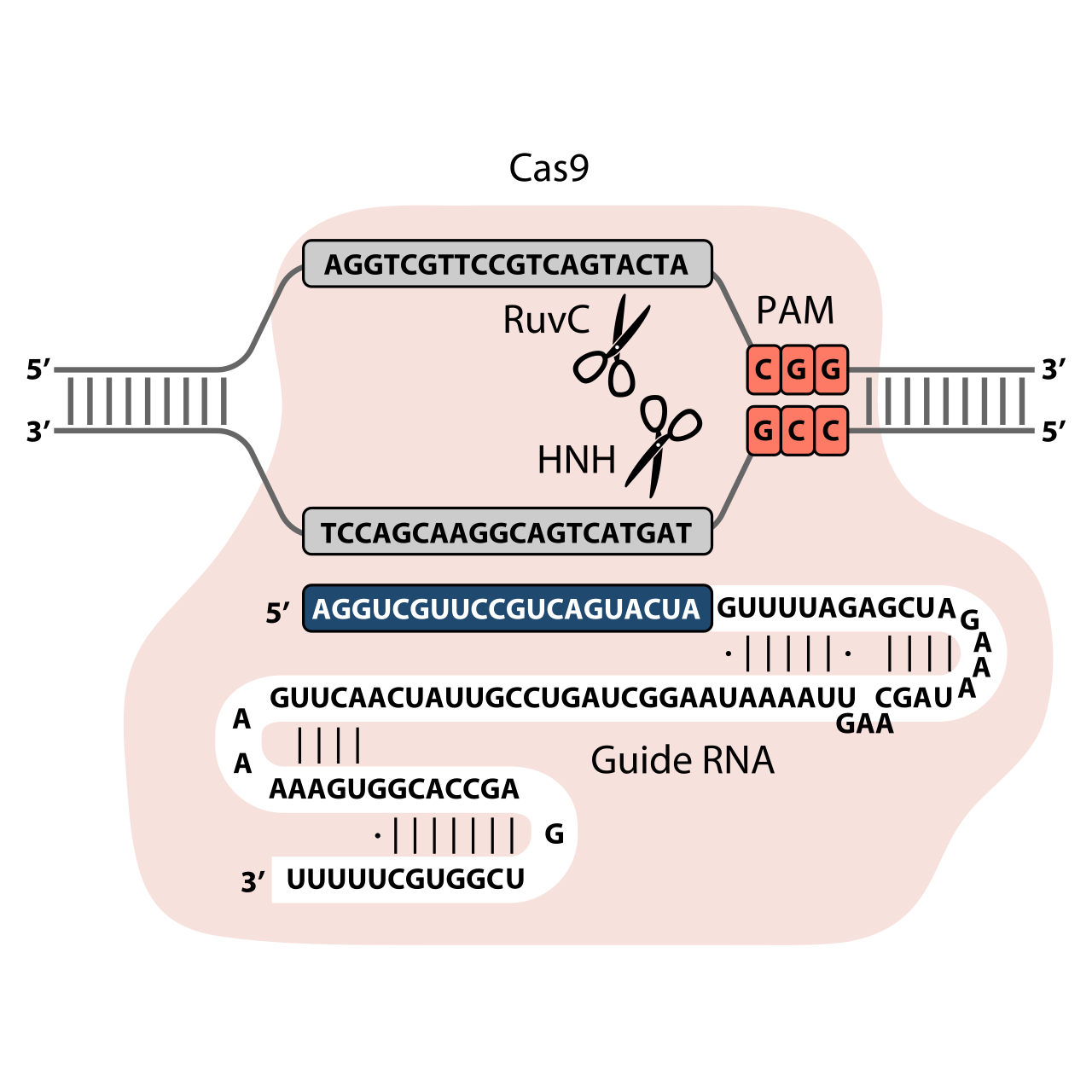
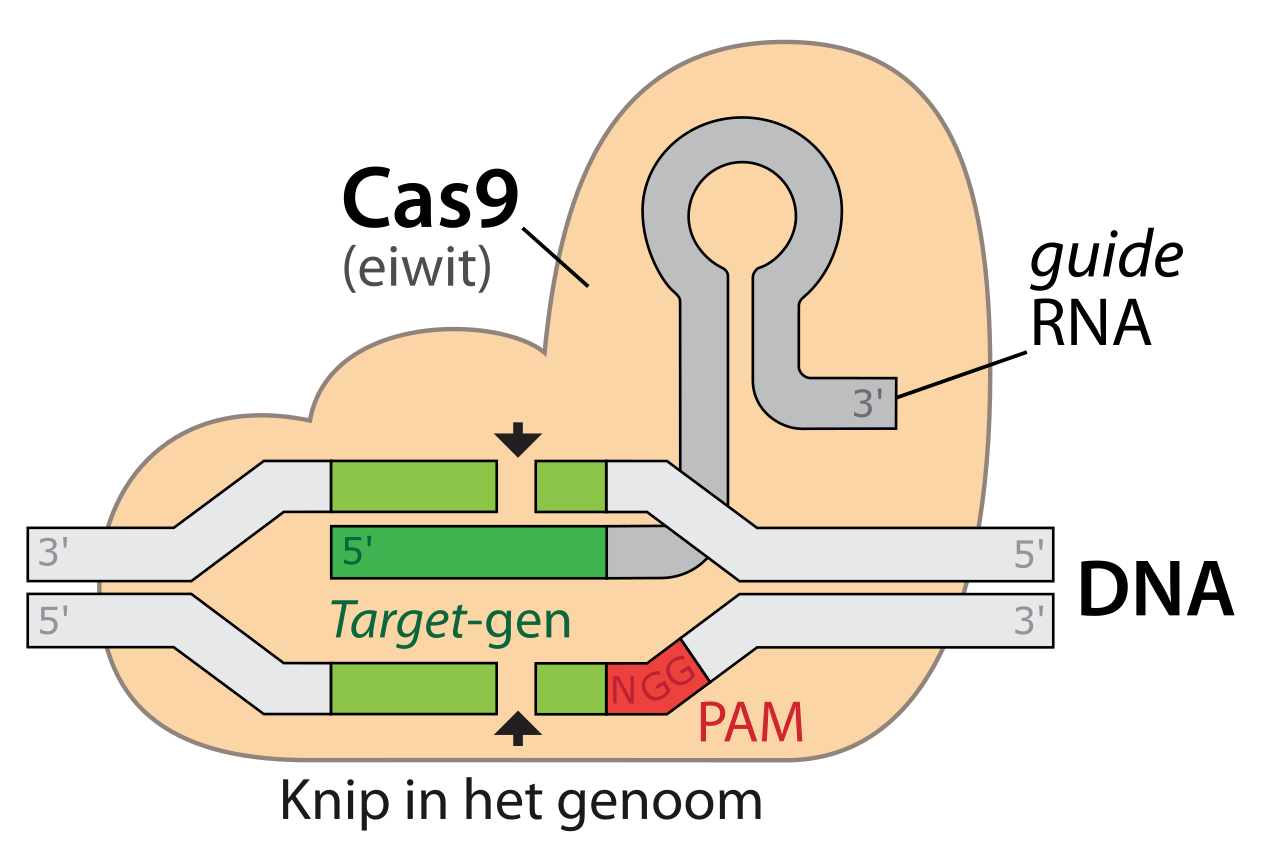
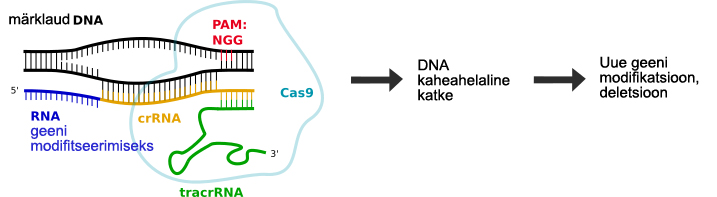
The natural CRISPR machinery, which exists in roughly half of all sequenced bacterial genomes and nearly nine-tenths of sequenced archaea, evolved as a heritable, acquired immune system. Each spacer within a prokaryote's CRISPR array is a molecular scar, a captured fragment of phage DNA stored so that the organism or its descendants can recognize and destroy the same virus upon re-infection. The enzyme Cas9 sits at the heart of this system: it reads the CRISPR sequence as a guide, locates the complementary strand of invading DNA, and cleaves it open. When researchers repurposed this bacterial scissors-and-guide mechanism into a programmable tool, they created CRISPR-Cas9, a technology capable of editing genes in virtually any living organism. The applications span basic biological research, the engineering of biotechnological products, and the development of therapeutic interventions for human disease. What began as a defensive strategy in single-celled microbes has been transformed into one of the most versatile instruments in modern molecular biology.
Rejection, Persistence, and the 2020 Nobel
The path from an accidental cloning artifact in a lab bench to the highest honor in chemistry was neither straight nor quick. The three landmark 2005 papers that first proposed CRISPR-Cas as a microbial immune system were all turned down by prestigious journals before finding a home elsewhere. The experimental confirmation that followed gradually built the case: Barrangou's 2005 work showing that S. thermophilus built up phage resistance by accumulating new spacers after iterative infection challenges, and the 2008 identification of the Cascade protein complex by Brouns and Van der Oost, which processes CRISPR RNA into mature guide molecules that direct Cas3 to cut viral DNA. The 2020 Nobel Prize in Chemistry went to Emmanuelle Charpentier and Jennifer Doudna in recognition of the CRISPR-Cas9 gene-editing technique they helped develop. The prize capped a journey that had begun with Ishino's surprise at an unusual repeat pattern in E. coli and Mojica's patient cataloguing of interrupted repeats across archaeal species, a reminder that the most transformative tools in science often start as curiosities no one expected to matter.
Gallery
More in Genetics 1-24
Spotted an error? Know more?
This is a living reference — every entry is fact-audited, and reader corrections feed straight into our audit queue. Suggest an edit · See this site's audit record