DNA repair
Processes by which cells identify and correct DNA damage.

Eunice Laurent · CC BY-SA 4.0
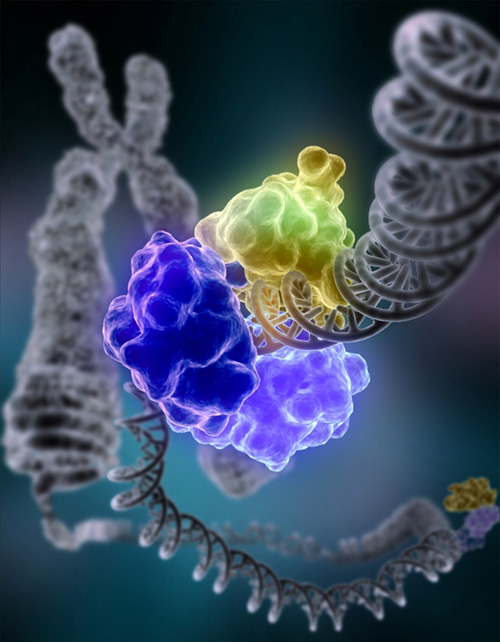
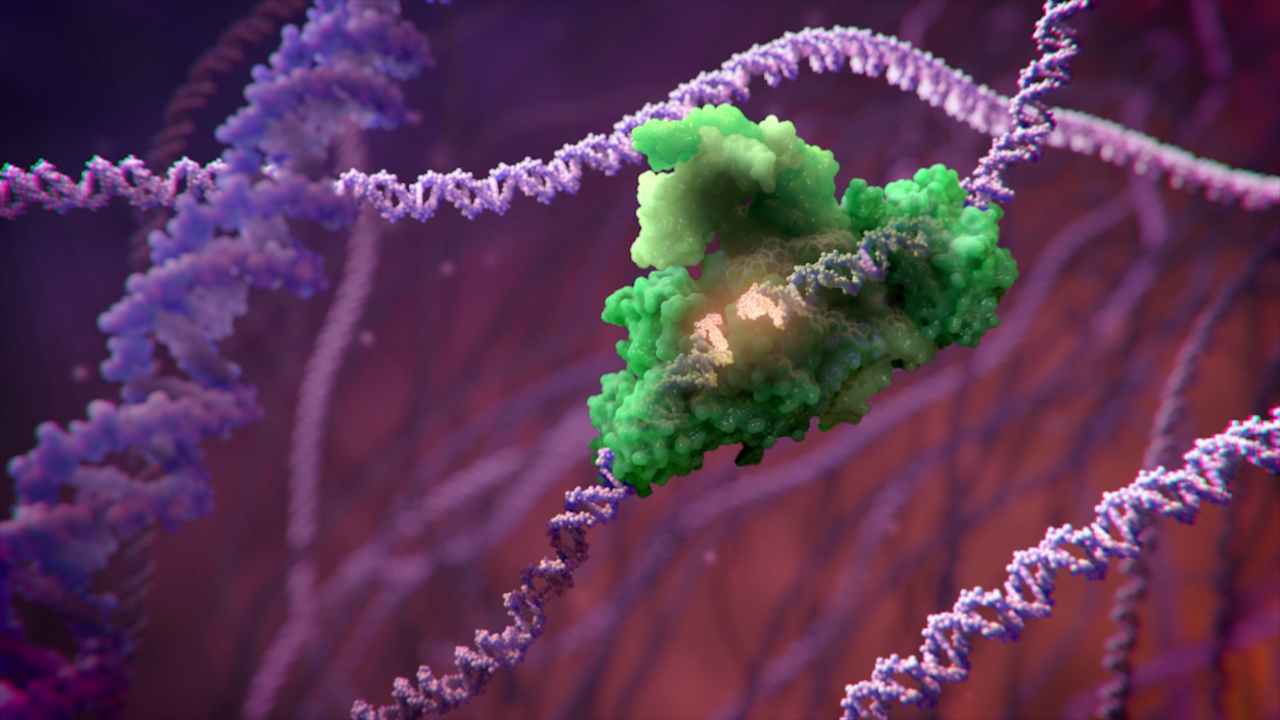
Cells are constantly fixing damage to their DNA—the molecule that holds the genetic blueprint. This ongoing process, known as DNA repair, involves a set of mechanisms that detect and correct errors. When a cell’s ability to repair its DNA weakens, the risk of developing cancer increases. The 2015 Nobel Prize in Chemistry recognized Tomas Lindahl, Paul Modrich, and Aziz Sancar for uncovering the molecular details of these repair systems.
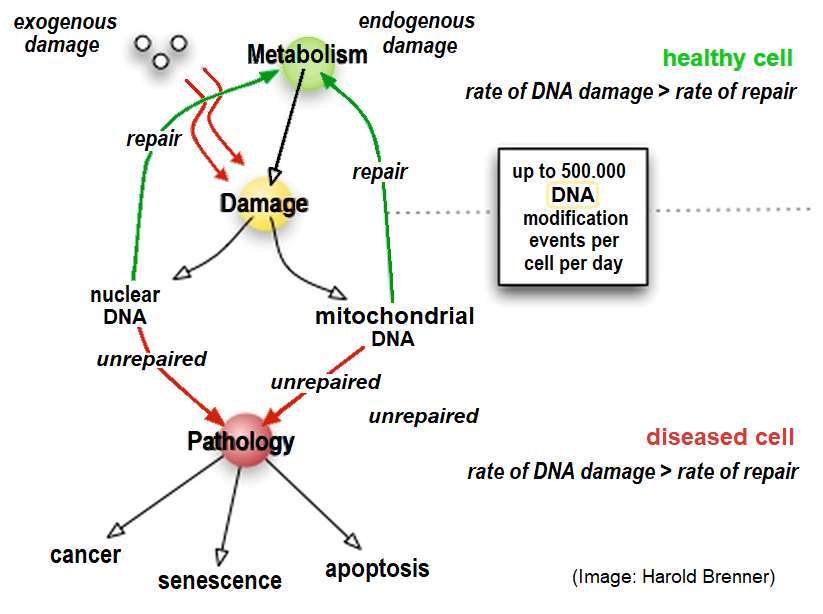
Every day, a single cell faces tens of thousands of individual molecular lesions—from as few as 10,000 to as many as 1,000,000—caused by both internal metabolic byproducts and external agents like ionizing radiation, ultraviolet light, and certain medicines. Some damage is also programmed by the cell itself. These lesions can alter or destroy the DNA’s structure, disrupting transcription and gene expression, or introduce harmful mutations that affect the survival of daughter cells after division. Because of this constant threat, DNA repair is always active as part of the broader DNA damage response.
The effectiveness of repair varies with cell type, the cell’s age, and its environment. If a cell accumulates too much damage or can no longer fix it properly, it may enter one of three states: an irreversible dormancy called senescence, a programmed cell death known as apoptosis, or uncontrolled division that can lead to a cancerous tumor. The ability to repair DNA is crucial for maintaining the genome’s integrity and, by extension, the organism’s normal function. Many genes initially linked to lifespan have turned out to play roles in DNA damage repair and protection.
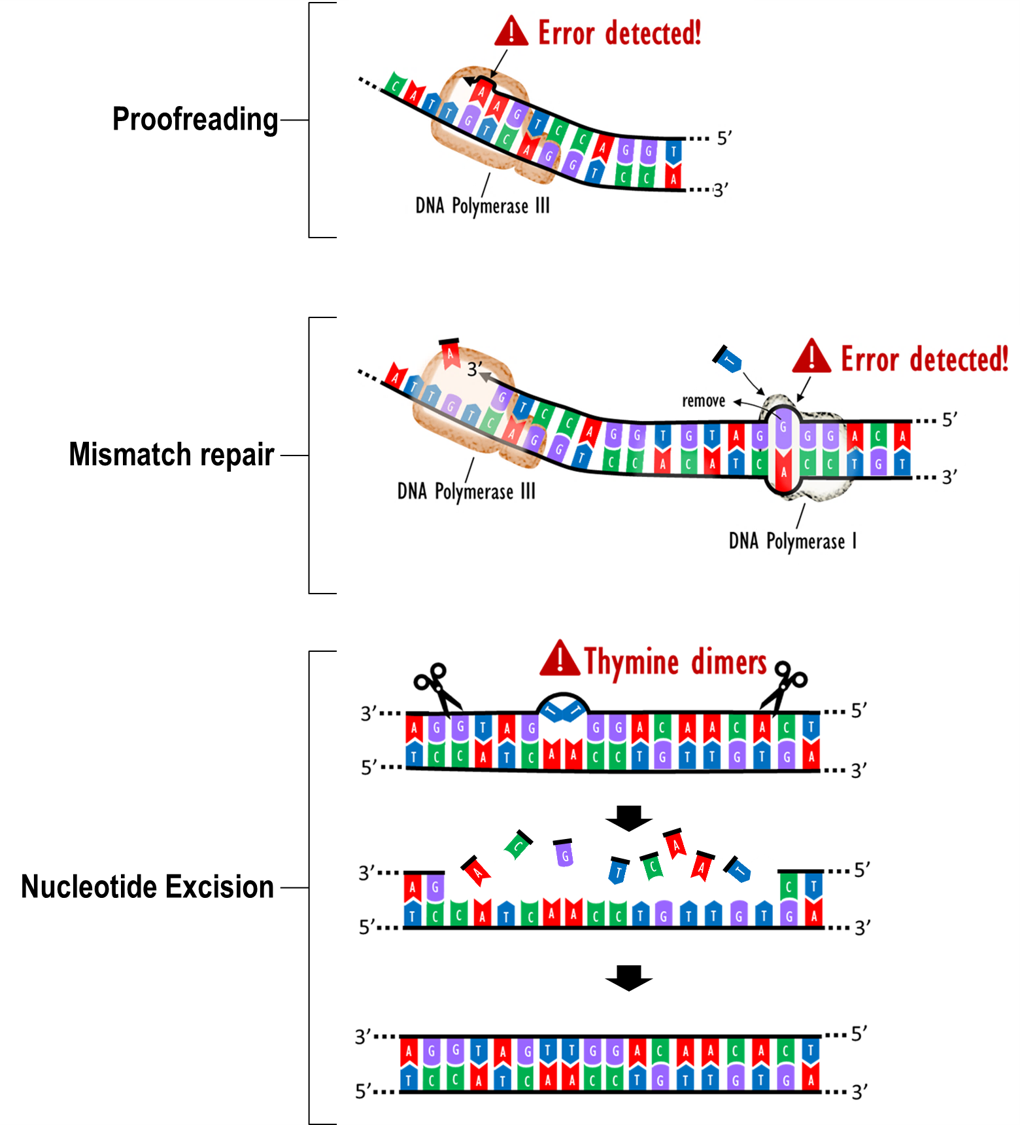
DNA damage primarily affects the chemical structure of the bases themselves—the building blocks of the double helix. Modifications include oxidation (like 8-oxo-7,8-dihydroguanine), alkylation (such as 7-methylguanosine), hydrolysis (deamination, depurination, or depyrimidination), formation of bulky adducts (e.g., from benzo[a]pyrene or aristolochic acid), and replication errors that cause base mismatches. Exogenous sources include UV light, which creates pyrimidine dimers and free radicals; ionizing radiation, which breaks DNA strands; thermal disruption at high temperatures, which speeds up depurination; and various chemicals, including plant toxins and synthetic mutagens that intercalate into DNA. Viruses can also cause damage.
When damaged DNA is replicate
- field
- Molecular biology
- known_for
- Molecular mechanisms of DNA repair processes
- nobel_prize
- 2015 Nobel Prize in Chemistry
Lore & Background
DNA is constantly modified in cells by internal metabolic by-products and by external ionizing radiation, ultraviolet light, and medicines, resulting in spontaneous DNA damage involving tens of thousands of individual molecular lesions per cell per day. DNA repair as part of the DNA damage response is constantly active. When normal repair processes fail, including apoptosis, irreparable DNA damage may occur, which may be a risk factor for cancer. The degree of DNA repair change within a cell depends on factors including cell type, age of the cell, and extracellular environment. A cell that has accumulated a large amount of DNA damage or can no longer effectively repair its DNA may enter one of three possible states: an irreversible state of dormancy known as senescence, apoptosis (programmed cell death), or unregulated division leading to tumor formation.
Reader's Guide
DNA repair is vital to the integrity of a cell's genome and thus to the normal functionality of an organism. Many genes initially shown to influence life span have turned out to be involved in DNA damage repair and protection. The 2015 Nobel Prize in Chemistry recognized Tomas Lindahl, Paul Modrich, and Aziz Sancar for their work on the molecular mechanisms of DNA repair processes. DNA damage can be caused by both environmental factors and normal metabolic processes, occurring at a rate of 10,000 to 1,000,000 molecular lesions per cell per day. Unrepaired lesions in critical genes such as tumor suppressor genes can impede a cell's ability to function and increase the likelihood of tumor formation. The vast majority of DNA damage affects the primary structure of the double helix, chemically modifying the bases themselves. Unlike proteins and RNA, DNA usually lacks tertiary structure, so damage does not occur at that level, but can affect DNA supercoil structure and histone packaging.
Did You Know?
- DNA damage occurs at a rate of 10,000 to 1,000,000 molecular lesions per cell per day.
- A weakened capacity for DNA repair is a risk factor for the development of cancer.
- The 2015 Nobel Prize in Chemistry was awarded to Tomas Lindahl, Paul Modrich, and Aziz Sancar for their work on DNA repair mechanisms.
- A cell with irreparable DNA damage may enter senescence, apoptosis, or unregulated division leading to tumor formation.
The Relentless Assault on the Genome
Every day, a single human cell endures between ten thousand and one million chemical insults to its DNA. These lesions arise from two broad categories: internal metabolic by-products that generate reactive oxygen species and drive spontaneous mutations, and external agents ranging from ultraviolet radiation in the 200–400 nm range to ionizing radiation such as x-rays, gamma rays, and subatomic particles. Industrial chemicals like vinyl chloride, hydrogen peroxide, and polycyclic aromatic hydrocarbons found in smoke and soot add yet another layer of threat, producing a bewildering diversity of adducts, oxidized bases, and crosslinks. Even the act of replicating DNA introduces its own errors, stitching wrong bases into newly forming strands. Although this damage represents at most 0.03% of the roughly 3.2 billion bases in the human genome, the cumulative effect is staggering, and the cell must mount a continuous, always-on defense to preserve the integrity of its genetic instructions.
When the Repair Machinery Fails
When a cell's repair systems are overwhelmed or compromised, it faces a critical fork in the road. The accumulated damage can push the cell into one of three distinct fates. First, it may enter senescence, an irreversible state of dormancy in which the cell ceases dividing but remains metabolically active. Second, it may trigger apoptosis, a form of programmed cell death that eliminates the damaged cell before it can propagate errors. Third, and most dangerously, the cell may slip into unregulated division, generating a tumor bearing the hallmarks of cancer. This last outcome is particularly likely when lesions strike critical genes such as tumor suppressors, impairing the cell's ability to perform its normal functions and increasing the probability of tumor formation and heterogeneity. A weakened capacity for DNA repair is therefore recognized as a significant risk factor for cancer, and the failure of normal repair processes—including the apoptotic safety net—can allow irreparable damage to persist and propagate through daughter cells.
The Chemistry of Lesions
The molecular lesions inflicted on DNA span a remarkable chemical diversity. Endogenous processes produce oxidation of bases—such as the formation of 8-oxo-7,8-dihydroguanine—along with alkylation events like 7-methylguanosine and 1-methyladenine, and hydrolytic losses including deamination, depurination, and depyrimidination. Exogenous agents create their own signatures: ultraviolet light drives photochemical reactions that fuse adjacent pyrimidines into dimers, while UV-A predominantly generates free radicals whose indirect damage mimics oxidative stress. Ionizing radiation from radioactive decay or cosmic rays severs DNA strands outright. Elevated temperatures accelerate depurination, a problem so acute in thermophilic bacteria thriving at 40–80 °C that normal repair machinery cannot keep pace. Unlike proteins and RNA, DNA lacks tertiary structure, so damage manifests primarily at the level of the double helix's primary sequence, through non-native bonds and bulky adducts that distort the standard geometry, or at the level of supercoiling and the histone proteins around which eukaryotic DNA is packaged into nucleosomes.
Recognition and Broader Significance
The molecular mechanisms by which cells detect and mend their DNA were honored with the 2015 Nobel Prize in Chemistry, awarded to Tomas Lindahl, Paul Modrich, and Aziz Sancar for their elucidation of these repair pathways. Their work illuminated processes that operate continuously within every living cell, forming a core component of the broader DNA damage response. The significance of this machinery extends far beyond preventing cancer. Many genes initially identified as influencing organismal life span have since been shown to function in DNA damage repair and protection, revealing a deep link between genomic maintenance and longevity. The repair capacity of a cell is fundamental to the integrity of its genome and, by extension, to the normal functionality of the entire organism. Whether a cell is young or aged, whether it exists in a benign or hostile extracellular environment, the degree and nature of repair activity shift accordingly, underscoring that DNA repair is not a single fixed pathway but a dynamic, context-sensitive program essential to life itself.
Gallery
More in Genetics 1-24
Spotted an error? Know more?
This is a living reference — every entry is fact-audited, and reader corrections feed straight into our audit queue. Suggest an edit · See this site's audit record