Cloning vector
DNA molecule used to carry foreign genetic material into a host.

Kelvinsong · CC BY-SA 3.0
A cloning vector is a small piece of DNA that can be stably maintained in an organism, into which a foreign DNA fragment can be inserted for cloning purposes. Cloning vectors are fundamental tools in molecular biology, enabling the replication and manipulation of DNA sequences. They may be derived from viruses, cells of higher organisms, or bacterial plasmids, and are designed with features such as restriction sites and selectable markers to facilitate the insertion, selection, and maintenance of foreign DNA.
- field
- Molecular biology
- known_for
- Used to clone and maintain foreign DNA fragments in host organisms
- types
- Plasmids, bacteriophages (e.g., phage λ), cosmids, bacterial artificial chromosomes (BACs), yeast artificial chromosomes (YACs)
Lore & Background
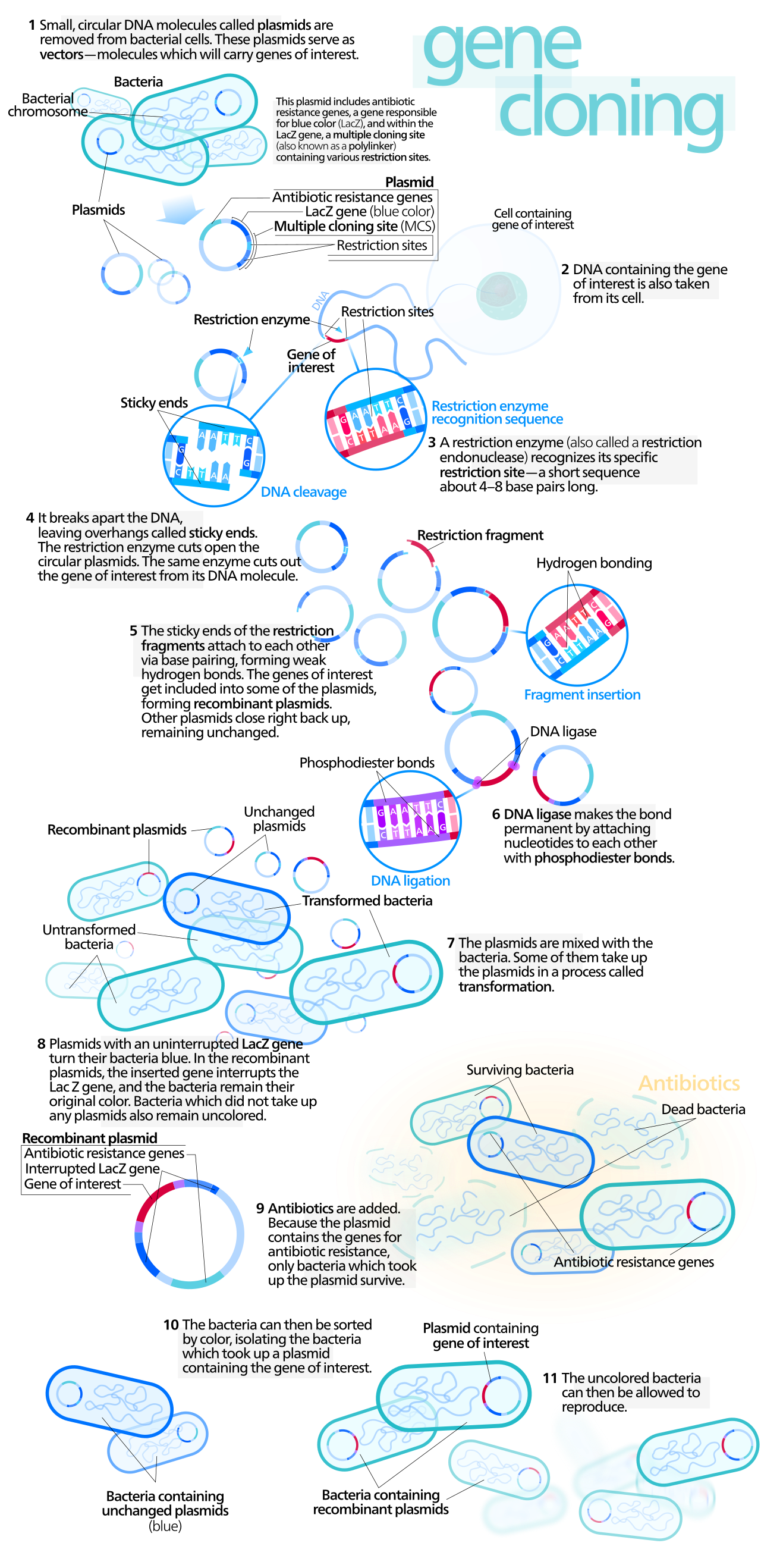
Cloning vectors are small DNA molecules that can be stably maintained in an organism, such as Escherichia coli or yeast. They are engineered to contain a cloning site—often a multiple cloning site (MCS) with unique restriction sites—where foreign DNA can be inserted. The vector and foreign DNA are treated with restriction enzymes to generate compatible ends, then joined by molecular ligation. Vectors also carry a selectable marker, such as an antibiotic resistance gene (e.g., beta-lactamase for ampicillin resistance), to allow selection of transformed cells. Some vectors include reporter genes like lacZα for blue-white screening or fusion partners like green fluorescent protein (GFP).
Reader's Guide
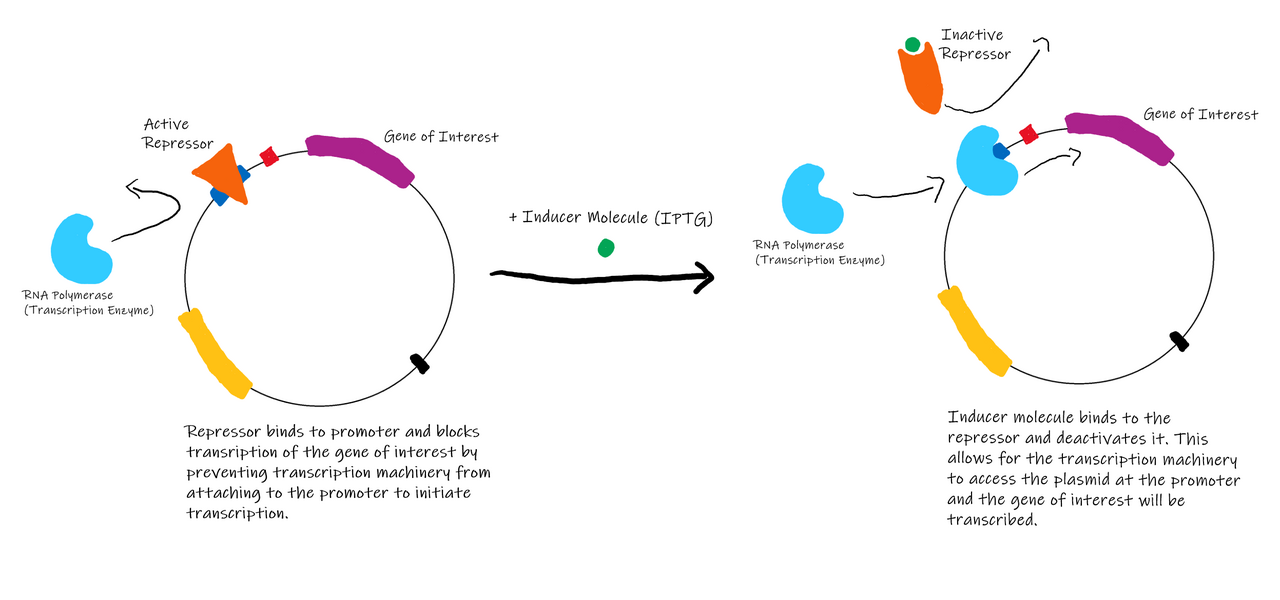
Cloning vectors are essential for gene cloning, library construction, and recombinant DNA technology. They allow researchers to amplify and manipulate DNA fragments in host organisms, most commonly E. coli. The choice of vector depends on insert size, copy number, and cloning method: plasmids handle up to 15 kb, while larger fragments require bacteriophages, cosmids, BACs, or YACs. Vectors may also include elements for expression, such as promoters (e.g., T7, lac) and ribosomal binding sites, transforming them into expression vectors. Shuttle vectors contain elements for maintenance in multiple organisms. Methods like TOPO cloning and Gateway recombination offer alternatives to restriction-ligation. Public repositories like Addgene maintain well-characterized vectors to support reproducibility. The development of cloning vectors has been foundational to molecular biology, enabling the study of gene function, protein production, and genetic engineering.
Did You Know?
- The ColE1 origin of replication is found in many plasmids used as cloning vectors.
- Some cloning vectors use topoisomerase instead of ligase for rapid cloning without restriction digest.
- The plasmid pACYC177 contains both ampicillin and kanamycin resistance genes as selectable markers.
- Phagemids, such as the pBluescript series, contain an M13 bacteriophage origin of replication to generate single-stranded DNA.
What a Cloning Vector Is and Where It Comes From
A cloning vector is, at its core, a compact DNA molecule that a living cell can keep intact across generations, and which is designed to accept an external piece of genetic material for the purpose of cloning. The source of this DNA is remarkably varied. It might be lifted from a virus, drawn from the cells of a higher organism, or taken from a bacterial plasmid. The vector is not a passive carrier; it is purpose-built with features—restriction sites being the most prominent—that make inserting or later removing a foreign fragment a practical, repeatable step. Once a target sequence has been cloned into its first vector, the researcher can subclone that fragment into a second vector engineered for a more specific downstream task, creating a modular, stepwise workflow that underpins much of modern molecular biology.
The Mechanics of Insertion and Ligation
The most classical route for inserting a foreign fragment into a vector depends on restriction enzymes. Both the vector backbone and the target DNA are cut with the same or compatible enzymes, producing either blunt ends or staggered overhangs known as sticky ends. When the two sets of ends are compatible, DNA ligase seals them together into a single circular molecule. Modern practice, however, has moved well beyond this digest-and-ligate workflow. In TOPO cloning, a linearized vector is activated by covalently attaching topoisomerase I to its termini. The activated vector then captures a PCR-amplified insert, ligates the 5' ends of the product, releases the topoisomerase, and reforms a closed circle—all without any prior restriction digestion of either the vector or the insert. Recombination-based strategies such as the Gateway system and Gibson assembly go a step further, dispensing with both restriction enzymes and ligase. A gene cloned into an entry vector can be recombined directly into a wide range of expression vectors, streamlining the transfer process.
Essential Features: Cloning Sites and Selectable Markers
Every functional cloning vector carries, at minimum, a cloning site and a selectable marker. The cloning site is typically a multiple cloning site or polylinker—a short stretch densely packed with unique restriction-enzyme recognition sequences. The researcher cleaves the site with the chosen enzymes, digests a PCR-amplified target gene with the same enzymes, and ligates the insert into the vector, sometimes in a defined orientation. The selectable marker serves a different purpose: it lets the experimenter distinguish cells that have taken up the vector from those that have not. Antibiotic-resistance genes are the most common example—beta-lactamase confers ampicillin resistance, while other markers grant tolerance to tetracycline, kanamycin, or chloramphenicol. Some plasmids, such as pACYC177, carry two resistance genes at once. Shuttle vectors designed for two different hosts may also need dual markers. Auxotrophic markers like LEU2 and URA3 fulfill the same role in yeast strains. A more refined strategy embeds a lethal gene—barnase, Ccda, or the parD/parE toxin pair—whose disruption during successful cloning kills only the failed clones, leaving positive selections intact.
Host Organisms and the Spectrum of Vector Types
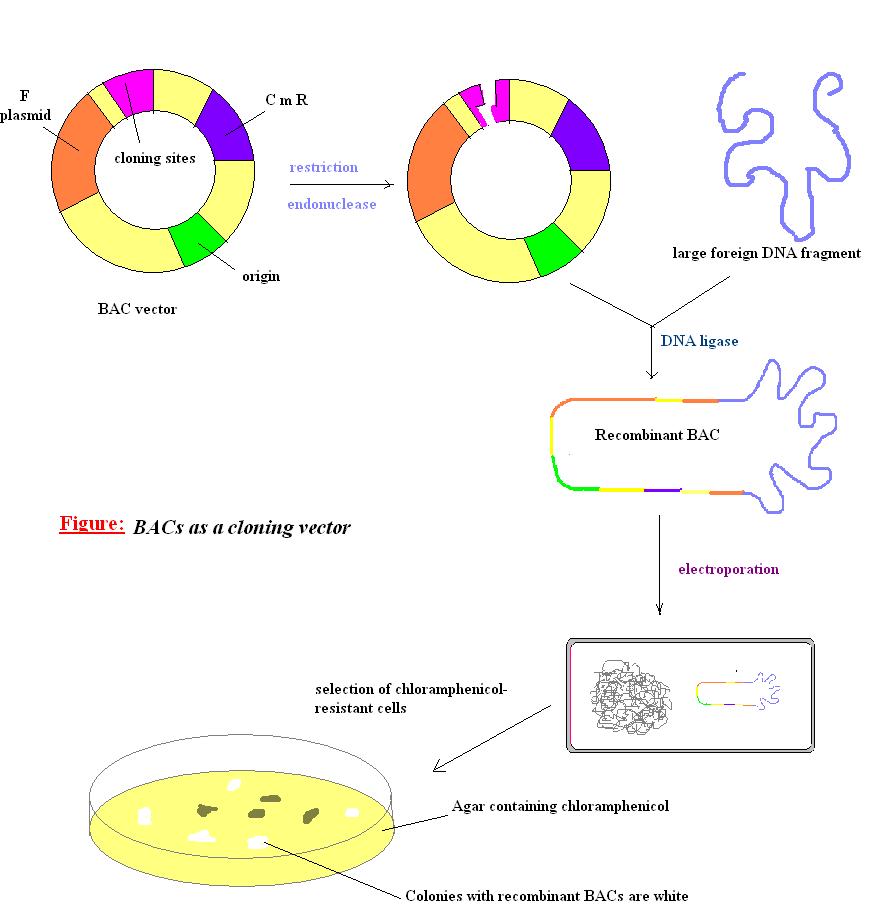
Escherichia coli remains the default host for the majority of cloning experiments, and the vectors used within it span a broad spectrum: plasmids, bacteriophages such as phage lambda, cosmids, and bacterial artificial chromosomes (BACs). The ColE1 origin of replication is a ubiquitous element that drives plasmid propagation in this bacterium. Yet E. coli has clear limitations. Very large DNA fragments simply cannot be stably maintained in it, so researchers turn to alternative hosts. Yeast, for example, accommodates much larger inserts through yeast artificial chromosomes (YACs). Vectors engineered to function simultaneously in two different organisms are called shuttle vectors, and they must carry elements—origins of replication and selectable markers—appropriate for each host. Some markers, such as resistance to zeocin or hygromycin B, are effective across different cell types, simplifying the design of these dual-host constructs. The choice of vector and host is therefore governed by the size of the insert, the organism in which the gene will ultimately be studied, and the specific downstream application the researcher has in mind.
Gallery

More in Genetics 1-24
Spotted an error? Know more?
This is a living reference — every entry is fact-audited, and reader corrections feed straight into our audit queue. Suggest an edit · See this site's audit record