Extranuclear inheritance
Inheritance of genes outside the nucleus, via organelles or parasites.

Extranuclear inheritance, sometimes called cytoplasmic inheritance, refers to the passing down of genes that are not housed in the nucleus. This process is widespread among eukaryotes and typically involves genes found in cytoplasmic organelles like mitochondria and chloroplasts, or in cellular parasites such as viruses and bacteria.
Mitochondria are organelles that convert energy through cellular respiration, while chloroplasts, found in plants and algae, produce sugars via photosynthesis. The genes within these organelles are crucial for normal cell function. Unlike nuclear DNA, which is arranged in chromosomes and replicates only once before cell division, mitochondrial and other extranuclear DNA replicate on their own. Their replication responds to the cell’s fluctuating energy needs rather than the cell division cycle. Because they replicate independently, genetic recombination of these organelle genomes is rare in offspring, unlike the common recombination seen in nuclear genomes.
Mitochondrial diseases are passed from mother to child, not from the father. This is because mitochondria, along with their DNA, are present in the egg cell before fertilization. During fertilization, the sperm’s head enters the egg, but its middle section—which contains the mitochondria—is left behind. As a result, the sperm’s mitochondrial DNA usually stays outside the zygote and is not inherited.
Extranuclear transmission can also occur for viral genomes and symbiotic bacteria. One example is perinatal transmission, where a mother passes viral material to her fetus or newborn through the bloodstream or breastmilk, starting before birth and continuing for about a month after. This is a particular concern for mothers carrying HIV or hepatitis C. Additionally, symbiotic bacteria in the cytoplasm are inherited in organisms like insects and protists.
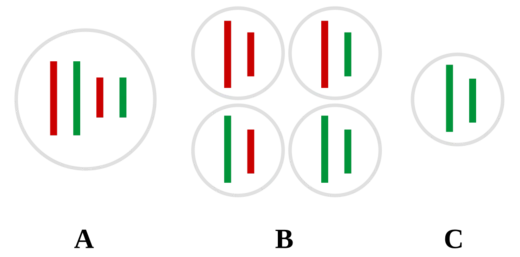
There are three general types of extranuclear inheritance. Vegetative segregation happens when cytoplasmic organelles, such as mitochondria and chloroplasts, are randomly replicated and partitioned during mitotic cell division. This gives daughter cells a random sample of the parent’s organelles, as seen with mitochondria in asexually replicating yeast cells.
Uniparental inheritance occurs when only one parent contributes organellar DNA to the offspring. A classic example is the maternal inheritance of human mitochondria: the
- field
- Genetics
- known_for
- Transmission of genes outside the nucleus, including mitochondrial and chloroplast DNA
- mechanisms
- Vegetative segregation, uniparental inheritance, biparental inheritance
- examples
- Maternal inheritance of human mitochondria, poky mutant in Neurospora crassa
Lore & Background
Extranuclear inheritance involves genes in mitochondria and chloroplasts, which replicate independently of nuclear chromosomes in response to a cell's energy needs. Mitochondrial DNA is typically inherited from the mother, as sperm mitochondria are often excluded from the zygote. Chloroplast inheritance can be maternal, paternal, or biparental, sometimes varying within the same species, as seen in tobacco where temperature and exonuclease activity affect the mode.
Reader's Guide
Extranuclear inheritance is a fundamental concept in genetics, highlighting that not all hereditary material is housed in the nucleus. Its study has revealed mechanisms such as vegetative segregation in yeast and uniparental inheritance in humans, where mitochondrial diseases are maternally transmitted. The discovery of the poky mutant in Neurospora crassa, caused by a deletion in mitochondrial DNA, was among the first to establish a mitochondrial basis for a specific genotype. This field also encompasses transmission of viral genomes, as in perinatal HIV or hepatitis C, and symbiotic bacteria in insects. Understanding extranuclear inheritance is crucial for comprehending organelle function, disease inheritance, and evolutionary biology, though its mechanisms can be complex and species-specific.
Did You Know?
- Mitochondrial DNA replicates independently of cell division, in response to the cell's energy needs.
- In many fertilizations, the sperm's mitochondria are left behind and excluded from inheritance.
- The poky mutant of Neurospora crassa has a deletion in mitochondrial DNA encoding the small subunit of ribosomal RNA.
- Chloroplast inheritance in tobacco can be affected by temperature and exonuclease activity during male gametogenesis.
More in Genetics 1-24
Spotted an error? Know more?
This is a living reference — every entry is fact-audited, and reader corrections feed straight into our audit queue. Suggest an edit · See this site's audit record