Southern Ocean
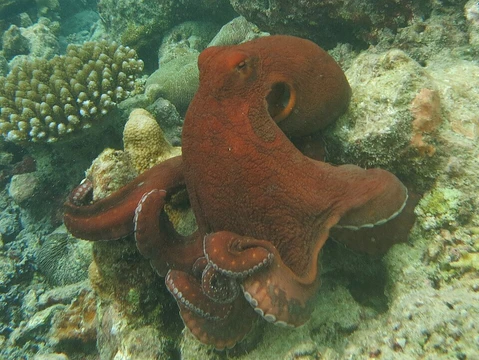
Eight-armed architect of the Southern Ocean's cold rocky shelves, mastering camouflage in a world of ice and kelp.

The Southern Ocean—defined by the Antarctic Circumpolar Current and the waters south of approximately 60°S—hosts a cold, nutrient-rich marine environment in which several cephalopod lineages, including octopods, maintain established populations. For the species profiled here, this region represents a critical component of its biogeographic range, providing rocky and soft-bottom substrates, sub-Antarctic kelp forests, and the thermal gradients that drive seasonal foraging and reproductive movements.
Within this habitat the octopus occupies a mid-to-upper trophic position as a benthic predator, preying on crustaceans, molluscs, and small fish while itself serving as prey for seals, penguins, and larger pelagic predators. Its presence in Southern Ocean waters underscores the adaptability of octopod physiology—hemocyanin-based oxygen transport, low metabolic tolerance, and flexible osmoregulation—to some of the coldest, most seasonally variable marine environments on Earth.
- Taxonomic group
- Cephalopoda, order Octopoda
- Habitat region
- Southern Ocean (Antarctic & sub-Antarctic waters)
- Substrate preference
- Rocky reefs, boulders, kelp holdfasts, and mixed sand-gravel bottoms
- Typical depth range
- Intertidal to ~400 m (species-dependent)
- Diet
- Benthic crustaceans, bivalves, gastropods, small demersal fish
- Thermal tolerance
- Cold-adapted; active at near-freezing to moderate temperatures
- Reproductive strategy
- Semelparous (single reproductive event followed by death)
Lore & Background
In the Southern Ocean the octopus encounters a habitat unlike any tropical reef: vast stretches of basalt and granite boulders draped in *Macrocystis* and *Durvillaea* kelp, where light is dim, currents are relentless, and the water hovers just above freezing for much of the year. The species has adapted to these conditions through a suite of physiological traits common to octopods—three hearts, hemocyanin-rich blue blood, and a highly vascularised mantle that permits sustained activity even when oxygen saturation is low. On sub-Antarctic islands such as South Georgia, Kerguelen, and the Auckland Group, dense kelp forests provide both cover and a rich infaunal community of crabs, snails, and small fish that form the octopus's primary diet.
Behaviourally, the Southern Ocean individual is a solitary, sit-and-wait predator that excavates or occupies a den beneath a boulder or within a kelp holdfast, extending its arms to ambush passing prey. Its chromatophore and papillae-based colour change allows it to match the grey-brown of wet rock or the dark green of kelp stipes within fractions of a second, rendering it nearly invisible to both predator and prey. During the austral summer, when phytoplankton blooms intensify and krill swarms proliferate, the octopus may shift to more active foraging, ranging over several hundred metres of shelf to exploit the elevated prey density.
Reproduction in these cold waters is a slow, energetically costly process. Males transfer spermatophores to the female, after which she guards a single clutch of eggs—often numbering in the low hundreds—attached to the underside of a rock or kelp blade. The female does not feed during incubation, which can last many months in near-freezing water, and dies shortly after the juveniles hatch. The hatchlings, only a few millimetres long, disperse with the Antarctic Circumpolar Current, potentially founding new populations on distant sub-Antarctic shelves.
Reader's Guide
Southern Ocean shelf and slope (0–400 m): The octopus favours rocky outcrops, boulder fields, and mixed sand-gravel substrates along the continental shelf. Rocky areas with crevices provide den sites; the species avoids open, featureless sand where it cannot anchor or hide. The shelf break, where the seafloor drops beyond 200 m, often marks the outer limit of regular occurrence, though individuals have been recorded at greater depths during reproductive or foraging excursions.
Sub-Antarctic kelp forests (intertidal to ~30 m): On islands such as South Georgia, Kerguelen, and the Auckland Group, dense stands of *Durvillaea antarctica* and *Macrocystis pyrifera* create a three-dimensional habitat rich in infaunal prey. The octopus uses kelp holdfasts and the spaces between stipes as both shelter and ambush points. These forests are ecologically significant because they concentrate primary productivity and support a high density of crabs, snails, and small fish, making them the most productive foraging grounds in the species's range.
Seasonal movement: During the austral summer (December–February), warming surface waters and intensified phytoplankton blooms drive a pulse of prey availability. The octopus may range laterally along the shelf to track krill aggregations and increased benthic invertebrate activity. In winter, activity decreases, and individuals remain in dens with reduced metabolic rate, conserving energy until conditions improve.
Antarctic Circumpolar Current influence: The ACC creates a dynamic boundary that can both constrain and facilitate dispersal. Juveniles released from egg masses may be carried hundreds of kilometres by the current, potentially colonising new shelf areas. This mechanism is thought to maintain genetic connectivity across otherwise isolated sub-Antarctic island populations.
Did You Know?
- Octopuses possess three hearts: two branchial hearts pump blood through the gills, while one systemic heart circulates oxygenated blood to the body.
- The semelparous reproductive strategy means the female octopus dies shortly after her eggs hatch; she does not feed during the months-long incubation period, relying entirely on stored reserves.
More in Distribution & Habitat
Elsewhere in Big blue octopus
Spotted an error? Know more?
Reader corrections go straight into our review queue. Suggest an edit · How this site is sourced