Kafenio
A Greek café serving coffee, drinks, and social life.

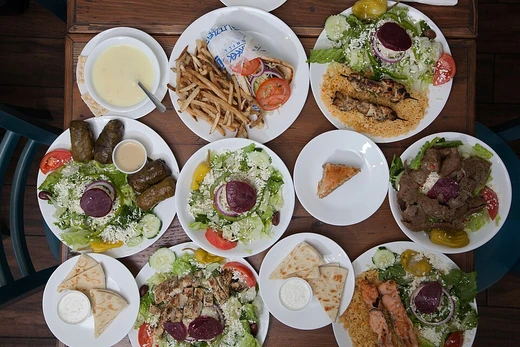
A kafenio (also spelled cafenio or cafeneon; plural kafenia) is a type of Greek café. Its menu typically includes Greek coffee and frappé, along with beer, retsina, and ouzo. Most kafenia offer meze or complimentary snacks, but they rarely serve full meals. Traditionally, these were family-run businesses with simple furnishings and whitewashed walls. Kafenia often function as the social hub of the villages and islands where they are found, where people gather after work to chat or play cards. In earlier times, women were not allowed inside, but today kafenia are commonly visited by women and girls.
- Type
- Greek café
- Typical beverages
- Greek coffee, frappé, beer, retsina, ouzo
- Food offered
- Meze or free snacks; rarely full meals
- Traditional ownership
- Family-run
- Social role
- Social center of villages and islands
- Historical gender restriction
- Previously unwelcoming to women; now frequented by girls and women
Lore & Background
The kafenio is a traditional Greek café that has long been a fixture of village and island life. Typically family-run and simply furnished with whitewashed walls, it offers Greek coffee, frappé, beer, retsina, and ouzo, along with meze or free snacks. Full meals are rarely served. The establishment functions as a social hub where people gather after work to talk or play cards. Historically, women were not welcome, but in modern times kafenia are frequented by girls and women as well.
Reader's Guide
The kafenio holds significance as a cornerstone of Greek social life, particularly in villages and islands. It is not merely a place to drink coffee or alcohol but a community center where relationships are maintained and leisure is shared. The simple, family-run nature of most kafenia reflects a tradition of local entrepreneurship and hospitality. The evolution from a male-only space to one inclusive of women marks a notable social shift. The word itself traces through Greek, Turkish, Persian, and Arabic roots, showing the deep cultural exchanges in the region. Similar establishments exist in other Balkan countries under names like kafana, kavane, or kaveana. The kafenio's enduring role as a gathering place underscores its importance in Greek cultural identity, even as modern cafes have proliferated.
Did You Know?
- The word kafenio comes from earlier Greek καφενές, borrowed from Turkish kahvehane or kahvene, which derives from Persian qahveh-khaneh.
- Kafenia typically serve Greek coffee, frappé, beer, retsina, and ouzo.
- Most kafenia provide meze or free snacks and rarely serve full meals.
- In previous centuries, women were not welcome in kafenia, but now they are frequented by girls and women.
More in Greek cuisine 1-24
Spotted an error? Know more?
Reader corrections go straight into our review queue. Suggest an edit · How this site is sourced